
The Mortgage Corner
Total nonfarm payroll employment increased by 228,000 in November, and the unemployment rate was unchanged at 4.1 percent, the U.S. Bureau of Labor Statistics reported today. Employment continued to trend up in professional and business services, manufacturing, and health care.
The jobs boost from hurricane rebuilding showed up with 55,000 new jobs in construction and manufacturing. Professional/business services and education/health services added 100,000 jobs, and the service sector added 159,000 jobs overall.
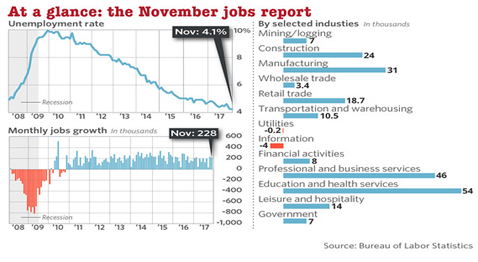
The unemployment rate held at 4.1 percent in November, and the number of unemployed persons was essentially unchanged at 6.6 million. Over the year, the unemployment rate and the number of unemployed persons were down by 0.5 percentage point and 799,000, respectively, which means the U.S. economy will continue to grow into 2018, and economic growth could top 3 percent in this fourth quarter, as well.
The best news this week was the second estimate of labor productivity remained at 3 percent rate, which means workers are producing more—though their wages aren’t rising any faster. Annualized output increased 4.1 percent, while labor costs, including benefits, increased just 1.1 percent.

This means businesses are increasing capital expenditures to make up for the lack of skilled workers. The meager rise is labor costs is helping productivity, and not boosting inflation. But as the so-called tax reform bill worming its way through congress indicates, there are very little benefits being doled out to those not in the top 1 percent.
The number of persons employed part time for economic reasons (sometimes referred to as involuntary part-time workers) at 4.8 million is down by 858,000 over the year, which shows progress in employment for the marginally employed. These individuals, who would have preferred full-time employment, were working part time because their hours had been cut back or because they were unable to find full-time jobs.
And the Federal Reserve will now raise interest rates another 0.25 percent next week at its FOMC meeting, even though there is a greater danger of disinflation and falling prices.
That’s what happens when $1.5 trillion in tax cuts benefit just the few, and are paid for with $1.5 trillion in benefit cuts for the many—that include Medicare and Medicaid.
Harlan Green © 2017
Follow Harlan Green on Twitter: https://twitter.com/HarlanGreen


 Populareconomicsblog