
Popular Economics Weekly
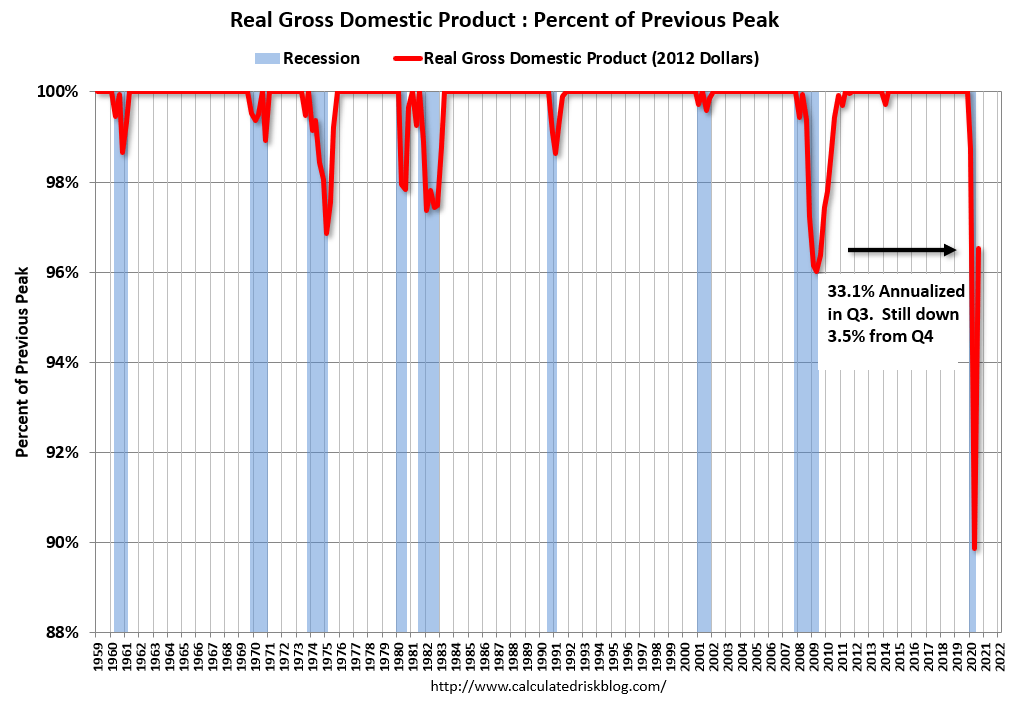
We are not really out of the COVID recession, per Calculated Risk graph, even though the US Bureau of Economic Analysis (BEA) “advance” estimate of third quarter GDP growth increased +33.1 percent. But it’s still 3.5 percent below last year’s fourth quarter growth rate.
Its blue bars portray past recessions, so the graph also tells us how severely this pandemic has affected economic growth. Real GDP had declined -31.4 percent in Q2.
The main driver of the rebound was consumption spending, which rose at a 40.7 percent growth rate. The biggest surprises were weaknesses in government spending and a very large rebound in inventories, as businesses stocked up for the holidays.
“We had thought federal spending would grow enough to keep overall public spending positive,” says Reuters, “but reported spending was down at both the federal and state levels, subtracting 0.7 percentage points from growth.”
This is precisely why congress’s inaction on passing another pandemic relief package is so maddening. It’s now declining state and local spending that is suppressing growth and additional job creation.
Positive economic growth for the rest of this year is also in doubt, as initial unemployment claims haven’t fallen fast enough to stay ahead of COVID-19, since more consumers are staying home because COVID-19 infection rates are already rising with the fall season and we haven’t even reached the holidays, when families and friends tend to gather.
Altogether, the number of people receiving benefits from eight separate state and federal programs fell by 415,727 to an unadjusted 22.7 million as of Oct. 10, the latest data available, which means 22 million of the formerly employed haven’t yet found another job.
Economists are concerned that rising coronavirus cases will lead people to stay home, and cause service industries to begin another round of layoffs. Adding to the sense of unease, Congress went home for the presidential election without passing addition coronavirus financial relief.
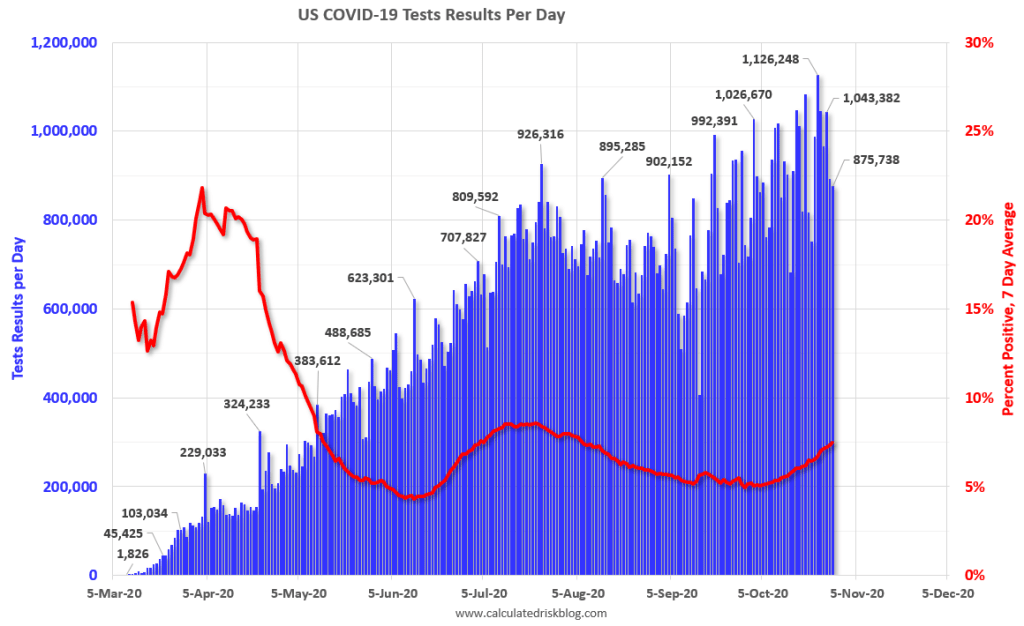
There are now more than 70,000 positive tests per day, surpassing the former 68,000 peak in August, not a good sign. Infection rates have risen above 7 percent (red line in graph), also a sign of faster community spreading of the virus in the long expected third surge in virus infections.
So consumers that drive 70 percent of economic activity are in a quandary. Will the pandemic surge continue, and so require consumers to stay at home, as is already happening in France and Germany with their new lock downs from rising infection rates?
The Conference Board’s latest consumer confidence report was a mixed bag.
“Consumer confidence declined slightly in October, following a sharp improvement in September,” said Lynn Franco, Senior Director of Economic Indicators at The Conference Board. “Consumers’ assessment of current conditions improved while expectations declined, driven primarily by a softening in the short-term outlook for jobs. There is little to suggest that consumers foresee the economy gaining momentum in the final months of 2020, especially with COVID-19 cases on the rise and unemployment still high.”
Senior Director Franco sums up consumers’ current forebodings–what might happen for the rest of this year–and maybe into much of next year, until consumers have some confidence in an effective COVID-19 vaccine.
Harlan Green © 2020
Follow Harlan Green on Twitter: https://twitter.com/HarlanGreen


 Populareconomicsblog