An End to Austerity—Part II

Financial FAQs

The Senate voted on Tuesday to start talks with the House about a compromise highway funding measure. Lawmakers are facing a Nov. 20 deadline for renewing federal infrastructure funding. Both chambers have passed bills that would guarantee at least three years of highway and transit spending, and the Senate voted 82-7 to begin bicameral negotiations on a potential compromise. 

The U.S. House of Representatives just passed their version, the Surface Transportation Reauthorization and Reform Act, STIRR, a new multi-year transportation authorization bill, by a vote of 363-64. It will refund the Highway Trust Fund, among other public projects.

This is a sea change for Congress that might have something to do with it being a Presidential election year, as we have said. The Senate bill contained three years’ worth of guaranteed highway funding in July, and lawmakers in both chambers have said they are eager to get to conference.

The good news is that it will prolong this economic recovery from the worst downturn since the Great Depression. The highway bill approved by the House last week calls for spending $261 billion on highways and $55 billion on transit over six years. The legislation authorizes highway funding for six years, but only if Congress can come up with a way to pay for the final three years. 

So, are we one step closer to a Congress that sees the need to boost spending in order to boost jobs and economic output for years to come, as we asked in our last column? It could mean the U.S. Congress has finally seen the folly of austerity policies that shrink growth, as has happened in Europe. Or, it could be because of a so-called ‘emergency’; the Highway Trust Fund has run out of money.

So congressional haste to refund the Trust Fund could also be due to predictions for another severe winter that could wreak havoc on deteriorating roads—including another Polar Vortex, perhaps. The British Guardian recently said: “…they’re likely to see more treacherous cold in coming years, because the long-term forecast for the north-east and midwest calls for a spike in damaging winter storms. That means more stress on the aging, dilapidated infrastructure of older cities and suburbs; more maintenance costs for home-owners and service costs for municipalities; more disruptions of school and business schedules; more automobile accidents; more aching all around.”

Hence the reason for coming to an agreement before the November 20 deadline. “Both the Senate and the House bills have many similarities that will allow for a very short conference period,” Sen. James Inhofe (R-Okla.), who is chairman of the Senate Environment and Public Works Committee, said in a statement while the House was finishing work on its version of the highway bill. 

“With this milestone, Congress should be able to send a bill to the president’s desk by Thanksgiving,” he continued. “This will allow for our nation to avoid the Highway Trust Fund hitting a dangerously low level, which DOT Secretary Anthony Foxx warned would significantly affect the 2016 construction season.”

Why has the Highway Trust Fund run out of money? First, in 1994, the GOP took over Congress on a wave of angry reactionary politics. Led by Newt Gingrich, they proposed repealing the last gasoline tax increase, from 1993. Though they failed at that, they stopped a new gas increase — and ever since, Republicans have refused to allow the gas tax to go up, even to keep pace with inflation.

The result is that the current 18.4-cent-per-gallon gas tax brings in less revenue in absolute terms than it did 20 years ago — thanks to more efficient cars and a dip in vehicle miles traveled — and the shortfall is even bigger in relative terms because of inflation. So transportation funding is squeezed, and passage of a comprehensive transportation bill has been stymied by Congress’s inability to find a new funding mechanism.

The Senate bill is “surprisingly good”, said one commentator. The Senate passed its long-term highway bill in July, though their work on federal infrastructure funding isn’t over. Senators voted 65-34 to approve the six-year bill, which funds federal highway and infrastructure projects for three years.

The legislation would be used to pay for about $47 billion of funding for the Department of Transportation’s Highway Trust Fund. Under the Senate bill, senators would have to determine by 2018 how to pay for the full six years.

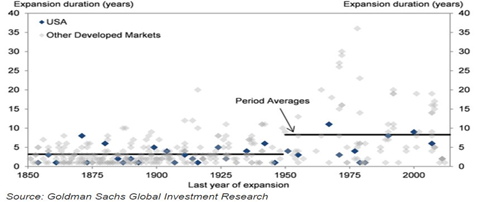
This should also boost the odds of a more prolonged recovery from the Great Recession. A new Goldman Sachs prediction just out says there is a 60 percent chance this recovery could last another four years, reports Marketwatch. This is according to a team of researchers at Goldman Sachs Group, led by Chief Economist Jan Hatzius. The team analyzed a data set of developed-market business cycles and their findings were pretty interesting. Among developed economies, the average length of an economic expansion has been expanding since 1950. The longest U.S. expansion lasted 10 years, from 1991 to 2001. Before 1950, the average expansion lasted about three years, with only a few enduring for 10 years or more.
image

Graph: Marketwatch

A suddenly bipartisan US Congress made a start in refuting such austerity policies by first agreeing to a two year budget plan that ignores the debt ceiling. Given the possibility of another severe winter, and presidential year politics, any final version of a transportation bill will help to prolong this recovery. Austerity policies can no longer be an option with so much at stake.

Harlan Green © 2015

Follow Harlan Green on Twitter: https://twitter.com/HarlanGreen

Posted in Economy, Keynesian economics, Macro Economics, Politics, Weekly Financial News | Tagged , , , , , , , , | Leave a comment

What Are Economic Lessons From ‘The Martian’?

Financial FAQs

What can we learn from The Martian, a terrific novel and movie starring Matt Damon as an Astronaut in the not too distant future thought dead and left behind on Mars during a violent dust storm? It was the highest grossing movie last weekend. How did he survive on such an inhospitable planet where nothing grows and water isn’t accessible?

It could tell us how we might survive—and even prosper—in the not too distant future on earth. It is a lesson very close to home in several ways. We have predictions that global warming could have catastrophic economic and environmental consequences from such as the Pentagon. Cities within 100 miles of the coastline affected and maybe even obliterated in the not too distant future.

And as many parts of the earth experience climactic changes that could bring about similar conditions as on Mars (too little usable water and violent storms), we can learn just how to rescue earthlings from a similar result.

It was because the U.S. and world, including China, were united in wanting to save Matt Damon that The Martian has a happy ending. And that is exactly how we have to act to save ourselves from becoming another Mars.

Is this too severe a picture of what could happen on earth? The New York Times reported on the latest Pentagon study of the effects of global warming, asserting that climate change poses an immediate threat to national security, with increased risks from terrorism, infectious disease, global poverty and food shortages. It also predicted rising demand for military disaster responses as extreme weather creates more global humanitarian crises.

The report lays out a road map to show how the military will adapt to rising sea levels, more violent storms and widespread droughts, said the Times. “The loss of glaciers will strain water supplies in several areas of our hemisphere,” said U.S. Defense Secretary Chuck Hagel in announcing the report last year. “Destruction and devastation from hurricanes can sow the seeds for instability. Droughts and crop failures can leave millions of people without any lifeline, and trigger waves of mass migration.”

In fact, this is already happening in the Middle East. Record droughts are a major reason for the civil wars and migration of millions into Europe and beyond. It can only be ‘saved’ with cooperation from all sides of the conflict, including Russia.

And China is buying up foreign resources because it will ultimately run out of enough water and arable land to feed its own growing population.

The Martian was rescued as a result of an effort coordinated by the National Aeronautics and Space Administration — NASA — that was responsible for our Apollo moon landings, the International Space Station, and now the Mars Rover and Curiosity remote vehicle explorations.

Closer to home, $700B was authorized by Congress in TARP support of Wall Street and commercial banks, then another $830B for the American Recovery and Reinvestment Act that enabled governments to continue to function, which prevented another Great Depression.

image

Graph: Econoday

We lost more than 800,000 government jobs during the Great Recession, of which only a small fraction have returned. This is due to government spending cuts because of reduced tax revenues, but also congressional resistance to expanding federal government spending when this is the time to invest public monies that will increase jobs and growth when the private sector will not.

Need we more lessons on how to save our own planet? The Martian, a tale of survival under impossible circumstances, provides an immediate example that has already caught the attention of many. This has to be why it has become a best-selling novel and movie.

Harlan Green © 2015

Follow Harlan Green on Twitter: https://twitter.com/HarlanGreen
Posted in Consumers, Economy, Politics | Tagged , , , , , , , , , , , , | Leave a comment

An End to Austerity?

Financial FAQs

On November 5, 2015, the U.S. House of Representatives passed the bipartisan Surface Transportation Reauthorization and Reform Act, a new multi-year transportation authorization bill, by a vote of 363-64. It will refund the Highway Trust Fund, among other public projects. The Trust Fund has been the source of highway repairs and improvements, but was about to run out of money.

And, earlier this summer the Senate passed their proposal for the same bill. The next step is the House and Senate must reconcile the differences between their two versions and pass a compromise transportation bill. The most recent extension of the current transportation program expires November 20 so they will have to work quickly.

Are we one step closer to a Congress that sees the need to boost spending in order to boost jobs and economic output for years to come? If so, it means the U.S. Congress has finally seen the folly of austerity policies—such as the sequester budget cuts that defunded even defense spending, or Repubs shutting down all government rather than agreeing to new budget caps.

The result of such austerity policies has been lost output and overall wealth that several economists say could last for years—and may even be permanent—hurting both jobs and economic output; thus fulfilling the prophecy of a ‘new normal’ of slower growth for economies of older, developed countries

Paul Krugman and other leading economists have lamented the vise-grip that austerity policies have on developed countries since the Great Recession, and that are continuing in Europe. “Governments that slashed spending in the face of depression hurt their economies,” said Krugman, “and hence their future tax receipts so much that even their debt will end up higher than it would have been without the cuts.”

“And a new paper by Mr. Summers and Antonio Fatás, in addition to supporting other economists’ conclusion that the crisis seems to have done enormous long-run damage,” says Krugman, “shows that the downgrading of nations’ long-run prospects is strongly correlated with the amount of austerity they imposed.”

And the Initiative on Global Markets at the University of Chicago — hardly a hotbed of liberal or Keynesian thought — regularly surveys a number of the leading American economists about a variety of policy issues, such as government stimulus spending, says Econ Prof Justin Wolfers. The survey results find widespread consensus that government spending during economic crises has benefits to employment and growth that far exceed its costs.

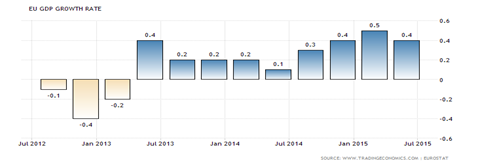
Even the EU may be seeing the folly of their current austerity policies, brought on by another emergency—millions of immigrants fleeing into Europe from war torn Middle East and Africa that have to be housed and fed. ECB Chairman Mario Draghi has been sounding the necessity to increase its QE program that to date is purchasing $60 billion per month in securities, in an attempt to boost growth by pushing down interest rates into negative territory. So the ECB would then literally be paying borrowers to borrow money in order to expand the monetary base.

image

Graph: Trading Economics

But why does there always have to be an emergency before Austerians (i.e., those who believe public debt is evil) and Progressives (who believe public debt is good and necessary for the public welfare) come together for the common good? The Senate passed its long-term highway bill in July, though their work on federal infrastructure funding isn’t over. Senators voted 65-34 to approve the six-year bill, which funds federal highway and infrastructure projects for three years.

The legislation would be used to pay for about $47 billion of funding for the Department of Transportation’s Highway Trust Fund. That funding accounts for only the first three years of the legislation. Under the Senate bill, senators would have to determine by 2018 how to pay for the full six years.

Austerity is an economic orthodoxy the gripped Herbert Hoover at the beginning of the Great Depression, before FDR decided that a New Deal of government stimulus spending was needed to fight what was not yet a Great Depression—itself an expression of changing times.

But then austerity prevailed in 1937 as well. Republicans were swept back into power because Americans thought the Depression over. Roosevelt listened to them, and raised taxes and cut spending to pay down the deficit before the economy had fully recovered, plunging the U.S. back into what became The Great Depression.

Unfortunately, it took the united will of a World War against fascist terrorism to bring the US together with European countries to fight economic orthodoxy. We knew then government spending and budget deficits were needed during such times. US debt ballooned to some 120 percent of US GDP at the end of WWII.

It took an exploding population and the consumer-driven society that succeeded WWII to bring the deficit back down to pre-war levels by the 1970s. And only with policies that boost growth have we been able to keep debt levels manageable.

The US’s Great Recession was technically over in June 2009, lasting 18 months, but sustained growth didn’t resume until 2012. Whereas Europe suffered through two recessions since 2008 because it also followed policies that cut spending and raised taxes, led by the more conservative (and prosperous) northern EU countries and Germany.

A suddenly bipartisan US Congress made a start in refuting such austerity policies by first agreeing to a two year budget plan that ignores the debt ceiling. The Surface Transportation Reauthorization and Reform Act is another step in the right direction. Maybe it is good politics in a Presidential year to advocate stimulus spending over austerity. Who cares why, as long as both parties can agree it’s the only path to improving our deteriorating infrastructure?

Harlan Green © 2015

Follow Harlan Green on Twitter: https://twitter.com/HarlanGreen
Posted in Consumers, Economy, Keynesian economics, Macro Economics, Politics, Weekly Financial News | Tagged , , , , , , , | Leave a comment

Huge October Employment Report Will Boost Growth

Popular Economics Weekly

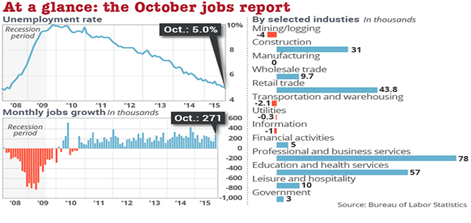
The economy generated 271,000 new jobs last month, with all but 3,000 coming in the private sector, the government said Friday, topping expectations for 190,000 to 240,000 jobs predicted by various economists.

Even bigger news is that on November 5, 2015, the U.S. House of Representatives passed the bipartisan Surface Transportation Reauthorization and Reform Act, a new multi-year transportation authorization bill, by a vote of 363-64. In other words, we are one step closer to a six-year transportation bill that will boost jobs and economic growth for years to come.

image

Graph: Marketwatch

The jobs report showed that a long-awaited acceleration in wages might finally be happening, another plus for economic growth. Hourly pay rose at the fastest year-over-year pace since the U.S. exited recession in mid-2009. Economists have been expecting a faster increase in pay amid a deep drop in unemployment and the creation of millions of new jobs over the past several years.

In October, average hourly earnings for all employees on private nonfarm payrolls rose by 9 cents to $25.20, following little change in September (+1 cent). Hourly earnings have risen by 2.5 percent over the year.

The rebound in hiring in October was driven almost entirely by the service sector jobs, such as software design, banking, health care, shopping and eating out. White-collar businesses added 78,000 profession jobs. Health care added 45,000 positions. Retailers took on 44,000 new workers, and restaurants hired 42,000 people. Builders also beefed up employment by 31,000, reflecting an upturn in construction over the past year, and the new transportation bill will boost more construction jobs, as well as heavy machinery and other industries that feed infrastructure spending.

As background to the just passed House transportation bill, earlier this summer the Senate passed their proposal for the same bill. The next step is that the House and Senate must reconcile the differences between their two versions and pass a compromise bill. The most recent extension of the current transportation program expires November 20 so they will have to work quickly.

The Senate passed its long-term highway bill in July, though their work on federal infrastructure funding isn’t over. Senators voted 65-34 to approve the six-year bill, which funds federal highway and infrastructure projects for three years.

The legislation would be used to pay for about $47 billion of funding for the Department of Transportation’s Highway Trust Fund. That funding accounts for only the first three years of the legislation. Under the Senate bill, senators would have to determine by 2018 how to pay for the full six years.

The labor market as a whole is now the healthiest it’s been in years. The U.S. has added an average of 206,000 jobs a month in 2015, in part because the seasonal adjustments were readjusted to add more jobs to past months. This usually happens during the summer months because Labor Department statisticians usually overcompensate for the number of hires in the summer. As much as a million more workers were hired this past summer than in past years, which might become the new normal for the next couple of years.

The change in total nonfarm payroll employment for August was revised from +136,000 to +153,000, and the change for September was revised from +142,000 to +137,000. With these revisions, employment gains in August and September combined were 12,000 more than previously reported.

As a result, the number of people who can’t find work or who can only get part-time jobs continues to shrink. The so-called U6 unemployment rate that takes these people into account dropped to 9.8 percent in October, the first time it’s fallen below 10 percent since May 2008.

The labor market is still not fully healed, however, says Marketwatch. Some 15.6 million Americans who want a full-time job can’t find one, an unusually high number after more than six years of economic recovery. The percentage of able-bodied people 16 or older in the labor force also sits at a 42-year low. It was unchanged at 62.4% in October.

Harlan Green © 2015

Follow Harlan Green on Twitter: https://twitter.com/HarlanGreen
Posted in Consumers, Economy, Macro Economics, Politics, Weekly Financial News | Tagged , , , , , , , | Leave a comment

How We Lost Our Middle Class

Financial FAQs

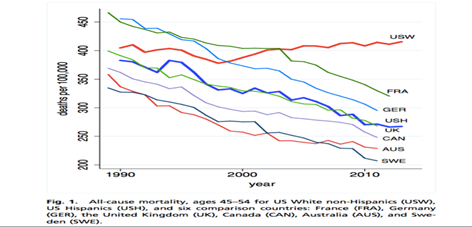
We now have an even better reason to lament the decline of our middle class. New research by this year’s Nobel Prize winner in the Economic Sciences, Princeton Econ Prof Angus Deaton and his wife Anne Case, have revealed what happened to those 45-54 year-old high school educated whites that were once able to rise to the middle class when there were jobs that required more manual than mental skills (such as manufacturing jobs). They are dying in record numbers.

Drs. Deaton and Case discovered that incomes declined 19 percent and death rates increased 22 percent in households headed by someone with a high school education from 1999 to 2013; the higher death rates largely due to exploding suicide rates, and the abuse of drugs and alcohol.

This new study uncovers the disillusionment and ongoing depression of those that lost the most from globalization and overseas job flight—the least educated whites that once thought their jobs were guaranteed by the fact they were part of the ruling class.

image

Graph: Krugman-NYTimes

This Paul Krugman graph shows the deaths from all causes for both white and Hispanic populations. The red line trending upward since 1990 is that of US White, non-Hispanics, vs. the declining blue line for US Hispanics. In other words, the US has the only (white) population of all developed countries whose death rates are increasing.

This truly horrific, new evidence of their plight might also highlight a reason for the flight of predominately white, lesser educated middle-aged males to the Tea Party that blames all government for their ills. It could also account for what goes with depression; an irrational opposition to any authority, which accounts for the popularity of Dr. Ben Carson and Donald Trump, in particular.

Yet opposition to any government programs has hurt this segment of society the most, as they are mostly situated in the poorest red states that need and depend on government transfer payments—such as social security, Medicare, Obamacare and food stamps.

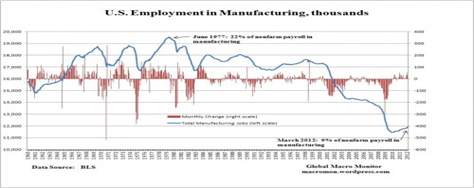
In fact, it has been too little government—the deregulation of whole industries which protected those jobs—that has allowed many jobs held by high school educated white in particular to migrate overseas, resulting in a decline of manufacturing jobs to 14 percent of employed workers from 22 percent in the 1960s.

image

Graph: Creditwritedowns.com

Big Business has almost always lobbied for freer trade (meaning lower tariffs), accompanied by fewer worker protections, as well as the ability to avoid U.S. taxes by keeping their foreign profits overseas. Then there was the demise of union collective bargaining, beginning with President Reagan’s firing of the PATCO Union traffic controllers that has led to some twenty-five right to work states where union membership is discouraged, union membership and dues aren’t required, so that employers are allowed to hire and fire their employees at will.

The result is business interests and their lobbyists have been able to keep the national minimum wage at $7.25 per hour (though individual cities and states are beginning to raise it). It has actually shrunk since 1968 when inflation is accounted for, which accompanies the greatest income inequality since the Great Depression

Today’s middle class entry-level jobs belong to computer and software engineers. The less educated are now victims of such income disparities. In fact, the overall current decline in middle class incomes and wealth can be explained as well. It was active government policies that intervened when and where the private sector wouldn’t with New Deal legislation that created our middle class after WWII, as I’ve said before.

image

Graph: New York Times

In the late 1960s, more than half of the households in the United States were squarely in the middle, says the New York Times. Middle class is considered to be earning in today’s dollars, $35,000 to $100,000 a year. Back then few people noticed or cared as the size of that group began to fall, because the shift was primarily caused by more Americans climbing the economic ladder into upper-income brackets.

But their share has been shrinking since 2000, to 43 percent of households today.

So the rise of income inequality highlighted by Professor Deaton is no accident. It has accelerated since the end of the Great Recession with such actions so that almost 100 percent of the income and wealth gain since 2008 has been garnered by the top 1 percent income bracket.

The study follows up on Dr. Deaton’s 2013 book, The Great Escape: Health, Wealth, and the Origins of Inequality, “a work that maps the origins of inequality and its fallout spanning 250 years of economic history in the world,” says a review of the book.

The result, as Professor Deaton predicted is the hurt to the middle-aged, high school educated has only grown. “There is a danger that the rapid growth of top incomes can become self-reinforcing through the political access that money can bring. Rules are set not in the public interest but in the interest of the rich, who use those rules to become yet richer and more influential.”

Harlan Green © 2015

Follow Harlan Green on Twitter: https://twitter.com/HarlanGreen
Posted in Consumers, Economy, Macro Economics, Politics, Weekly Financial News | Tagged , , , , , , | Leave a comment

Home Ownership Rate Increases, Thanks to Millennials

The Mortgage Corner

The Commerce Department just reported that homeownership rate rose to 63.7 percent in the third quarter, from 63.4 percent in the second quarter, reports the National Association of Realtors. That is still well below the high of the series, of 69.2 percent in the second quarter.

But things may be starting to change, as the home ownership rate for those under age 35—the so-called millennial generation of those aged 18 to 36–increased from 34.8 percent to 35.8 percent in the third quarter. That marks the largest gain for that population since the second quarter of 2004. Also, it was the only age cohort that posted a significant increase in the home ownership rate in the third quarter.

Why? They are the largest population generation, even topping their baby boomer parents in numbers. And many have been renting until now, but it looks like their job prospects have brightened, while rents are increasing some 8 percent per year due to the overall housing shortage. So why not take advantage of the tax deductions that come with home ownership?

Most economic forecasters have remained fairly optimistic about the job market for millennials in the coming years, reports the Wall Street Journal. The Federal Reserve and Congressional Budget Office, for example, expect the unemployment rate to continue to fall in the years ahead. In its most recent round of forecasts, the Fed thinks the jobless rate will settle in at between 5 percent and 5.2 percent. The CBO is somewhat less optimistic, projecting unemployment will fall a little further from where it is today, but that from 2018 to 2025 it will, on average, be a little bit higher than the Fed’s estimate, at about 5. percent.

“If the CBO or Fed are close to correct, the first 10 years for today’s graduating millennials would be the best for the entire generation so far,” says the WSJ.

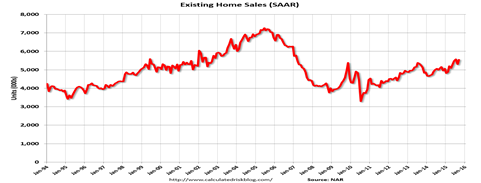
The result of the increase in home buying is that September existing-home sales soared to a 5.55 million rate, highest since 2007 at the end of the housing bubble. But this is putting pressure on inventories, as total housing inventory at the end of September decreased 2.6 percent to 2.21 million existing homes available for sale, and is now 3.1 percent lower than a year ago (2.28 million). Unsold inventory is at a 4.8–month supply at the current sales pace, down from 5.1 months in August.

image

Graph: Calculated Risk

This is much too low, and leaves many prospective homebuyers out of the market, especially at the lower-price, entry level. It is reflected in just released lower pending home sales for September. Pending home sales cooled for the second straight month and to their second lowest index reading in 2015, said the National Association of Realtors. All four major regions experienced a pullback in activity in September.

The Pending Home Sales Index, a forward–looking indicator based on contract signings, declined 2.3 percent to 106.8 in September from a slightly downwardly revised 109.3 in August but is still 3.0 percent above September 2014 (103.7). With last month’s decline, the index is now at its second lowest level of the year (103.7 in January), but has still increased year–over–year for 13 straight months.

Lawrence Yun, NAR chief economist, says a combination of factors likely led to September’s dip in contract signings. “There continues to be a dearth of available listings in the lower end of the market for first–time buyers, and Realtors in many areas are reporting stronger competition than what’s normal this time of year because of stubbornly–low inventory conditions,” he said. “Additionally, the rockiness in the financial markets at the end of the summer and signs of a slowing U.S. economy may be causing some prospective buyers to take a wait–and–see approach.”

And that is why the Federal Reserve just announced after its October FOMC meeting that it would not raise their interest rates. “The Committee continues to see the risks to the outlook for economic activity and the labor market as nearly balanced but is monitoring global economic and financial developments. Inflation is anticipated to remain near its recent low level in the near term but the Committee expects inflation to rise gradually toward 2 percent over the medium term as the labor market improves further and the transitory effects of declines in energy and import prices dissipate.”

NAR chief economist Lawrence Yun remains optimistic. “With interest rates hovering around 4 percent, rents rising at a near 8–year high, and job growth holding strong — albeit at a more modest pace than earlier this year — the overall demand for buying should stay at a healthy level despite some weakness in the overall economy.”

Most economic forecasters have remained fairly optimistic about the coming years. The Federal Reserve and Congressional Budget Office, for example, expect the unemployment rate to continue to fall in the years ahead. In its most recent round of forecasts, the Fed thinks the jobless rate will settle in at between 5 percent and 5.2 percent. The CBO is somewhat less optimistic, projecting unemployment will fall a little further from where it is today, but that from 2018 to 2025 it will, on average, be a little bit higher than the Fed’s estimate, at about 5.4%.

If the CBO or Fed are close to correct, the first 10 years for today’s graduating millennials would be the best for the entire generation so far. But aren’t the Fed and the CBO always wrong about the economy, you might ask? That’s a fair question. They haven’t done a good job predicting turning points, and they majorly missed the severity and length of damage from the 2007-09 recession.

It will be up to the millennial generation to push for economic and social policies that protect their interests, as with past generations.  Fortunately, a labor-friendly Federal Reserve under Janet Yellen is doing just that, in keeping interest rates this low.  It gives this largest adult generation a chance to gain that foothold so necessary for future prosperity.

Harlan Green © 2015

Follow Harlan Green on Twitter: https://twitter.com/HarlanGreen

Posted in Consumers, Economy, Housing, housing market, Weekly Financial News | Tagged , , , , , , , | Leave a comment

The Fed Can’t Raise Interest Rates Soon

The Mortgage Corner

Our Federal Reserve won’t be able to raise interest rates at all this year, or maybe even next year, says Marketwatch. Why? Because the EU Central Bank just announced they are increasing their Quantitative Easing program (QE), and that means the euro’s exchange rate will continue to fall.

Hence exports will be cheaper, helping their export industries (though imports are more expensive), while hurting ours in those industries that are in direct competition, such as the competition for airplane sales between Boeing and. Airbus.

“The logic is very simple, says Marketwatch’s Matthew Lynn. “While the ECB is still aggressively pumping money into the system, it is impossible for other central banks to tighten. Through the currency markets, it would wreak too much havoc on their own economies. And since it looks impossible for rates to rise in Europe any time soon, they are not going to rise anywhere else.”

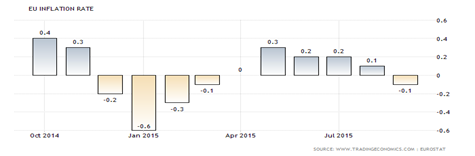
The EU Central Bank Chairman Mario Draghi is the culprit. He announced additional QE (Quantitative Easing) measures would be implemented, beginning in December, mainly because their retail inflation rate is back in negative territory. The inflation rate has been below the ECB’s 2 percent target since February of 2013.

At a press conference last week, he said the bank was exploring options for expanding QE. The bet in the markets is now that there will be more action in December, pumping more money into the system. If it doesn’t happen then, it probably will early in 2016.

image

Graph: Trading Economics

With inflation in negative territory, the ECB is far from its target of getting price growth to near 2 percent and its 60 billion euros ($66 billion) a month asset buys have proven insufficient as lower energy prices and slower growth in emerging economies have worked against it.

“Inflation is just not moving higher, there is a risk of falling into a Japanese-style liquidity trap,” said an ECB Governing Council member.

Doesn’t this sound like former Fed Chairman Ben Bernanke’s rationale when he announced the various U.S. QE purchase programs of government securities? And the result kept us from falling back into a recession, whereas the EU has had 2 recessions since 2008, and in danger of falling into a third, unless prices can be kept from falling further—i.e., into a deflationary spiral that Japan faced for one decade.

The euro has fallen more than 18 percent against the US Dollar, though its exchange rate is still a positive 1.11eu to the $1. It was as high as 1.35eu to the U.S. Dollar in 2014.

image

The EU is in this position because it didn’t move sooner to stimulate demand after the Great Recession. It was named so because it was a worldwide recession, for the most part, especially affecting the developed countries. Instead, the EU doubled down on austerity measures to reduce debt by cutting government spending. Greece was the poster child for profligacy and so has suffered the most from those austerity measures.

Draghi in his press conference said economic recovery and inflation in the eurozone were likely to be hit by slowing growth in emerging markets. “In this context, the degree of monetary policy accommodation will need to be re-examined at our December monetary policy meeting, when the new eurosystem staff macroeconomic projections will be available,” Draghi said at the meeting. He added that the Governing Council is “willing and able to act by using all the instruments available within its mandate.”

The emerging markets are especially hard hit with falling commodity prices hurting their resource industries. Brazil is in a full blown recession with negative GDP growth over the past 5 quarters, resulting in a – 2.6 percent annual growth rate in the second quarter 2015.

Harlan Green © 2015

Follow Harlan Green on Twitter: https://twitter.com/HarlanGreen
Posted in Economy, Keynesian economics, Macro Economics, Politics, Weekly Financial News | Tagged , , , , , , , | Leave a comment

Which Are Fastest Growing States?

Popular Economics Weekly

A very interesting report by the Philadelphia Fed is just out that surveys economic growth in all 50 states. And the report shows excellent growth continuing in most of the country as of September.

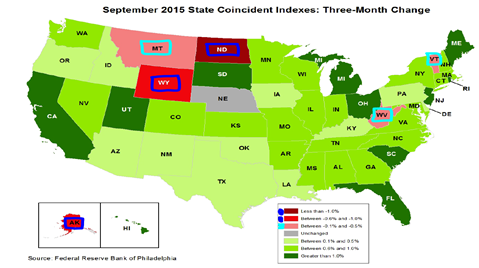
The Federal Reserve Bank of Philadelphia has released the coincident indexes for the 50 states for September 2015, indexes that measure near term growth. In the past month, the indexes increased in 41 states, decreased in six, and remained stable in three, for a one-month diffusion index of 70. Over the past three months, the indexes increased in 43 states, decreased in six, and remained stable in one, for a three-month diffusion index of 74.

image

Graph: Philadelphia Fed

This is firstly, a very good sign when 41 states show expanded growth. Secondly, the pink and red states are obviously coal or oil-driven economies, hence their downturn with the oil glut and falling energy prices in general may be temporary. Their economies were doing very well before energy prices declined, and in fact no states had negative growth as recently as December 2014, according to the Philadelphia Fed.

The coincident indexes combine four state-level indicators to summarize current economic conditions in a single statistic. They are nonfarm payroll employment, average hours worked in manufacturing, the unemployment rate, and wage and salary disbursements deflated by the consumer price index (U.S. city average). The trend for each state’s index is set to the trend of its gross domestic product (GDP), so long-term growth in the state’s index matches long-term growth in its GDP.

So the 10 fastest growing states (in dark green) that have grown more than 1 percent include California, Florida, South Carolina, and Maine. The worst performing states (red or pink) over the last 6 months are West Virginia (coal), North Dakota (oil), Alaska (oil), Wyoming, and Oklahoma (oil); obviously due to the drop in oil prices, as I’ve said.

California is an example of a fast growing state not dependent on the energy sector, due to Silicon Valley and its fast growing high tech industries. In fact, the California Legislative Analysts Office predicts something like a $10 billion budget surplus by the 2019-2020 fiscal year; maybe due to cheaper energy prices.

 image

Graph: CALAO

“As shown in the above graph, we project that operating surpluses will grow at a rate of between about $1 billion and $3 billion each year between 2014–15 and 2017–18, at which point we estimate that they will reach $9.6 billion under current laws and policies, says the LAO. “As the temporary taxes authorized by Proposition 30 phase out over several fiscal years near the end of our forecast period, we project that operating surpluses will remain stable as revenues and expenditures grow at similar rates. All this is premised upon our assumption of continuing economic growth through 2020.”

That is really the question, of course. Such projected growth means we remain in what I have called ‘goldilocks’ economic growth that is neither too hot (i.e. too much inflation), or too cold (too little inflation). And that will probably be up to Janet Yellen’s Fed, which is unwilling to raise interest rates this year, at least.

Harlan Green © 2015

Follow Harlan Green on Twitter: https://twitter.com/HarlanGreen
Posted in Consumers, Economy, Macro Economics, Weekly Financial News | Tagged , , , , , , , , , | Leave a comment

Best Existing-Home Sales Since 2007

Popular Economics Weekly

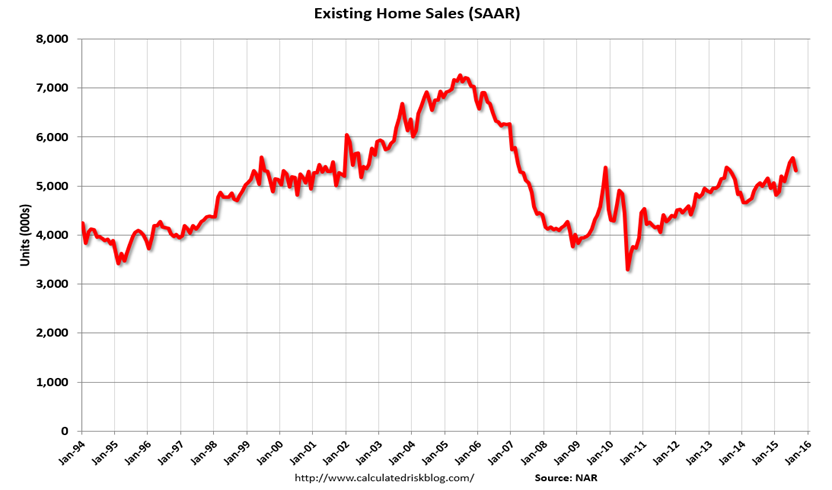
Total existing–home sales, which are completed transactions that include single–family homes, townhomes, condominiums and co–ops, increased 4.7 percent to a seasonally adjusted annual rate of 5.55 million in September from a slightly downwardly revised 5.30 million in August, and are now 8.8 percent above a year ago (5.10 million).

image

Graph: Calculated Risk

This is the best sales total since 2007. Total housing inventory at the end of September decreased 2.6 percent to 2.21 million existing homes available for sale, and is now 3.1 percent lower than a year ago (2.28 million). Unsold inventory is at a 4.8–month supply at the current sales pace, down from 5.1 months in August.

Lawrence Yun, NAR chief economist, says a slight moderation in home prices in some markets and mortgage rates remaining below 4 percent gave more households the confidence to close on a home last month. “September home sales bounced back solidly after slowing in August and are now at their second highest pace since February 2007 (5.79 million),” he said. “While current price growth around 6 percent is still roughly double the pace of wages, affordability has slightly improved since the spring and is helping to keep demand at a strong and sustained pace.”

“Despite persistent inventory shortages, the housing market has made great strides this year, backed by an increasing share of pent–up sellers realizing the increased equity they’ve gained from rising home prices and using it towards trading up or moving into a smaller home,” says Yun. “Unfortunately, first–time buyers are still failing to generate any meaningful traction this year.”

First–time buyers fell to 29 percent of sales in September after climbing to their highest share of the year in August (32 percent). This was the same as one year ago, when first–time buyers also represented 29 percent of all buyers.

It tells us several things. Firstly, it explains the surge in new-home construction, now up to 1.206 million units in September, and the rise in builder optimism to the highest level since 2005 and the beginning of the Great Recession.

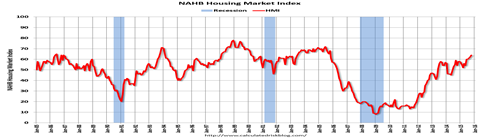
Econoday reported that a strong gain in current sales gave a major boost to the housing market index which, coming in at 64 for October, topped Econoday’s high-end forecast for the highest reading since 2005. Current sales, the most heavily weighted component, rose 3 points to 70, strength that points to further gains for new home sales. Pointing to gains for permits and for future sales is a striking 7 point gain to 75 in expected sales six months from now.

Still slightly sub-par traffic, unchanged at a sub-50 level of 47, isn’t holding down sales, though the lack of traffic does point to lack of participation from first-time home buyers. Otherwise, this report is a standout for the housing outlook and will raise expectations for strength in tomorrow’s housing starts & permits report, which did rise.

The increase in sales and optimism is understandable with 30-year conforming fixed rates still at 3.50 percent, and so-called Hi-Balance conforming fixed at 3.625 percent (up to maximum $625,500 amount for single home in most counties) in California for less than one origination point.

Harlan Green © 2015

Follow Harlan Green on Twitter: https://twitter.com/HarlanGreen

Posted in Consumers, Housing, housing market, Weekly Financial News | Tagged , , , , , , | Leave a comment

Pending Sales, Housing Construction Are Healthy

The Mortgage Corner

Most of the Federal Reserve Governors have announced they don’t support raising interest rates until sometime next, year, and only if worldwide economic growth picks up. Why? The US Dollar is so strong that it’s hurting exports, and China and emerging markets aren’t importing much these days anyway, which hurts our growth.

So housing is leading our ongoing recovery at the moment. For instance, the NAR’s Pending Home Sales Index continues to grow. Though pending home sales retreated in August, they remained at a healthy level of activity and have now risen year–over–year for 12 consecutive months, according to the National Association of Realtors. A modest increase in the West was offset by declines in all other regions.

Lawrence Yun, NAR chief economist, says even with the modest decline in contract signings, demand continues to outpace housing supply and elevate price growth in numerous markets. “Pending sales have leveled off since mid–summer, with buyers being bounded by rising prices and few available and affordable properties within their budget,” he said. “Even with existing–housing supply barely budging all summer and no relief coming from new construction, contract activity is still higher than earlier this year and a year ago.”

The national median existing–home price is expected to increase 5.8 percent in 2015 to $220,300. Yun forecasts total existing–home sales this year to increase 7.0 percent to around 5.28 million, about 25 percent below the prior peak set in 2005 (7.08 million). Actually, that has already happened with August sales already at a 5.31m rate, which has to continue to achieve his annual total.

I wrote last week that Janet Yellen’s Fed delayed their announced rate raise in September because their growth projections for the rest of 2015 and beyond have been downgraded, since inflation is still too low for sustained growth. And now both the Fed and IMF are projecting a worldwide economic slowdown.

The Fed staff’s view was already gloomy. A mistaken leak this summer by the U.S. central bank revealed, before the Fed’s June policy committee meeting, potential growth averaging just 1.74 percent over 2015-2020, according to the document now on the Fed’s website. That’s down from an average growth rate of 3.1 percent over the past 50 years. Ordinarily, those predictions would not be released for 5 years, says the Fed.

image

Graph: Calculated Risk

Even better housing news was that builder confidence in the market for newly constructed single-family homes rose three points in October to a level of 64 on the National Association of Home Builders/Wells Fargo Housing Market Index (HMI), according to the HAHB. This month’s reading is a return to HMI levels seen at the end of the housing boom in late 2005.

“With October’s three-point uptick, builder confidence has been holding steady or increasing for five straight months. This upward momentum shows that our industry is strengthening at a gradual but consistent pace,” said NAHB Chief Economist David Crowe. “With firm job creation, economic growth and the release of pent-up demand, we expect housing to keep moving forward as we start to close out 2015.”

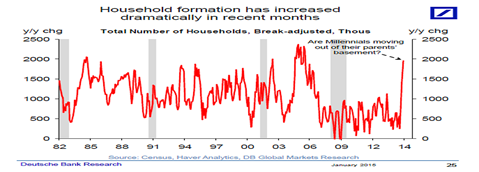
Housing construction has to catch up to more normal levels of approximately 1.2 million historical units per year from the current 1.09 million units. So there is still room for housing sales to grow, as household formation picks up (which is already happening, according to Deutsch Bank).

image

Graph: Deutsch Bank

This is even better news, needless to say.  Deutsche Bank predicts 1 million new households are being formed in 2015.  Millennials need dwellings as they continue to leave home and graduate from college. But much of new construction has to be in the moderate price ranges that we see in outlying areas. Even California has these regions in the southland and desert regions, mainly.

Harlan Green © 2015

Follow Harlan Green on Twitter: https://twitter.com/HarlanGreen
Posted in Consumers, Economy, Housing, housing market, Weekly Financial News | Tagged , , , , , , , , , | Leave a comment