A Different Federal Reserve

Financial FAQs

“Warsh would chart a new course that de-emphasizes the inflationary impact of factors such as supply chains and tariffs in favor of a views of inflation driven by government spending and the money supply.” Barron’s

Graph: Last Tech Age

The Federal Reserve is about to go through a regime change. Though President Trump initially appointed current Fed Chairman Jerome Powell, he hasn’t been happy with Powell’s leadership in his second presidential term because he wants easier credit conditions.

The Fed Governors had been resisting Trump’s pressure to lower interest rates until their rate cut in September, fearing the inflationary effects of Trump’s ongoing tariff wars, which have been boosting inflation.

So what does President Trump want to do? Move the goalposts, so that higher inflation is no longer the danger that the current Fed Board of Governors believe in maintaining their 2% inflation target. This is despite Trump’s promise to bring down inflation on “Day One”.

And Kevin Warsh, a bright young conservative economist who was just interviewed in Barron’s might be the next Fed President to do just that, along with other recently-appointed Fed Governors that are more Trump-friendly.

Do what? The fact that he is the husband of an Estee Lauder heiress worth $billions should tell us all we need to know. He, or someone as conservative, is being groomed as the new Fed Chair to be the protector of great wealth.

A summary of Warsh interview in Barron’s above quote tells us how. He is following the Republican line that most inflation comes from government overspending, for which government must print money. The cure is to cut the size of government in every way rather than raise taxes to pay for it.

So they would blame President Biden and Chairman Powell for the skyrocketing inflation that happened when the Fed printed $2.9 trillion in less than three months, bought roughly $543 billion worth of debt in a week, and reduced interest rates to nearly zero, according to Powell’s Britannica bio.

It caused the Fed’s extensive intervention in the U.S. economy after the COVID-19 crisis of 2020 because consumer inflation then skyrocketed to a high of 9% so that the Fed began to raise short term rates to bring down inflation.

Republicans then made it a cause celebre even though it’s now obvious Trump never intended to bring down inflation on “Day One” or any other day.

In fact, most of the government largesse (with Republicans’ bipartisan support) was meant to be spent on the pandemic recovery and modernization of the American economy, which would take at least a decade. And it would largely pay for itself over the longer term with higher economic growth.

The result was that the American economy recovered from the pandemic faster than the rest of the world and resulted in several quarters of +3% GDP growth.

But now Trump has raised tariffs back to 1934 levels that prevailed during the Great Depression without congressional approval, per Nobel Laureate Paul Krugman, which is raising the cost of everything for ordinary Americans.

And it was a major cause of the Great Depression because it restricted the flow of goods and services from other countries that were badly needed to recover from the Great Depression, just as the COVID-19 pandemic shut down the whole world’s economy and resulted in a brief recession.

So we know what a new Federal Reserve regime will look like with Kevin Warsh, or another such conservative at its helm. Less interference in private sector business, which means combatting inflation isn’t its only priority (therefore allowing higher inflation). And a smaller government paid for with lower taxes and fewer regulations, which means slashing federal government jobs as DOGE is still doing and cutting more public services that benefit all Americans.

It is following a frighteningly similar trajectory to the economy of the 1930s, the last time tariffs were this high, that led to the Great Depression. The question will be how long Americans will tolerate the corruption and favor-seeking that goes with protecting the wealthy, before looking for another Roosevelt who can make a New Deal for all Americans.

Harlan Green © 2025

Follow Harlan Green on Twitter: https://twitter.com/HarlanGreen

Posted in Consumers, COVID-19, Economy, Politics, Weekly Financial News | Tagged , , , , , , , , , , , , , | Leave a comment

Why Do Republicans Hate Immigrants?

Popular Economics Weekly

“The stakes are enormous if Republicans succeed in removing most of the estimated 11 million undocumented worker (only half of which are from Mexico and the Latin countries), and cut legal immigration in half, as they have promised to do. Economic growth will plummet, since it is mainly based on growth of the working age population, as well as labor productivity, which has also fallen since 2000.” Harlan Green Huffington Post

Huffington Post

I wrote in 2017 that for most of the past half-century, adults in the U.S. Baby Boom generation – those born after World War II and before 1965 – have been the main driver of the nation’s expanding workforce. But as this large generation headed into retirement, the increase in the potential labor force would slow markedly, and immigrants will play the primary role in the future growth of the working-age population (though they will remain a minority of it).

Republicans know this. Then why have Republicans and the Trump administration opposed immigration reform when there has never been enough American-born citizens to fill the labor rolls?  America has always had a labor shortage, which is why we have always been a land of immigrants.

A hint to the answer may be in the Gestapo-like tactics of the ICE raids to deport undocumented immigrants that is supposedly because they are supplanting lower-paid jobs that could be held by American citizens. (But that has never been the case, according to various studies that show American citizens won’t take such lower-paying jobs.)

The Republican Party has come to believe that it can only maintain power by preventing minorities from voting. They have suppressed voters in red states by limiting access to polls in minority districts and getting the Supreme Court to nullify parts of the Voting Rights Act that allowed federal government oversight of voting districts to ensure they weren’t over-gerrymandered to not accurately represent the population mix.

And now it is taking a darker turn with Trump’s callup of National Guard Troops to occupy Democratic cities, and threats to call any protests signs of an insurrection. Why have Republicans become so desperate that they now want to rule by decree?

One reason is the total growth of adults in the prime working ages of 25 to 64 over the next decade will be lower than the total in any single decade since the Baby Boomers began pouring into the workforce in the 1960s. The growth rate of working-age adults will also be markedly reduced, according to a PEW Research study.

The latest immigration trends studied by Josh Bivens of the Economic Policy Institute’s (EPI), a labor think tank, echoes the PEW analysis. Future economic growth will suffer if there aren’t enough new immigrants to supplant retiring workers in our adult labor workforce.

“The fast growth of the labor force between 1948 and 2007 and the slowdown since then can be explained by three big demographic changes: the Baby Boom that saw high fertility rates from the late 1940s to the mid-1960s and then a sharply lower fertility rate since, the steady influx of women into the labor force from 1948 until roughly 2000, and population aging that has seen the share of the over-65 population rise rapidly since 2007,” said Bivens.

We know that President Trump has always been racist; calling any immigrants that aren’t from white, Caucasian countries, such as Norway, criminals and the lowest of the low, hence his appeal to White Christian Nationalists.

Withholding funds from states and institutions in the name of suppressing DEI hiring is the Trump administration’s attempt to impoverish Americans in the blue states, as they have done in the red states. Their answer to the smaller workforce is the hope that AI and robots will fill the labor market void.

It is the reason for the huge rally in AI companies that is driving today’s stock market highs, driven by the hope that AI can replace our declining population.

The EPI’s Bivens says the labor force of the U.S.-born population will likely fall each year for the next decade. So what can we do to alleviate the hardships to come because Republicans have no answer for the half of our working population that will be replaced by AI, and already live month-to-month with no excess savings?

  • reductions in opioid use
  • reductions in incarceration rates
  • improvements in policies that support parents and caregivers
  •  substantial improvements in the pay and working conditions of jobs of the future (like caregiving jobs) to attract and retain workers

“Investments in today’s children are crucial for boosting the labor force participation of future generations, such as safety net policies that promote long-term health and educational investments. The future labor market benefits of investing in children are so strong in the long run that they may even be fiscally self-financing,” continues Bivens (Bold highlights are mine.)

This isn’t a pie-in-the-sky wish list but what can be done today, as it has been done in the past when such autocracies fail, as they always do.

Harlan Green © 2025

Follow Harlan Green on Twitter: https://twitter.com/HarlanGreen
Posted in Consumers, COVID-19, Economy, Politics, Weekly Financial News | Tagged , , , , , , , , , , , | Leave a comment

Why Are Americans So Unhealthy?

Financial FAQs

“Americans have just avoided another health care disaster in voting down the Senate’s ‘skinny’ Obamacare Repeal and Replace bill. Even though maintaining most of the taxes to pay for the Medicaid portion, it would have made insurance coverage prohibitively expensive for those older and sicker users with the removal of the private and employer mandate requirements that would cause younger and healthier people to leave the insurance markets.” Harlan GreenHuffington Post

Graph: Last Tech Age

I wrote this in 2017 when Republicans had almost succeeded in repealing Obamacare, the Affordable Care Act (ACA) during President Trump’s first term.

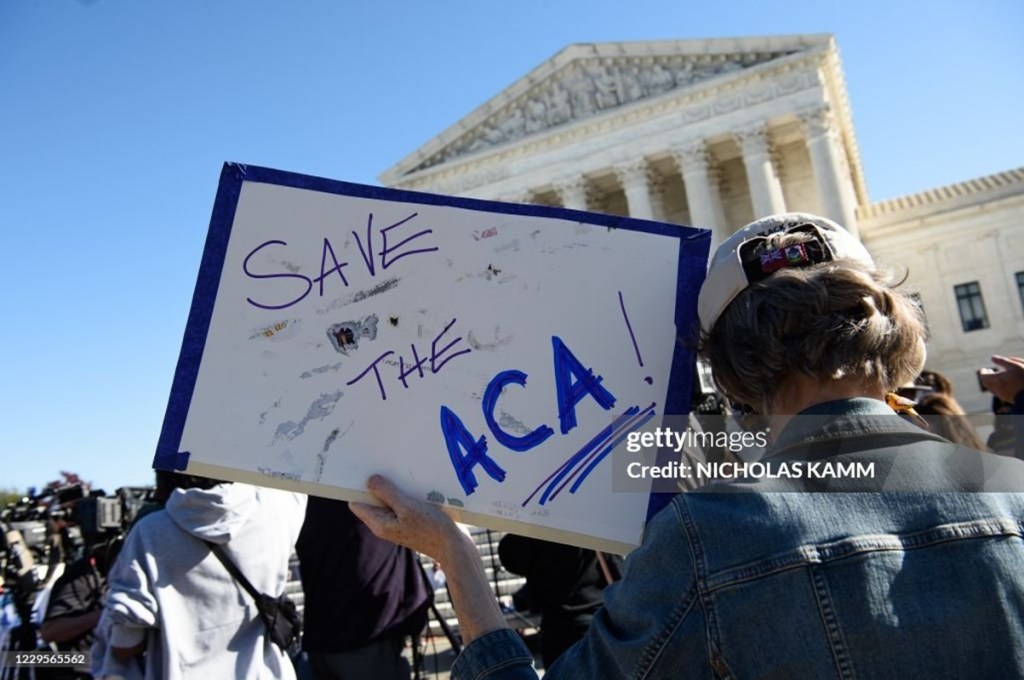
And they are at it again by refusing to negotiate their continuing resolution (CR) with Democrats that has caused the latest government shutdown. The Democrats have been asking to keep the Obamacare subsidies in the CR that help to finance the Obamacare premiums for older and sicker folks. It’s 2017 all over again.

Republicans couldn’t repeal Obamacare then but they are about to succeed this time by allowing the Obamacare subsidies that keep premiums affordable for the 30 million users to lapse at the end of this year.

Americans already have the worst health outcomes in the developed world, precisely because America is the only developed country—in fact, even of undeveloped countries—that doesn’t have universal coverage.

The result is one of the highest birth death rates, as well as diabetes, heart and other infectious disease rates—which are diseases usually associated with poorer, undeveloped countries and regions.

Why have Republicans been able to prevent a universal healthcare system that insures Americans that almost every other country in the world provides for their citizens?

I believe a major reason is because the U.S. has the highest income inequality in the developed world, as measured by the Gini Inequality Index that is accepted by economists. The U.S. is in 34th place of the 149 countries as ranked by the CIA’s World Factbook; with a Gini inequality index (41.8) like Bolivia and Djibouti. Whereas Denmark (29.3) and the European countries are at the top of equality rankings. The higher the index, the greater the gap between wealthy and poorer citizens of a country’s population.

Republicans have made more than 30 attempts to repeal President Obama signature achievement that required private health insurers to cover clients with existing illnesses for the first time.

A 2016 Commonwealth Club study listed Obamacare’s benefits. “…evidence indicates that the ACA has likely acted as an economic stimulus, in part by freeing up private and public resources for investment in jobs and production capacity. Moreover, the law’s payment and other cost-related reforms appear to have contributed to the marked slowdown in health spending growth seen in recent years.” Health care spending growth per person—both public and private—has slowed for five years.

· A number of ACA reforms, particularly related to Medicare, have likely contributed to the slowdown in health care spending growth by tightening provider payment rates and introducing incentives to reduce excess costs.

· Faster-than-expected economic growth and slower-than-expected health care spending have led to multiple downward revisions of the federal deficit and projected deficits.

· These trends have also been a boon to state and local government budgets, as job growth has improved state tax revenues while cost growth in health care programs has slowed. At the same time, expanding insurance to millions of people who were previously uninsured has supported local health systems and enhanced families’ ability to pay for necessities, including health care.

The benefits of Obamacare have become blindingly obvious since it was enacted in 2014, which for the first time required private health insurers to cover people with existing illnesses. So why have Republicans continued to oppose it?

Combined with RFK, Jr.’s cuts to the Department of Health and Human Services, Americans’ health outcomes will get even worse, making working Americans less productive.

Why shouldn’t affordable healthcare be a right for the poorest, as well as the wealthiest? Maybe even Republicans might begin to ask why?

Harlan Green © 2025

Follow Harlan Green on Twitter: https://twitter.com/HarlanGreen
Posted in Consumers, COVID-19, Politics, Weekly Financial News | Tagged , , , , | Leave a comment

Trump’s Art of the Steal

Popular Economics Weekly

“I put lipstick on a pig,” he said. “I feel a deep sense of remorse that I contributed to presenting Trump in a way that brought him wider attention and made him more appealing than he is.” He went on, “I genuinely believe that if Trump wins and gets the nuclear codes there is an excellent possibility it will lead to the end of civilization.” Author Tony Schwartz

Huffington Post

Tony Schwartz should have named his 1987 Trump biography “The Art of the Steal.” Trump’s main talent has been his ability to steal from others.

Trump’s Republican-engineered shutdown that allowed no Democratic input is his latest steal. Refusing to negotiate the continuing resolution (CR) with Democrats caused the shutdown, which will give Trump an excuse for even more job losses, cost-cutting and closing of government services, as well as essential services for social security, Medicare and Medicaid, while downsizing Obamacare benefits by as much as 70 percent.

It’s becoming obvious that Trump and his Republican accomplices are stealing as much as they can from the American people in his second term.

Americans are paying in a big way. Higher everyday prices to begin with for groceries, energy, and even higher interest rates. The Federal Reserve has been reluctant to lower interest rates until now because of the rising inflation levels due to the rising costs from Trump’s tariffs.

His thievery has been well documented, lately in Susanne Craig and Russ Buettner’s best seller, Lucky Loser, How Donald Trump Squandered His Father’s Fortune and Created the Illusion of Success, that documents the con artist he really is.

“Donald Trump came to be imbued with a host of attributes that speak to how we confer status and admiration in modern America. Our awe of celebrity. Our tendency to conflate the trappings of wealth with expertise and ability. Our eagerness to believe people of apparent status will not lie to us. Our inability to distinguish the fruits of hard work from those of sheer luck.”.

It’s a sordid tale, because he has stolen from friends and foes alike. So why have Republicans allowed the wholesale stealing, who were once the party of President Nixon that signed the U.S. Environmental Protection Agency into law?

It is only possible because of the intentional dumbing down of a political party that came to rely on conspiracy theories instead of facts, according to conservative journalist Matt Lewis in his 2016 best-seller, Too Dumb to Fail:

“Somewhere between Ronald Reagan’s “A Time for Choosing” speech in support of Barry Goldwater in 1964 and the most recent government shutdown, the conservative movement became neither conservative nor a movement. Hijacked by the divisive and the dumb, it now finds itself hostage to emotions and irrational thinking.”

Why? Because it became the party of the super wealthy that could only maintain power by hiring the “divisive and dumb”, as Trump has done, to run the Republican Party and his government.

Trump’s recommendation of bleach injections and the downplay of mask use to treat the COVID-19 pandemic were an attempt to dumb down his electorate, and many MAGA supporters died because of it.

Author Tony Schwartz attributed Trump’s inability to focus on any subject for more than a few minutes to his short attention span. But the chaos that followed disguised his real intentions; to steal from whomever he is dealing with, such as the students of his faux Trump University, the workers he never paid that built his Atlantic City casinos, multiple bankruptcies, and his own charitable foundation that he milked for his own use.

Why would one political party become so devoid of basic truths that they follow a man who says climate change is a hoax while experiencing more frequent floods, fires, tornadoes and rising sea levels with their own eyes?

How many more jobs will be lost, more natural disasters and pandemics and even recessions will occur, before the Republican Party base realizes they’ve been conned and want to become part of a democratic system again in which all are treated equally under the law and our constitution?

It’s what wannabe dictators do to stay in power, if their electorate will allow it.

Harlan Green © 2025

Follow Harlan Green on Twitter: https://twitter.com/HarlanGreen
Posted in Consumers, COVID-19, Economy, Politics, Weekly Financial News | Tagged , , , , , , , , , , | Leave a comment

It’s Trump’s Economy Now–Part II

Financial FAQs

“Despite the strong economic growth we saw in the second quarter, this month’s release further validates what we’ve been seeing in the labor market, that U.S. employers have been cautious with hiring. ADP

That’s one way to characterize the U.S. Economy. But it’s Trump and his Republicans’ economy now, no matter what happens next. The government shutdown that began on October 1 will have little effect on economic growth, according to most economists.

ADP, a private payrolls processor, reported September was the third month in a row that businesses eliminated jobs. Small and medium-sized companies lost jobs, while companies with more than 500 employees gained 33,000 jobs, mostly in healthcare and education.

It is the only employment report we may have for a while, since the Labor Department says that September’s official US unemployment report will be postponed because of the government shutdown.

Conferenceboard.org

The decline in job availability is beginning to affect consumers, reports the Conference Board’s Consumer Confidence Survey:

“Consumer confidence weakened in September, declining to the lowest level since April 2025,” said Stephanie Guichard, Senior Economist, Global Indicators at The Conference Board. “Consumers’ assessment of business conditions was much less positive than in recent months, while their appraisal of current job availability fell for the ninth straight month to reach a new multiyear low.”

It’s no wonder the Federal Reserve finally cut interest rates two weeks ago for the first time since last December, and two more cuts are scheduled for this year.

The government shutdown will make things even worse, since employees will be either furloughed, or must work without pay in its most essential functions like the military, social security, Medicare, and Medicaid.

About 750,000 federal employees could be furloughed every day, according to a Congressional Budget Office estimate out Tuesday, cited my MarketWatch’s Victor Reklaitis. “The number of furloughed employees could vary by the day because some agencies might furlough more employees the longer a shutdown persists and others might recall some initially furloughed employees,” the CBO said.

Yet inflation continues to rise with the latest Personal Consumption Expenditures (PCE) core index reporting a 2.9% inflation rate, up from its low of 2.4% in the spring.

And the manufacturing sector has been contracting for seven months, reports the Institute for Supply Management (ISM). The index of future sales orders has declined in seven of the last eight months.

“We believe we are in a stagflation period where prices are up but orders are down due to tariff policy, and, again, customers are not willing to pay the higher prices, so they are just not buying,” said one executive in the transportation sector, also cited by MarketWatch.

So, the stagflation term is rearing its ugly head once again. What a time for another government shutdown as happened during Trump and Republicans first term! It lasted 37 days and this one will create even more uncertainty with the looming tariffs.

Guess what that means for more stagflation? Fewer jobs mean consumers have less purchasing power. They have continued buying until now because most tariffs are still being negotiated, hence the current effective tariff rate is still in the teens.

But sooner or later Trump will reach agreement on the tariffs, since they still must be ratified by congress.

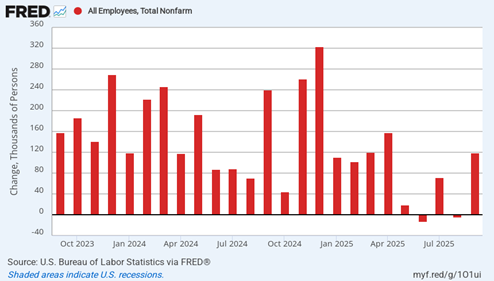
The Trump administration has really little room to maneuver to keep the U.S. economy from shrinking. It has added an average of just 25,000 new jobs a month from May through August after the benchmark revisions, marking the weakest four-month stretch since 2010, ignoring the COVID-19 era.

We don’t need another prolonged government shutdown or another Great Recession, in other words. Nobody wins.

Harlan Green © 2025

Follow Harlan Green on Twitter: https://twitter.com/HarlanGreen
Posted in Consumers, COVID-19, Economy, Politics, Weekly Financial News | Tagged , , , , , , , , , , , | Leave a comment

Why the Housing Shortage?

The Mortgage Corner

How can we recover from our housing shortage that has resulted in record homelessness and a lack of affordability for many young households?

FREDhousingstarts

There haven’t been enough homes built to satisfy prospective home buyers for a decade—from the end of the housing bubble until 2020, thanks to the oversupply generated during housing bubble and Great Recession, as can be seen in the FRED graph of housing construction dating from 2000 (large gray bar is the Great Recession).

Builders are still not building enough homes to keep up with population growth while builder confidence remains stagnant in the face of weaker homebuyer demand. August housing starts declined 8.5% month-over-month to a seasonally adjusted annual rate of 1.307 million units, according to the latest data released by the U.S. Census Bureau. 

Builders had been constructing 1.6 to over 2 million new housing units until January 2006 at the height of the housing bubble because they thought they had prospective homebuyers with adequate incomes and credit that could afford the purchases.

But lax regulations and supervision during the GW Bush administration by the U.S. Treasury and Alan Greenspan’s Federal Reserve allowed for anyone to qualify to buy a home with so-called liar loans that had artificially low start rates. The housing bubble burst when Greenspan finally began to raise interest rates to combat the rising inflation, which caused a massive defaulting of the liar loans.

More than one million new households per year are still being formed but it wasn’t until 2013 that more than one million new units were being built again. And 8.7 million jobs were lost during the Great Recession, compounding the problem of affordability.

In a word, builders must build more affordable homes. At one time 40% of existing-home sales were entry-level, first-time homebuyers that could afford to buy a home. It’s just 28% in the latest sales report by the National Association of Realtors (NAR).

Existing-home sales remained essentially the same in August, ticking down by 0.2% from July, according to the National Association of REALTORS® Existing-Home Sales Report. Existing-home sales are also hurting because of the lack of affordable financing with the 30-year fixed rate mortgage still above 6%.

“Record-high housing wealth and a record-high stock market will help current homeowners trade up and benefit the upper end of the market. However, sales of affordable homes are constrained by the lack of inventory,” Yun added. “The Midwest was the best-performing region last month, primarily due to relatively affordable market conditions. The median home price in the Midwest is 22 percent below the national median price.”

We got to the housing shortage largely because of bad politics and a record income inequality for working Americans that must be reversed. The best programs that subsidize building for more affordability include zoning for more units in areas near transportation centers, a state and local government mandate, and more funding set aside for affordable housing, such as tax breaks to builders for building more low income and first-time homebuyers.

Biden did that during his four years with his Housing Action Plan, that subsidized affordable housing as well as rents, but alas, much of that funding has been cut by Trump’s DOGE team in the name of downsizing government.

And a brisk summary of what Trump is doing to HUD, the government’s main housing administrator, is summarized by Shelterforce:

· HUD relaunched its website in late March, after removing 90 percent of its content, under the pretext of improving user experience. Research publication archives, recent press releases, and much more were removed, and a religious quote of Secretary Turner’s was placed on the homepage.

· HUD Headquarters to Be Sold: With an April 15 executive order intended to “restore common sense to Federal office space management by freeing agencies to select cost effective facilities and focus on successfully carrying out their missions for American taxpayers,”

The Trump administration is doing almost nothing at the federal level for housing in its quest to slash government spending in order to fund the Trump tax cuts.

Why must the federal government do better to support housing? The GW Bush administration set housing construction back a decade by causing the housing bubble with lax regulation and too easy credit conditions.

The American people will want a government that better serves Americans’ housing needs to make up for the years of mismanagement and neglect. Otherwise, the dream of many Americans for more affordable housing will forever be out of reach.

Harlan Green © 2025

Follow Harlan Green on Twitter: https://twitter.com/HarlanGreen

Posted in Consumers, COVID-19, Economy, Housing, housing market, Politics, Weekly Financial News | Tagged , , , , , , , , , , | Leave a comment

Why the Recession Calls?

Financial FAQs

The Conference Board’s Index of Leading Economic Indicators (LEI), a read on actual economic data rather than an opinion survey like its Consumer Confidence Index, has called a recession. Its Consumer Confidence Index is hinting at the same.

conferenceboard.org

“Besides persistently weak manufacturing new orders and consumer expectation indicators, labor market developments also weighed on the Index with an increase in unemployment claims and a decline in average weekly hours in manufacturing. Overall, the LEI suggests that economic activity will continue to slow.” Conference Board

Is that really a surprise? President Trump is attempting to bring back a Gilded Age that prevailed in the early1900s by steering as much business to his oligarchs and himself as possible while deregulating and slashing government programs that protect all Americans, and damaging the job market by rounding up working immigrants.

The LEI forecasts business activity six months ahead had been forecasting a possible recession for some time, but now says it is here.

Why? “Its widespread weakness among the LEI’s components and a negative growth rate over the past six months triggered the recession signal in August,” said Justyna Zabinska-La Monica, Senior Manager, Business Cycle Indicators, at The Conference Board.

The graph shows where its LEI components dropped below the horizontal red line at the start of past recessions. The blue line of the LEI graph shows the two recoveries since the 2001 and 2008-09 recessions and its current low in August (gray bars are recessions).

Consumers weren’t much happier in the confidence survey. The Expectations Index—based on consumers’ short-term outlook for income, business, and labor market conditions—decreased by 1.2 points to 74.8. Expectations remained below the threshold of 80 that typically signals a recession ahead, said Stephanie Guichard, Senior Economist, Global Indicators at The Conference Board. .

The LEI is nowhere near past recessionary lows, per the graph, and stock indexes are at record highs. Then why does its LEI keep predicting an incipient recession?

It partly because consumers’ appraisal of current job availability declined for the eighth consecutive month in the survey, and it is the most heavily weighted LEI component. We now know what consumers must have already been intuiting. There were -991,000 fewer jobs created over the past year and one half in the Labor Department’s just released benchmark revision.

Chairman Powell has been hinting of late that the Fed has no good choices in deciding whether to ease credit conditions by cutting interest rates or not, because the job market is deteriorating and inflation has been rising since April 2 when Trump first announced his tariff war on the world.

The September rate cut of -0.25% was the first since last December and Powell said there will probably be two more cuts by the end of the year to support more job creation.

Why the job weakness? There were just 22,000 hires and the unemployment rate rose to 4.3% in August. The hires were in the Leisure/Hospitality, Education and Health sectors. Manufacturing, Construction, Professional Services and Government (state and local included) lost jobs. And initial jobless claims for workman’s comp have risen to a three-year high.

There was widespread weakness among most of the LEI’s components, such as fewer hours worked. Businesses had in effect stopped adding workers, not knowing what the final tariff rates may be. This is enough to shake consumers’ confidence in their future job prospects.

Add to that the demoralizing effect on hourly wage earners in construction, manufacturing that require manual labor and mostly employ immigrants, the target of the ICE raids.

The financial markets are more focused on how to spend the record profits of big business, hence the hysteria over AI, TikTok, IPOs, and the irrational exuberance that has driven the stock indexes to record highs.

In fact, it’s what is looking increasingly like the last Gilded Age where a small group of the extra-wealthy partied while the US economy as a whole declined prior to World War One.

It can be reversed, of course, if Republicans have enough cajónes to stop Trump from weakening almost every sector of the American economy that creates growth, from consumer and environmental protections, healthcare, to national security (e.g., NATO by alienating our allies).

Consumers are extremely on edge and their behavior determines what happens next. The poorest largely live in the red states. Republicans will be the most affected.

Harlan Green © 2025

Follow Harlan Green on Twitter: https://twitter.com/HarlanGreen

Posted in Consumers, COVID-19, Economy, Politics, Weekly Financial News | Tagged , , , , , , , , , , , | Leave a comment

The Too Dumb to Fail Party

Popular Economics Weekly

“In November 2021, (President Biden) signed a $1 trillion infrastructure bill. Then, in August 2022, he signed the CHIPS bill, which invests $280 billion in semiconductor manufacturing. Days later, he signed the Inflation Reduction Act, which invests $370 billion in clean energy and related infrastructure, along with provisions designed to reduce health care costs.” Washington Monthly

perseusbooks.com

How sad it is that the Republican Party, the party of Lincoln and the Emancipation Proclamation that abolished slavery, has become the party of a wannabe dictator Too Dumb to Fail in the words of author and journalist Matt Lewis, that imprisons immigrants of the wrong race and color.

It is a party that has enabled Donald Trump to rely on mostly illegal executive orders, including the tariffs, instead of working with congress as did President Biden to pass his very successful ‘New, New Deal’ legislation that is modernizing the American economy for many years to come.

Trump’s inability to negotiate with congress had as much to do with the Republican Party that had already become the party of the wealthy who owned or stewarded America’s biggest businesses.

“In the run-up to the 2016 election, Trump listed his top 10 legislative priorities as part of his “Contract with the American Voter”,continued the Washington Monthly, which included repeal of the Affordable Care Act, infrastructure investment, harsher prison sentences for immigration violations, and full funding of a border wall to be reimbursed by Mexico. None of that reached his desk.”

That is because the Republican Party learned early they could only hold power if they succeeded in dumbing down their electorate; even before Ronald Reagan’s ‘trickle-down” economic schemes in 1980 that cut the taxes of the wealthiest and social benefits for the rest of Americans to pay for the budget deficits incurred by his tax cuts.

Journalist Matt Lewis said it in his 2016 best-seller, Too Dumb to Fail: “Somewhere between Ronald Reagan’s “A Time for Choosing” speech in support of Barry Goldwater in 1964 and the most recent government shutdown, the conservative movement became neither conservative nor a movement. Hijacked by the divisive and the dumb, it now finds itself hostage to emotions and irrational thinking.

“It became more personal and less principled — more flippant and less thoughtful. It became mean. It became lazy. It became its own worst enemy. Where once the movement drew strength from its desire to win the philosophical argument over its adversaries, it now wears its lost causes as badges of honor — expected, like Coriolanus, to show these battle scars as a means of vote mongering.”

I said in a 2015 Huffington Post blog the result of one political party’s choice to replace scientific facts with conspiracy theories had begun to permeate the American educational system as well.

According to the National Research Council, only 28 percent of high school science teachers consistently follow the National Research Council guidelines on teaching evolution, and 13 percent of those teachers explicitly advocate creationism or “intelligent design,” said Psychology Today in a very damning 2014 article entitled, Anti-Intellectualism and the Dumbing Down of America:

“After leading the world for decades in 25-34 year olds with university degrees, the U.S. is now in 12th place,” said Psychology Today. “The World Economic Forum ranked the U.S. at 52nd among 139 nations in the quality of its university math and science instruction in 2010. Nearly 50 percent of all graduate students in the sciences in the U.S. are foreigners, most of whom are returning to their home countries.”

Even in 2015 Republican candidates were echoing the Republican platform that advocated the deportation of all illegal aliens, would abolish or cripple whole government agencies (including the Environmental Protection Agency and CDC), shut down the federal government over Planned Parenthood funding, and maintain that a fertilized egg is a viable human being that can’t be aborted.

Nothing has changed, in other words, except Republicans elected Donald Trump, who has suffered from what psychologists and psychiatrists have called a Narcissistic Personality Disorder his whole life, whose father had given him more than $400 million over the years to support his various business ventures, according to the NYTimes.

The results of his father’s wealth are well documented in the book titled, “Lucky Loser: How Donald Trump Squandered His Father’s Fortune and Created the Illusion of Success, written by NYTimes reporters Susanne Craig and Russ Buettner. Such largesse resulted in a string of business failures and seven bankruptcies.

Now Donald Trump and the Republican Party that supports him have taken the dumbing down of Americans to a whole new level by firing the best and brightest public officials and cutting their research budgets that protect Americans from future pestilences and environmental disasters.

History says the truth will out, eventually. A man and party that is too dumb to fail, that can only rule with lies and deception, must eventually fail. But when, and at what cost to Americans’ health and safety?

Harlan Green © 2025

Follow Harlan Green on Twitter: https://twitter.com/HarlanGreen
Posted in Consumers, COVID-19, Economy, Politics, Weekly Financial News | Tagged , , , , , , , , , , | Leave a comment

Retail Sales Continue Decline

Financial FAQs

“Advance estimates of U.S. retail and food services sales for August 2025, adjusted for seasonal variation and holiday and trading-day differences, but not for price changes, were $732.0 billion, up 0.6 percent (±0.4 percent) from the previous month, and up 5.0 percent (±0.5 percent) from August 2024.” Census.gov

FREDretailsales

The financial markets rallied because the US Census Bureau’s August retail sales report showed consumers were still shopping and might save the holiday season for retailers. But it couldn’t hide the damage from the tariff wars.

The FRED graph of retail sales shows the huge monthly fluctuations in sales due to the tariff uncertainty. January retail sales (i.e., when Trump was sworn in) plunged 1%. In March it rose 1.3% to get ahead of Trump’s April 2 retaliatory tariffs. Then it plunged for two more months before Trump announced the 90-day reprieve, after which it rose 1% before beginning the monthly sales decline to 0.6% in August.

And retail sales are reported without inflation factored in as I highlighted above. Today’s inflation rate is 3% and climbing, so ‘real’ retail sales on average have been increasing just 2%. And this must be in large part because of the decline in the number of shoppers.

The latest unemployment report showed there has been a -313,000 decline year-over-year in the working population mostly thanks to the ICE roundup of undocumented immigrants. Although less than 100,000 undocumented immigrants have been incarcerated by ICE, there are millions more hiding in their homes or elsewhere to avoid being arrested.

Also factor in the job decline from the Bureau of Labor Statistics (BLS). The economy created half as many new jobs from early 2024 to early 2025 in its national benchmark reassessment of the job market—a loss of -991,000 jobs—amounting to about 71,000 new jobs a month instead of the previously reported 147,000.

This decline will eventually figure into economic growth as well, since consumers power two-thirds of GDP growth.

The financial markets are in a relief rally because the tariffs (i.e., import taxes) aren’t yet stopping consumers from shopping and eating. New car and car parts sales increased in August for the third month in a row. Car shoppers have been buying more vehicles than usual for the past several months to avoid anticipated price increases in the coming months as tariffs take full effect.

Americans have also spent more on certain items that are heavily imported, such as coffee and car parts, whose prices have risen (coffee prices are up 15%, thanks in part to Trump’s 50% tariffs in Brazilian imports).

Another critical category, restaurant sales, advanced 0.7% last month. Overall restaurant spending is up 6.6% in the past three months compared with the same three-month period one year ago.

People buy more prepared food when they are confident in the economy. They eat out less when they are anxious about their jobs, according to MarketWatch’s Jeffry Bartash, a commentator I like to follow.

Wednesday’s Federal Reserve rate cut could power more consumer spending and higher inflation. Many upper income earners are willing to pay the higher tab, but not the bottom 20 percent of income earners.

And the bottom 20 percenters are in the main Trump supporters. So, I for one hope the Supreme Court disallows many of the tariffs-by-executive order Trump is foisting on the rest of the world. They are counter-productive, since their goal is not really economic. They are tax increases on all Americans to aid in paying down the huge debt incurred from Trump’s gigantic transfer of wealth in his big beautiful tax bill.

So he will use any excuse to levy them. The 50 percent Brazilian tariff is an excellent example, since Brazil imports more from the US than it exports. Trump has said he did it to attempt to influence the outcome of convicted felon buddy Jair Bolsonaro’s trial. It didn’t work, of course, as Bolsonaro is going to jail.

Trump wants to be a dictator, and a major trait of dictators is the accumulation of enormous wealth, not to “lift all boats” as JF Kennedy once said, but their own boats while the rest of US sink.

Harlan Green © 2025

Follow Harlan Green on Twitter: https://twitter.com/HarlanGreen
Posted in Consumers, COVID-19, Economy, Politics, Weekly Financial News | Tagged , , , , , , , , | Leave a comment

Are We in a Recession?

Financial FAQs

“The preliminary estimate of the Current Employment Statistics (CES) national benchmark revision to total nonfarm employment for March 2025 is -911,000 (-0.6 percent), the U.S. Bureau of Labor Statistics reported today. BLS.gov

FREDunemployment

There was a lot of consternation when the Bureau of Labor Statistics (BLS) reported that the economy created half as many new jobs from early 2024 to early 2025 in its national benchmark reassessment of the job market— amounting to about 71,000 new jobs a month instead of the previously reported 147,000, said MarketWatch’s Jeffry Bartash.

Did it mean we are already in a recession, the BLS doesn’t know what it is doing, and Trump was right to fire the BLS head because he didn’t like the numbers? No, but it does show the job slowdown began last fall during the Biden administration, not in January.

Why? Because the Federal Reserve had been holding their Fed Funds rate at 5.33% for too long, more than one year until September 2024, before dropping it suddenly -0.5% to 4.83%, then two more times in November and December 2024 to 4.33%, where it’s been ever since.

The PCE inflation rate had fallen to 2 percent, so it looked like inflation had been conquered, and it was hurting consumer spending. Did the Fed see the possibility of a recession?

The National Bureau of Economic Research (NBER that calls recessions) put up the above FRED unemployment rate graph on its website as a simplified picture of what has happened to the unemployment rate during past recessions since 1980 (gray bars are recessions).

Past economic downturns seem to have begun when the unemployment rate rose to 5% and was as high as 10% during the 1981 and 2008 recessions and took months, even years in some cases, to end. The Great Recession of 2008-09 lasted more than 1.5 years, which made it the worst economic downturn since the Great Depression with the loss of nearly 8.9 million jobs, per the BLS.

COVID-19 was the exception to other recessions because the unemployment rate was already 3.5% when it hit and quickly returned to 3.5% when the pandemic ended, indicating the US economy was still fully employed and COVID-19 caused a temporary slowdown in growth. Since then, the unemployment rate has risen steadily to 4.3% in August.

This doesn’t really answer the recession question, since the NBER also looks at other economic numbers, such as real GDP (inflation adjusted), real personal income minus government transfers, real consumer spending, and industrial production, which are still growing, but for how much longer?

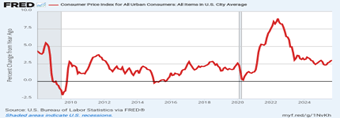
This is while the tariffs are in fact causing higher inflation. The BLS reported its Consumer Price Index is up to 2.9% annually from 2.3% in April before the tariffs kicked in, a sure sign that the tariffs have raised overall prices.

“The Consumer Price Index for All Urban Consumers (CPI-U) increased 0.4 percent on a seasonally adjusted basis in August, after rising 0.2 percent in July, the U.S. Bureau of Labor Statistics reported today. Over the last 12 months, the all items index increased 2.9 percent before seasonal adjustment.” BLS.gov

The financial markets rallied on the latest inflation news, apparently believing the Fed will finally begin to cut interest rates in September—for the first time since last December.

Lower interest rates are badly needed to counter the high tariff rates that are slowing economic growth, if SCOTUS allows them in Trump’s appeal. They are causing the loss of $trillions to the US auto makers. GM reports it will have lost $1trillion in profits this year if the tariffs remain.

But what if SCOTUS disallows them? The NYtimes cites Alex Durante, a senior economist at the Tax Foundation. “You would be doing a tax cut. You would be undoing a tax increase and you would provide relief to lots of businesses and consumers.”

Wouldn’t that be a better outcome? It would lower import costs and should mean lower prices overall.

We know that upcoming rate cuts by the Federal Reserve are now guaranteed even with the latest inflation reports because of the weak job numbers. This will surely spark higher near-term consumer spending and capital expenditures due to the reduction in borrowing costs, but for how long if the tariffs are allowed, as I said?

Harlan Green © 2025

Follow Harlan Green on Twitter: https://twitter.com/HarlanGreen

Posted in Consumers, COVID-19, Economy, Politics, Weekly Financial News | Tagged , , , , , , , , | Leave a comment