What About Another ‘Roaring Twenties’?

Financial FAQs

IMF

Could we be returning to the Roaring Twenties; I mean a Roaring 2020’s as the coronavirus pandemic winds down this summer, leading to an explosion of growth after the worst recession since the Great Depression and worst pandemic since the Spanish Flu pandemic of 1918-19?

The International Monetary Fund is hinting at such with its latest forecast. Its World Economic Outlook forecast projects global growth at 5.5 percent, which is higher than their previous forecast in October. Global growth will moderate to 4.2 percent growth in 2022, said the IMF in its latest blog post.

“In our latest World Economic Outlook forecast we project global growth for 2021 at 5.5 percent, 0.3 percentage point higher than our October forecast, moderating to 4.2 percent in 2022. The upgrade for 2021 reflects the positive effects of the onset of vaccinations in some countries, additional policy support at the end of 2020 in economies such as the United States and Japan and an expected increase in contact-intensive activities as the health crisis wanes. However, the positive effects are partially offset by a somewhat worse outlook for the very near term as measures to contain the spread of the virus dampen activity.”

The economy grew 42 percent during the 1920s, and the United States produced almost half the world’s output because World War I destroyed most of Europe, say the historians. New construction almost doubled, from $6.7 billion to $10.1 billion. Aside from the economic recession of 1920-21, when by some estimates unemployment rose to 11.7 percent (due to the Spanish flu pandemic lockdowns), unemployment in the 1920s never rose above the natural rate of around 4 percent.

We should see a similar rebound from the damage done by COVID-19. The global economy contracted by 3.5 percent in 2020, the worst peacetime contraction since the Great Depression of the 1930s. But it was a short-lived recession, since the economy was at full employment last February at the onset of the pandemic that has killed 2,143,861 worldwide and 421,670 in the U.S., according to the John Hopkins coronavirus tracking center.

“Much now depends on the outcome of this race between a mutating virus and vaccines to end the pandemic, and on the ability of policies to provide effective support until that happens,” said IMF chief economist Gita Gopinath, in a blog post accompanying the updated forecast.

The Biden administration is making a good start with its program to vaccinate 100 million in the first 100 days by opening mass vaccination sites and mandating the increased production of PPE and vaccines with the Defense Production Act.

But the IMF emphasizes this must be a global effort, as poorer countries don’t have as ready access to the PPE supplies and vaccines, which means they will continue to harbor virus outbreaks that could prolong the pandemic.

“The international community must act swiftly to ensure rapid and broad global access to vaccinations and therapeutics,” says the IMF, “to correct the deep inequity in access that currently exists…The health and economic arguments for this are overwhelming. The new virus strains are a reminder that the pandemic is not over until it is over everywhere, and we estimate that faster progress on ending the health crisis will raise global income cumulatively by $9 trillion over 2020–25, with benefits for all countries, including around $4 trillion for advanced economies.”

Need we say more on what is needed to bring us a  new Roaring ‘20’s’?  Let us hope we can keep the peace as well, since the Great Depression and a second World War followed the original Roaring Twenties.

Harlan Green © 2020

Follow Harlan Green on Twitter: https://twitter.com/HarlanGreen

Posted in COVID-19, Keynesian economics, Weekly Financial News | Leave a comment

Housing Construction Soars

The Mortgage Corner

Calculated Risk

As much housing is being built today as in 2006 at the height of the housing bubble. What is going on? People want to move away from cities, where fear of COVID-19 contagion is highest, and work from home to replace empty offices as the digital economy makes over white collar working places.

This looks like a more permanent transformation because Fifth Generation, 5G networks will begin to kick in with up to 40 times faster transmission speeds for all kinds of AI connections that will ultimately be able to power factories, as well as homes and offices.

Privately-owned housing starts in December were at a huge seasonally adjusted annual rate of 1,669,000, said the Census Bureau. This is 5.8 percent above the revised November estimate of 1,578,000 and is 5.2 percent above the December 2019 rate of 1,587,000.

Building permits were authorized at an even higher rate. Privately-owned housing units authorized by building permits in December were at a seasonally adjusted annual rate of 1,709,000. This is 4.5 percent (±1.4 percent) above the revised November rate of 1,635,000 and is 17.3 percent (±1.8 percent) above the December 2019 rate of 1,457,000.

This is while total existing-home sales, https://www.nar.realtor/existing-home-sales, completed transactions that include single-family homes, townhomes, condominiums and co-ops, decreased 2.5% from October to a seasonally-adjusted annual rate of 6.69 million in November, according to the NAR. But sales in total rose year-over-year, up 25.8% from a year ago (5.32 million in November 2019).

“Home sales in November took a marginal step back, but sales for all of 2020 are already on pace to surpass last year’s levels,” said Lawrence Yun, NAR’s chief economist. “Given the COVID-19 pandemic, it’s amazing that the housing sector is outperforming expectations.”

The demand for more housing will further increase with the expanding 5G networks, as described in a World Economic Forum 2020 White Paper.

“5G will be critical because it will enable unprecedented levels of connectivity, upgrading 4G networks with five key functional drivers: superfast broadband, ultra-reliable low latency communication, massive machine-type communications, high reliability/availability and efficient energy usage. Together, these defining features will transform many sectors, such as manufacturing, transportation, public services and health.”

The WEF estimates that significant economic and social value can be generated by enabling cases activated by 5G. “An IHS Markit study estimates that $13.2 trillion in global economic value will be made possible by 2035, generating 22.3 million jobs in the 5G global value chain alone.”

There is another problem that needs to be tackled, however. The upcoming surge in evictions is on temporary hold until March. Low-income renters are most affected, as a UC Berkeley housing study found more than one million renter households in California alone had lost their jobs. And the US Census Bureau estimated that 1.9 million US tenants were behind on their rents last December.

The moratorium does not cancel out owed back rents, however. But California tenants and landlords are in line to receive some $2.6 billion in rental assistance from the coronavirus aid package approved last month, reports the LA Times. That and the additional unemployment benefits and cash aid will do much to cushion the losses incurred by both tenants and landlords from the pandemic.

Adequate housing will be problem for years to come, in other words, so building new homes will solve only part of the problem.

Harlan Green © 2020

Follow Harlan Green on Twitter: https://twitter.com/HarlanGreen

Posted in Consumers, COVID-19, Economy, Housing, housing market, Weekly Financial News | Leave a comment

A ‘New’ New Deal

Popular Economics Weekly

FREDgdpgrowth

Even before his inauguration, the Biden administration announced its ‘new deal’ for a new administration doing government’s business as we recover from the worst recession since the Great Depression of the 1930s.  Yes, this is the worst of the worst as the FRED graph dating from 1950 shows.  Only government at such a time of need can provide aid to businesses and working Americans.

President Biden’s first priority will be closing the income inequality gap that has persisted since the 1970s when most of the fruits of increased productivity and technology were kept by the owners of capital rather than paid to their employees.

This is when we have just witnessed one of the consequences of that inequality, as I said last week—the storming of the US Capital by extreme-right terrorists bent on overthrowing our duly-elected government that was verifying the electoral victory of President-elect Joe Biden and Vice president-elect Kamala Harris.

Here is what the Biden administration is proposing to Congress:

  • Direct payments of $1,400 to most Americans, bringing the total relief to $2,000, including December’s $600 payments
  • Increasing the federal, per-week unemployment benefit to $400 and extending it through the end of September
  • Increasing the federal minimum wage to $15 per hour
  • Extending the eviction and foreclosure moratoriums until the end of September
  • $350 billion in state and local government aid
  • $170 billion for K-12 schools and institutions of higher education
  • $50 billion toward Covid-19 testing
  • $20 billion toward a national vaccine program in partnership with states, localities and tribes
  • Making the Child Tax Credit fully refundable for the year and increasing the credit to $3,000 per child ($3,600 for a child under age 6)

It is a lot to ask of American taxpayers with more than $3 trillion already appropriated to keep the United States from sinking even deeper into a long term depression.  Cash payments and extended unemployment benefits will boost incomes, while raising the minimum wage will double what was a starvation-level minimum wage to $2,580/month with a 40-hour week that barely rectifies the disparity.

Less obvious is the child tax credit that makes childcare more affordable as well as improving K-12 education.  A huge income and opportunity gap has yawned between high school and college educated citizens, which has caused an alarming increase in “deaths of despair” from alcohol and drug abuse among high school-educated, unemployed males that have suffered from the pandemic.

Incoming Treasury Secretary Janet Yellen at her confirmation hearing said, “It will be my core focus if I’m confirmed as Treasury secretary to focus on the needs of American workers, those living in cities and rural areas, and to make sure that we have a competitive economy that offers good jobs and good wages.”

The coronavirus pandemic has reinforced the need for an economic science that recognizes the needs of all Americans.  As many have said before, we are all poorer if we ignore the plight of the poorest.

Harlan Green © 2020

Follow Harlan Green on Twitter: https://twitter.com/HarlanGreen

Posted in COVID-19, Economy, Keynesian economics, Politics, Weekly Financial News | Leave a comment

Economy Has Room to Expand

Financial FAQs

Calculated Risk

The latest Job Openings and Labor Turnover Survey (JOLTS) report showed that small businesses are hurting the most during this pandemic with even outdoor dining banned in some regions, such as Southern California, while new hires and job openings were basically unchanged in November.

It looks like most businesses are holding their breath over future plans until there is more certainty about COVID-19 outcomes.

The number of job openings was little changed at 6.5 million on the last business day of November, the U.S. Bureau of Labor Statistics reported today. Hires were little changed at 6.0 million (deep blue line on graph) while total separations increased to 5.4 million. Within separations, the quits rate (yellow line) was unchanged at 2.2 percent while the layoffs and discharges rate (red bar) increased to 1.4 percent.

Details include the fact that layoffs increased 295,000 to nearly 2.0 million in November. Hiring rose 67,000 to 5.979 million. The hiring rate was steady at 4.2 percent. A separate report showed a sharp decline in confidence among small businesses in December.

Hires increased in professional and business services (+175,000) and mining and logging (+13,000). Hires decreased in accommodation and food services (-73,000), other services (-67,000), and information (-43,000). The number of hires was little changed in all four regions as we said.

AppleMobility

What is still missing from this picture? Apple mobility tracks the number of Google map requests, which is a proxy for frequency of travel (except for regular commuters). It confirms people are traveling approximately 50 percent less, another so-called high frequency indicator of economic trends, which is why entertainment, leisure and hospitality jobs have declined as indicated in the most recent unemployment report.

Also, the NFIB Small Business Optimism Index declined 5.5 points in December to 95.9, falling below the average Index value since 1973 of 98. Nine of the 10 Index components declined and only one improved. Owners expecting better business conditions over the next six months declined 24 points to a net negative 16 percent, said the press release.

“This month’s drop in small business optimism is historically very large, and most of the decline was due to the outlook of sales and business conditions in 2021,” said NFIB Chief Economist Bill Dunkelberg. “Small businesses are concerned about potential new economic policy in the new administration and the increased spread of COVID-19 that is causing renewed government-mandated business closures across the nation.”

The beige-book report, prepared by the Federal Reserve on information collected by regional Fed banks on or before Jan. 4, showed modestly higher growth in most parts of the country but found that two districts reported no change in activity (St. Louis and Kansas City) while two noted a decline (New York and Philadelphia).

So there is no inherent reason business and consumer confidence might return to pre-pandemic levels once the vaccinations begin to reach the general population. Most economists predict a rebound by the beginning of fall when schools are scheduled to fully open again.

Much will depend on what kind of legislation a Democratic congress will pass—including a higher minimum wage, expanding Obamacare with a public option, and a national reconstruction program that will begin to upgrade our badly obsolescent infrastructure and create millions of good-paying jobs.

Harlan Green © 2020

Follow Harlan Green on Twitter: https://twitter.com/HarlanGreen

Posted in COVID-19, Economy, Keynesian economics, Politics, Weekly Financial News | Leave a comment

Job Losses Mount From COVID-19

Popular Economics Weekly

MarketWatch

Total nonfarm payroll employment declined by 140,000 in December, and the unemployment rate was unchanged at 6.7 percent, the U.S. Bureau of Labor Statistics reported today.

“The decline in payroll employment reflects the recent increase in coronavirus (COVID-19) cases and efforts to contain the pandemic. In December, job losses in leisure and hospitality and in private education were partially offset by gains in professional and business services, retail trade, and construction.”

The U.S. economy shed jobs for the first time in eight months in December, suggesting a significant loss of momentum that could temporarily disrupt the recovery from the pandemic. The economy has recovered 12.4 million of the 22.2 million jobs lost during the pandemic. Employment at bars and restaurants tumbled 372,000, accounting for three quarters of the drop.

And now the pandemic’s toll is 4,000 deaths  per day, which shows that without central planning to slow its spread the toll will only get worse. It is one more example of why government must be part of the solution to today’s problems, especially in protecting Americans’ health.

COVIDTrackingProject

I believe the coronavirus pandemic is a major reason why this shift to more effective government is coming with the January 20 change of administrations, as even the vaccination rollout has lacked coordination that only the federal government can provide states in charge of disbursing the vaccinations.

Operation “Warp Speed” is not reaching recipients-especially essential workers and the elderly—at anything approaching a warp speed.

The US does lead countries in providing COVID vaccinations as of January 7 with 5.92 million doses administered and China is second with 4.5 million doses as of Dec. 31, according to the World Data, a worldwide data collecting service. But this is a far cry from the HHS and the CDC prediction that 20 million doses should have been administered by Dec. 31.

According to Steven Rattner, a former Treasury official interviewed on MSBNC’s Morning Joe, Trump is the first president to have lost more jobs than he gained during his term since Herbert Hoover at the beginning of the Great Depression.

And businesses will remain shuttered and a majority of consumers continue to stay home until the pandemic has been brought under control.  Any guesses on when that will happen? 

Harlan Green © 2020

Follow Harlan Green on Twitter: https://twitter.com/HarlanGreen

Posted in Consumers, COVID-19, Economy, Keynesian economics, Politics, Weekly Financial News | Leave a comment

Finding a Path to Greater Equality

Popular Economics Weekly

CenterforEquitableGrowth

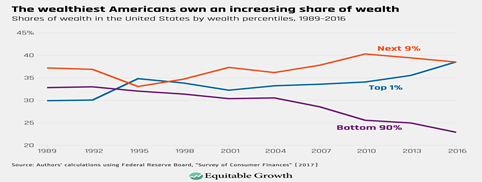
Economic theory is finally catching up to political theory in showing policymakers how to right the record income inequality—worst in the developed world—that has plagued working Americans since the 1970s.

It is about time when we have just witnessed one of the consequences of that inequality—the storming of the US Capital by domestic terrorists bent on overthrowing our duly-elected government that was in the midst of verifying the electoral victory of President-elect Joe Biden and Vice president-elect Kamala Harris.

Economists are modernizing New Deal Keynesian economics that brought us out of the Great Depression and World War II, the economics that says government must be part of the solution to today’s problems, including the protection of workers’ rights, the environment, and keeping America strong and prosperous for all Americans, not just the 1 percent.

For instance, a recent MIT research project confirmed that Four decades ago, for most U.S. workers, “…the trajectory of productivity growth diverged from the trajectory of wage growth. This decoupling had baleful economic and social consequences: low-paid, insecure jobs held by non-college workers; low participation rates in the labor force; weak upward mobility across generations; and festering earnings and employment disparities among races that have not substantially improved in decades.”

Much of that divergence was caused by trickle-down economics, a political theory from the Reagan era that rationalized making the wealthy wealthier with the teaser that some of that wealth might trickle down to the 80 percent, which are wage and salary earners that power most economic activity.

While new technologies have contributed to these poor results that promote labor-saving AI and robotics, researchers are now saying these outcomes were not an inevitable consequence of technological change, nor of globalization, nor of market forces. Similar pressures from digitalization and globalization affected most industrialized countries, and yet their labor markets fared better.

It was, “…the decay of unions and collective bargaining, the explicit hardening of business (by the Business Roundtable formed in the 1970s), the popularity of right-to-work laws (mainly in conservative red states), and the fact that the wage lag seems to have begun at about the same time as the Reagan presidency all pointing he same direction: the share of wages in national value added may have fallen because social bargaining power of labor has diminished,” said the MIT study.

And therein lies the solution that only government policymakers and legislators can enact by expanding government healthcare, raising the minimum wage, more progressive taxation, making college education more affordable, and expanding workers’ collective bargaining rights that red state right-to-worker laws have drastically curtailed.

This list of economic can-dos has been obvious to any professional economist that has not been defending the one percent’s right to most of the wealth created by working Americans. Free market ideologies have held sway for the past 40 years—not based on empirical research—that advocated unfettered economic growth by any means, and enshrined maximized profits as the greatest good, while ignoring business ethics and a morality that promotes caring for our brothers and sisters.

The economic disparities are growing due to the pandemic, as I reported earlier. In April, nearly 12 million low-wage workers were laid off, while some 6 million workers who were earning between $18 to $29 an hour were laid off. By November, all but 400,000 of those workers earning $18 to $29 an hour had returned to work, Raj Chetty, a Harvard economics professor, has said. Meanwhile, some 6 million workers who earned less than $13 an hour have yet to return to work.

Now the coronavirus pandemic has reinforced the need for an economic science that recognizes we are all in this together. As many have said before now, we are poorer if we ignore the plight of the poorest.

Harlan Green © 2020

Follow Harlan Green on Twitter: https://twitter.com/HarlanGreen
Posted in COVID-19, Keynesian economics, Politics, Weekly Financial News | Leave a comment

Finding the Path to Greater Prosperity!

Popular Economics Weekly

CenterforEquitableGrowth

Economic theory is finally catching up to political theory by showing policymakers how to right the record income inequality—worst in the developed world—that has plagued working Americans since the 1970s.

It is about time when we have just witnessed one of the consequences of that inequality—the storming of the US Capital by domestic terrorists bent on overthrowing our duly-elected government that was in the midst of verifying the electoral victory of President-elect Joe Biden and Vice president-elect Kamala Harris.

Economists are modernizing New Deal Keynesian economics that brought us out of the Great Depression and World War II, the economics that says government must be part of the solution to today’s problems,; including the protection of workers’ rights, the environment, and keeping America strong and prosperous for all Americans, not just the one percent.

For instance, a recent MIT research project confirmed that Four decades ago, for most U.S. workers, “…the trajectory of productivity growth diverged from the trajectory of wage growth. This decoupling had baleful economic and social consequences: low-paid, insecure jobs held by non-college workers; low participation rates in the labor force; weak upward mobility across generations; and festering earnings and employment disparities among races that have not substantially improved in decades.”

Much of that divergence was caused by trickle-down economics, a political theory from the Reagan era that rationalized making the wealthy wealthier with the teaser that some of that wealth might trickle down to the 80 percent, which are wage and salary earners that power most economic activity.

While new technologies have contributed to these poor results that promote labor-saving AI and robotics, researchers are now saying these outcomes were not an inevitable consequence of technological change, nor of globalization, nor of market forces. Similar pressures from digitalization and globalization affected most industrialized countries, and yet their labor markets fared better.

It was, “…the decay of unions and collective bargaining, the explicit hardening of business (by the Business Roundtable formed in the 1970s), the popularity of right-to-work laws (mainly in conservative red states), and the fact that the wage lag seems to have begun at about the same time as the Reagan presidency all pointing he same direction: the share of wages in national value added may have fallen because social bargaining power of labor has diminished,” said the MIT study.

And therein lies the solution that only government policymakers and legislators can enact by expanding government healthcare, raising the minimum wage, more progressive taxation, making college education more affordable, and expanding workers’ collective bargaining rights that red state right-to-worker laws have drastically curtailed.

This list of economic can-dos has been obvious to any professional economist that has not been defending the one percent’s right to most of the wealth created by working Americans. Free market ideologies have held sway for the past 40 years—not based on empirical research—that advocated unfettered economic growth by any means, and enshrined maximized profits as the greatest good, while ignoring business ethics and a morality that promotes caring for our brothers and sisters.

The economic disparities are growing due to the pandemic, as I reported earlier. In April, nearly 12 million low-wage workers were laid off, while some 6 million workers who were earning between $18 to $29 an hour were laid off. By November, all but 400,000 of those workers earning $18 to $29 an hour had returned to work, Raj Chetty, a Harvard economics professor, has said. Meanwhile, some 6 million workers who earned less than $13 an hour have yet to return to work.

Now the coronavirus pandemic has reinforced the need for an economic science that recognizes we are all in this together. As many have said that is even truer today, we are poorer if we ignore the plight of the poorest.

Harlan Green © 2020

Follow Harlan Green on Twitter: https://twitter.com/HarlanGreen
Posted in Economy, Keynesian economics, Politics, Weekly Financial News | Leave a comment

Deaths of Despair, Part II—The Wall of Ignorance

Answering the Kennedys’ Call

NBER.org

Something can be done about the “Deaths of Despair” among the non-college educated white males that Anne Case and Angus Deaton have been writing about that I discussed in Deaths of Despair, Part I, and has been exacerbated by the current COVID-induced recession.

But first we must counteract the wall of ignorance that has blocked efforts to ameliorate their suffering to date, a wall that was built on the denial of scientific studies from epidemiologists and the Trump administration’s own experts at the CDC and other NIH entities.

The Trump administration is responsible for the misinformation campaign that has denied the efficacy of mask-wearing and testing to control the pandemic, for starters. And, harsh as it may sound, the Republican Party is largely responsible for the dumbing down of its electorate with its continual denial of scientific knowledge that confirms the basic facts for global warming and even evolution.

The coronavirus pandemic is wreaking havoc among the less-educated Americans, according to Case and Deaton, who wrote about the growing divide between those with a four-year college degree and those without in their recent book, Deaths of Despair and the Future of Capitalism.

“The rise in deaths that we describe is concentrated almost entirely among those without a bachelor’s degree, a qualification that also tends to divide people in terms of employment, remuneration, morbidity, marriage, and social esteem – all keys to a good life,’ said Case and Deaton.”

The economic disparities are growing due to the pandemic. In April, nearly 12 million low-wage workers were laid off, while some 6 million workers who were earning between $18 to $29 an hour were laid off. By November, all but 400,000 of those workers earning $18 to $29 an hour had returned to work, Raj Chetty, a Harvard economics professor, has said. Meanwhile, some 6 million workers who earned less than $13 an hour have yet to return to work.

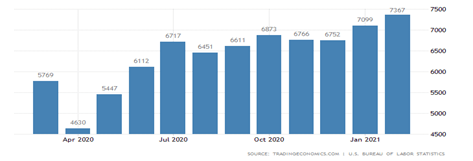
The pandemic and recession were associated with a 10 percent to 60 percent increase in deaths of despair above already high pre-pandemic levels, according to a working paper by Casey Mulligan, professor of economics at the University of Chicago. He found these non-COVID excess deaths are disproportionately experienced by men aged 15-55, per the above NBER graph.

“Mortality in 2020 significantly exceeds what would have occurred if official COVID deaths were combined with a normal number of deaths from other causes,” he wrote. “The demographic and time patterns of the non-COVID excess deaths (NCEDs) point to deaths of despair rather than an undercount of COVID deaths. The flow of NCEDs increased steadily from March to June and then plateaued. They were disproportionately experienced by working aged men, including men as young as aged 15 to 24.”

Because drug epidemics tend to follow major episodes of “social upheaval and destruction”, we can expect more of the same economic disparities and consequent social unrest that has followed, unless something is done.

And that requires a major educational effort to bolster K-12 public education institutions that have been purposely downplayed by Trump’s own Department of Education, in favor of private, for-profit learning, even transferring funds earmarked for public education to for-profit programs.

The high wall of ignorance that has built up over more than a decade of denial of scientific knowledge by one political party is a wall that needs to be torn down to even begin to mitigate the social unrest among those suffering from Deaths of Despair and rebuild their faith in democratic processes.

Harlan Green © 2020

Follow Harlan Green on Twitter: https://twitter.com/HarlanGreen
Posted in Consumers, Economy, Politics, Weekly Financial News | Leave a comment

The Rising Deaths of Despair Amid COVID-19

Financial FAQs

ProjectSyndicate

Evidence is beginning to mount that the Trump administrations half-hearted response to the COVID-19 pandemic was intentional. And we are seeing the results in mounting suicide and drug abuse rates among the populace most affected—the lesser educated—according to Professors Anne Case and Angus Deaton

President Trump confessed to Bob Woodward in February that he knew the COVID-19 virus was more deadly than the flu, even though he many times publicly asserted the opposite.

On March 13, Trump rolled out what was supposed to be a nationwide set of drive-thru testing facilities sited at thousands of “big box” retailers and backed by a website created by “7,000 engineers from Google.”

But Trump did not follow the announcement with an actual system of either testing or case tracing. The website that he cited did not exist. And the testing facilities themselves never went past a handful of poorly supplied locations mismanaged by Jared Kushner and his college buddies.

It was an intentional decision made by Trump and his White House staff to allow COVID-19 to ravage the country because he believed it would be to his political advantage.

Professor Timothy Snyder, author of the best-selling On Tyranny asserted in a recent Christine Amanpour interview that the policy of herd immunity was also a political decision. Trump was hoping that more voters in the blue states with minorities and where infection rates were highest at the time would be incapacitated.

The result of these policies of inaction backfired, as we now know. The red states and rural regions where the less educated live and that are the mainstay of his supporters became as infected.

Anne Case and Angus Deaton have confirmed these results in a Project-Syndicate article. The coronavirus pandemic is wreaking havoc among the less-educated Americans, according to Case and Deaton, who wrote about the growing divide between those with a four-year college degree and those without in their recent book, Deaths of Despair and the Future of Capitalism.

“The rise in deaths that we describe is concentrated almost entirely among those without a bachelor’s degree, a qualification that also tends to divide people in terms of employment, remuneration, morbidity, marriage, and social esteem – all keys to a good life,’ said Professors Case and Deaton; Deaton a 2015 Nobel Prize-winner in economics.

Even with the beginning of vaccinations, the two-thirds of Americans in service-oriented jobs in leisure and hospitality, entertainment, travel and transportation will still see a worsening situation, whereas white-collar gig workers that can work online won’t be as affected.

Even in the future when vaccinations will reduce the infection and death rates, “The same cannot be said for deaths of despair (suicide, accidental drug overdose, and alcoholic live disease), of which there were 164,000 in 2019, compared with the past “normal” US level of roughly 60,000 per year (based on data from the 1980s and early 1990s),” write Case and Deaton.

COVIDTrackingProject

It is the less-educated workers that will be most affected with our inadequate employer-based, exorbitantly expensive health care system that only works for those with a job. And because drug epidemics tend to follow major episodes of “social upheaval and destruction”, say Case and Deaton, we can expect more of the same economic disparities and consequent social unrest in the future, unless something is done about it.

Through November 2020, the economy lost 9.37 million jobs, writes Calculated Risk.   By April 2020, the economy had lost 21.7 million jobs, and then added back 12.33 million jobs by November.  But job growth has slowed over the last few months, even as stocks have soared. 

Let us therefore hope that we set up future job growth, educational and social welfare policies that address and bring down the horrific deaths of despair totals, so that we do not see a resurgence of political opportunism evinced by Trump and the Republican Party that has cost so many lives and livelihoods.

Harlan Green © 2021

Follow Harlan Green on Twitter: https://twitter.com/HarlanGreen
Posted in Economy, Politics, Weekly Financial News | Leave a comment

What Happened to Our Leaders?

Answering the Kennedys’ Call

Wikipedia

President-Elect Biden is 78 years old, and will be the oldest President in our history when he is sworn in. He continues to uphold the recent age levels of POTUS set by Donald Trump (74), Presidents Eisenhower, Reagan and GHW Bush that were all over 70 by the time they left office.

The NY Times Ian Philbrick reports that we have the oldest leaders in the western developed countries at a time when the age of elected leaders in other developed countries is falling. 

“Since 1950, the average age of heads of government in the three dozen member countries of the Organization for Economic Cooperation and Development has steadily declined, from above 60 years old to around 54 today. The average O.E.C.D. national leader is now two decades younger than Mr. Trump — and almost a quarter century younger than Mr. Biden.”

Why does that matter? I believe it is a major reason for the slow slide into populism and the dysfunctional democracy we currently endure without the increased social and economic benefits enjoyed by citizens of other western developed countries with younger and more forward-looking leaders.

The slide into a federal government led by President Donald Trump that is barely able to function has resulted in our inability to manage the new coronavirus pandemic that is infecting and killing a record number of Americans.

We seem to crave the appearance of strong leadership even if he or she eschews the main requirement of leadership, namely the necessity to keep our 50 different states plus territories, each with its own system of governance, safe and united in common purpose.

“Since 1950, the average age of heads of government in the three dozen member countries of the Organization for Economic Cooperation and Development has steadily declined, from above 60 years old to around 54 today. The average O.E.C.D. national leader is now two decades younger than Mr. Trump — and almost a quarter century younger than Mr. Biden.”

The Trump administration’s one legislative accomplishment was the 2017 Tax Cut and Jobs Act that resulted in the first $1 trillion annual budget deficit in our history, while Republicans failed in more than 80 attempts to repeal Obamacare.

Our federal government has become out of touch with younger generations in particular that are almost unanimous in wanting better schools, universal health care, a higher minimum wage, and other benefits now enjoyed by all other developed countries.

Pew Research Center survey conducted in January of this year found that about a quarter of registered voters ages 18 to 23 (22 percent) approved of how Donald Trump is handling his job as president, while about three-quarters disapproved (77 percent). Millennial voters were only slightly more likely to approve of Trump (32 percent) while 42 percent of Gen X voters, 48 percent of Baby Boomers and 57 percent of those in the Silent Generation approved of the job he is doing as president.

The Times also points out that the average age of Congress has also trended upward for decades. Nancy Pelosi, the House speaker, is 80; Mitch McConnell, the Senate majority leader, is 78. The Supreme Court’s nine justices average above 67. Mr. Trump’s cabinet averages over 60, among the oldest in the O.E.C.D.

Even younger Republicans follow Democrats in wanting more benefits in the PEW survey. Gen Z Republicans, for instance, are much more likely than older generations of Republicans to desire an increased government role in solving problems, says PEW.

“About half (52%) of Republican Gen Zers say government should do more, compared with 38% of Millennials, 29% of Gen Xers and even smaller shares among older generations. And the youngest Republicans are less likely than their older counterparts to attribute the earth’s warming temperatures to natural patterns, as opposed to human activity (18% of Gen Z Republicans say this, compared with three-in-ten or more among older generations of Republicans).”

Looked at in economic terms, our slide into extreme conservatism instituted by Ronald Reagan and the Republican Party with their credo of lower taxes and an unregulated, free market capitalist ideology, is the reason we have a federal government out of touch with most Americans.

Whereas our European cousins enjoy universal health care, higher minimum wages, and shorter work weeks for the same pay; all brought about by keeping their governments young and able to adapt to even a COVID-19 pandemic.

So where are the leaders to come that will bring in programs and policies that will govern for future generations, rather than cater to the populace of the past?

Harlan Green © 2020

Follow Harlan Green on Twitter: https://twitter.com/HarlanGreen

Posted in Economy, Politics, Uncategorized | Leave a comment