Popular Economics Weekly
All the talk that QE3 is about to end centers on when the Fed believes inflation will become a problem. Fed Chairman Bernanke doesn’t believe inflation will be a problem, as long as wages aren’t growing. And wages can’t even keep up with inflation at present, as he said in his latest congressional Q&A.
“There’s a distinction between prices being high and prices rising…(cost of living) isn’t going up, it’s high, it’s not going up. In other words, real wages are going down because even though inflation is very low wages have been growing slower than inflation.”
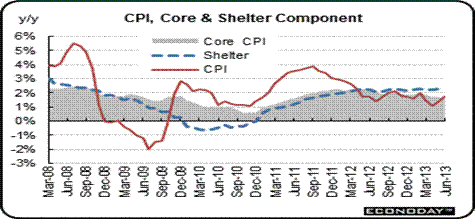
The consumer price index is substantially below the Fed’s target inflation rate of 2 to 2.5 percent, which is the level that shows sustained economic growth, according to the Fed. The reason for the spike in monthly CPI was energy prices, and the summer driving season. By major components outside the core, energy spiked 3.4 percent, following a partial rebound of 0.4 percent in May. Gasoline surged 6.3 after no change in May. The food component rebounded 0.2 percent, following a dip of 0.1 percent in May.
The Conference Board’s Index of Leading Economic Indicators (LEI) also mirrors the ongoing weak economic growth. The weak portions were in stagnant stock prices and building permits, while the positive contributors were higher long term interest rates (which predicts future growth), the leading credit index (more debt), lower average weekly initial claims for unemployment insurance, higher average consumer expectations for business conditions and manufacturers’ new orders for consumer goods and materials. The factory workweek was a zero contribution.

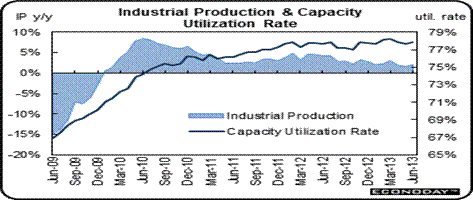
Right now, therefore, industrial production seems to be the main culprit, rather than the service sector, because of subdued exports. The Empire State and Philly Fed manufacturing surveys were slightly positive, but overall production has trended downward.
So we can say that inflation should not be a problem for some time. Real inflation could even be years away, given that overall household incomes have shrunk 10 percent since 2000. That means the decline in wages and salaries is the real problem holding back sustainable domestic growth. Then the question becomes how to gain back some of that wealth?
Harlan Green © 2013
Follow Harlan Green on Twitter: www.twitter.com/HarlanGreen


 Populareconomicsblog
Whether they admit it or not, QE is a means of currency debasement. Inflation happens because of QE and it robs money from people through the inflation. Suddenly government debt is proportionally less, and since corporations profits grow in line with inflation, their share of the money also becomes more. The only ones left are the suckers on the ground, who end up being robbed from. The way to make the money more evenly shared again, is to kill the quantitative easing.
LikeLike
QE is a way of shifting wealth back to the middle class that tax policies have shifted to the 1%…the problem is stimulating more demand, and since govt spending gridlocked, Federal Reserve is only tool to stimulate growth….greater growth is only way to pay down debt!
LikeLike
There is no inflation, my friend, so QE isn’t debasing anything. The only reason we have healthy exports is because $US competitive, which means our goods are cheaper than those of other countries, which means lower value to the dollar. The ‘suckers’ are those who voted in the Repubs who shifted the wealth to their Wall St. buddies!
LikeLike
YOU MEAN WHEN THERE IS INFLATION, SUCH AS IN 2005, WHICH LED TO HOUSING BUBBLE. But right now this is NO INFLATION, which is reason for QE, and will be reason until incomes/spending pick up demand for more, which will then create more jobs.
LikeLike