
Popular Economics Weekly
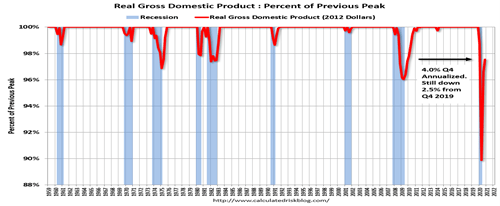
This Real Gross Domestic Product graph dating from 1959 shows that the US economy in 2020 had its worst contraction since the end of World War II. No surprise given we have the worst COVID-19 infection rates and death totals in the world.
But that doesn’t dim predictions of economists for a ‘Roaring 2020’s’ this year, if we get the economic aid that harks back to a more progressive, New Deal, era when government was the solution.
It has taken the coronavirus pandemic to end 40 years of trickledown economics that benefited corporate owners rather than their workers. Raising the minimum wage, childcare payments, and aid to state and local governments will benefit those lower-paid, essential workers that are not invested in the surging stock and bond markets.
The advance estimate of real fourth quarter GDP was 4 percent when adjusted for inflation after the record Q3 jump of 33 percent. But overall GDP still shrank by 3.5 percent last year due to the pandemic shutdowns, which gives an inkling of the task ahead for President Biden in crafting a recovery plan from the worst pandemic in 100 years.
Economist James K. Galbraith said recently in Project-Syndicate, “Biden has correctly billed his plan an “American Rescue Plan,” rather than as a “recovery” or “stimulus” program. If successful, the package will stem the pandemic, stave off a variety of social calamities, and prevent the collapse of state and local government services. Economic reconstruction is important; but it is a separate objective that can be advanced in a second package.”
Biden is asking for $1.9 trillion just to rescue the American economy. If Democrats can pass it without too many cuts, as well as an infrastructure bill that will create millions of new jobs, economic forecasters are predicting even higher GDP growth this year—upwards of 5 to 6 percent.
The New York Fed’s Nowcast predicts a 6.5 percent jump in 2021 Q1 growth. Most of its prediction came from an increase in manufacturers’ production and inventories of durable goods, which have been building as nondefense capital goods orders have been on a tear, reports the US Census Bureau.
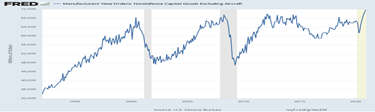
Businesses are ramping up investments in capital goods that will ensure future growth. Business orders for durable goods such as tools, appliances and new cars rose in December for the eighth month in a row, signaling that companies are preparing for a stronger U.S. economic rebound this year.
Why the optimism when Republicans resisted new spending on anything but tax cuts, border walls and defense over the past four years? The COVID-19 pandemic has brought this second Gilded Age to a crashing halt, as I said.
The party of Roosevelt won the election with the massive support of younger generations that want what citizens of the other developed countries enjoy—universal health care, a higher minimum wage, better social services, public education, paid vacations—the list goes on and on.
Harlan Green © 2020
Follow Harlan Green on Twitter: https://twitter.com/HarlanGreen


 Populareconomicsblog