
U.S. Already in Recession?

Financial FAQs

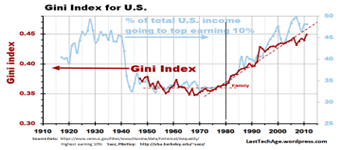
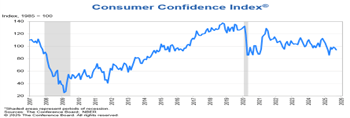
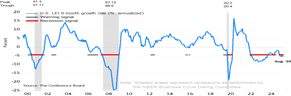
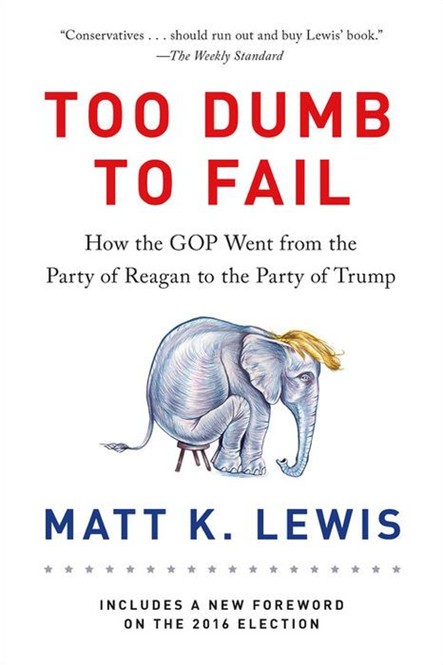
The Conference Board Leading Economic Index® (LEI) for the US ticked down by 0.1% in May 2025 to 99.0 (2016=100), after declining by 1.4% in April (revised downward from –1.0% originally reported). The LEI has fallen by 2.7% in the six-month period ending May 2025, a much faster rate of decline than the 1.4% contraction over the previous six months.

ConferenceBoard

Are we already in a recession? The Fed doesn’t think so, but the Conference Board’s Index of Leading Economic Indicators conjectures we will be in a recession soon, if not already. The LEI is a tricky read because it looks at indicators spanning longer periods, hence its name.

The Conference Board’s index of Leading Economic Indicators is now signaling that a recession might have begun in May 2025, though Fed Chair Jerome Powell and the Fed Governors don’t think so. Powell said after last Wednesday’s FOMC meeting that interest rates will stay on hold for now.

“The economy is in solid shape, so the labor market is not crying out for a rate cut,” said Powell. (Therefore, the Fed has time to “learn” more about the economy.)

However, Justyna Zabinska-La Monica, Senior Manager, Business Cycle Indicators, at The Conference Board, said “With the substantial negatively revised drop in April and the further downtick in May, the six-month growth rate of the Index has become more negative, triggering the recession signal,”

The Conference Board creates several surveys, including the Consumer Confidence Index, so it puts the most weight on consumer expectations for business conditions, which has been dropping sharply in its surveys.

And the ISM’s New Order Index as well as private housing building permits have continued to decline as well, thanks to the Fed’s intransigence on reducing interest rates further.

So the LEI is hedging its bets just as the Fed is doing by taking a longer wait and see. “The Conference Board does not anticipate recession, but we do expect a significant slowdown in economic growth in 2025 compared to 2024, with real GDP growing at 1.6% this year and persistent tariff effects potentially leading to further deceleration in 2026.

Federal Reserve President Chris Waller, one of the Fed Governors, is a dissenter: “I don’t think [the inflation impact of Trump’s tariffs] is going to be that big,” Waller said in an interview on CNBC. “I think we have room to bring [rates] down in July (the next FOMC meeting)”

Almost everyone in congress and President Trump also want lower rates because the new fiscal budget’s annual interest expense could be close to $1 trillion annually on approximately $38 trillion in debt.

This is unsustainable, so everyone is waiting to see if the Republican congress succeeds in driving the U.S. economy over the cliff with their new fiscal budget. Then what good will any amount of import taxes (tariffs) do to fill the debt void?

It’s becoming evident that Republicans will do anything to get their tax cuts, and Democrats don’t seem to be shouting loud enough to win at least two Republican House members to their side that don’t want to bankrupt the U. S. economy.

That’s all they require to block the looming budget disaster. This is while it looks like Trump’s tariffs will ultimately equal those in 1930. And we know the 1930 Smoot-Hawley tariffs that raised prices on imports was one of the reasons for the Great Depression.

Harlan Green © 2025

Follow Harlan on Twitter: https://twitter.com/HarlanGreen
Posted in Consumers, COVID-19, Economy, housing market, Politics, Weekly Financial News | Tagged , , , , , , , , , | Leave a comment

Tariffs Trump Consumer Spending

Financial FAQs

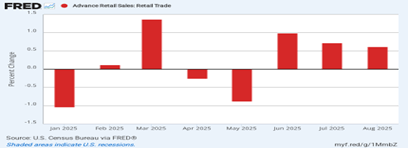
“Advance estimates of U.S. retail and food services sales for May 2025, adjusted for seasonal variation and holiday and trading-day differences, but not for price changes, were $715.4 billion, down 0.9 percent (±0.5 percent) from the previous month, and up 3.3 percent (±0.5 percent) from May 2024.” U.S. Census Bureau

FREDretailsales

Retail sales have declined in four out of five months since January, a sign that consumers don’t like trade wars; i.e., not knowing what will happen to prices and whether shelves will soon be empty if  President Trump can’t finalize any of the trade deals that he says are almost done.

There’s even more that affects consumer spending and economic growth—the new federal budget still in negotiation and immigration crackdown that will become evident in coming months.

Consumers and businesses are complaining about the uncertainties, which is why President Trump keeps postponing the deadlines while pushing for better “deals”. He can keep promising, though even the UK tariff tax hasn’t been finalized.

And the Senate could shave as much as $1 trillion from Medicaid spending in the Senate version of the bill not yet out of committees, according to reports.

It will increase the federal debt by $2.8 trillion, which will drive up interest rates because bond investors will demand higher returns for the added risk of default. Higher interest rates will then slow growth, while rising import prices from snarled supply chains caught up in the tariff war will cause higher inflation, which is the other half of the stagnation + inflation (stagflation) equation that will result.

Motor vehicles and parts as well as construction sales declined in the retail sales report, as did healthcare and gardening supply sales. Consumers have also dined out less over the past two months, another sign that consumers are becoming more cautious in their spending habits.

All the Trump administration seems to be able to do at present is round up undocumented immigrants, which should cause even more serious damage to economic growth. Immigrants also like to shop, and now there are fewer of them working or shopping due to the growing arrests of undocumented immigrants.

According to estimates on its website from the Center for Migration Studies of New York (CMS) and other groups, as many as 8.3 million undocumented immigrants work in the US economy, or 5.2 percent of the workforce. They work in construction (1.5 million), restaurants (1 million), agriculture and farms (320,000), landscaping (300,000), and food processing and manufacturing (200,000), among other occupations.

That’s a lot of undocumented immigrants in the workforce, and the Trump administration wants to deport one million of them per year. As the numbers of working immigrants decline so will the amounts they produce, which also effects the family members who are American citizens.

And guess where many of them work—in red states with lots of agriculture for which immigrants are needed. That, and the draconian cuts to the health services will hurt MAGA-dominated red states the most that have fewer public services.

This is Economics 101, folks. Without more workers our economy can’t grow. And without paying for our debts, interest rates will continue to rise. And with tariffs at historically high levels, as high as they were in 1930, the cost of almost everything will rise. It’s not bringing down inflation on ‘Day 1’ or any other day of this administration.

Harlan Green © 2025

Follow Harlan on Twitter: https://twitter.com/HarlanGreen

Posted in Consumers, COVID-19, Economy, Politics, Weekly Financial News | Tagged , , , , , , , , | Leave a comment

California Can’t Be Bullied

Popular Economics Weekly

Governor Gavin Newsom today announced that California has officially overtaken Japan to become the world’s fourth-largest economy, according to newly released data from the International Monetary Fund (IMF) and the U.S. Bureau of Economic Analysis (BEA). April, 2025

LATimes

The Trump administration’s efforts to bully California in the past week by sending in contingents of the California Coast Guard and active-duty Marines to ‘guard’ its ICE agents that are bent on rounding up as many undocumented workers in California as possible, is almost comical.

Would they try the same with Japan or Germany, who have economies that are basically the same size? Of course not, though Trump wants to pick on smaller Canada, and maybe Denmark’s Greenland.

Of the 850,000 farmworkers in California that are providing close to one-quarter of the agricultural produce of America, some 400,000 are seasonal workers (i.e., with permits) or undocumented, which is why President Trump has told ICE workers to stop rounding them up, for fear Americans will no longer have enough fresh (or canned) produce to eat.

It’s a sign of the Trump administration’s tremendous ignorance that their efforts to deport as many of the 11 million undocumented U.S. workers is looking worse than ridiculous, it is enraging the populous of those cities that depend on immigrants to work in the service and hospitality industries, as well as feed them.

If Trump also thinks he can humble California by attacking the University of California system (UC) as he is doing to Harvard, he is also mistaken.

The system’s ten campuses presently have a combined student body of 299,407 students, 26,100 faculty members, 192,400 staff members, over 2.5 million living alumni, and $41.6 billion in annual operating revenues.

And as an alumnus, I can attest it teaches or promotes no particular ideology or political view, just the scientific and social science truths that are verified and tested empirically, not by rumor or conspiracy theories.

Trump and the Republican Party have succeeded in bullying the smaller red states they have dominated since the 1970s, making them the poorest states in income (many have no minimum wage), health care, social services and education.

Republican led red states are mostly dependent on the excess tax revenues passed on to them from blue states.

“In 2023, the federal government collected around $4.67 trillion from states and their residents through taxes on individuals and businesses and redistributed about $4.56 trillion back to states and residents through programs like Social Security, Medicaid, Medicare, food stamps, and education grants, says USA Facts.

Virginia alone depended on $79 billion in transfer payments in 2023 to balance its budget from states like California and New York, who contributed $78B and $89B in 2023 to the federal kitty.

So why have Republicans gone to all this trouble that will do very little harm to the likes of UC and California’s economy? Their red states can’t do without the income coming from blue states.

Oh, their leaders want more tax cuts, which will continue to increase federal debt. Americans will find out soon enough that’s not how to stay in business.

Harlan Green © 2025

Follow Harlan Green on Twitter: https://twitter.com/HarlanGreen

Posted in Consumers, COVID-19, Economy, Politics, Weekly Financial News | Tagged , , , , , , , , , , , | Leave a comment

Republicans Have Never Paid Their Bills

Financial FAQs

The new law will reduce federal revenues by significant amounts, even after allowing for the impact on economic growth. It will make the distribution of after-tax income more unequal. If it is not financed with concurrent spending cuts or other tax increases, TCJA (Tax Cuts and Jobs Act) will raise federal debt and impose burdens on future generations. If it is financed with spending cuts or other tax increases, TCJA will, under the most plausible scenarios, end up making most households worse off than if it had not been enacted.” Brookings

President Trump is justifying his trade war that could wreck the U.S. and maybe world economies because he wants to renew his 2018 Tax Cuts and Jobs Act (TCJA) that could raise the federal debt $2.8 trillion over the next 10 years.

If Republicans would ever pay their bills, rather than continue to lobby for tax cuts, we wouldn’t be in this situation. But they haven’t since Ronald Reagan and now are led by a complete phony who sues those that expose his lies and make complete fools of those who support him.

Why are we in a huge financial mess today with a record federal budget deficit and falling value of the dollar President Trump is using to justify an illegal tariff war that is tearing apart the world’s financial order and alienating our closest allies?

Trump’s Republicans are twisting themselves into pretzels to justify the tariff wars Trump is waging on the whole world—all 180 countries—that could lead to product shortages last experienced during the COVID-19 pandemic.

Yet rather than destroy the U.S. and other world economies with unjustified DOGE job cuts and tariffs, if Trump Republicans were serious about reducing the federal debt, they should raise taxes on those that have benefited most from decades of tax cuts enacted by Republican administrations

It doesn’t have to be this way. The Clinton/Gore government downsizing of the 1990s created four years of budget surpluses, because they negotiated with congress to make the cuts that were in congressionally mandated programs.

“Unlike the current effort, the cutting didn’t start until they had gone through a six-month study process and developed a blueprint of how to best reinvent the federal government,” said a recent Newsweek article on the subject. “Government agencies were brought into the process to determine the best ways that efficiencies could be realized. In fact, the effort was led by some 250 federal employees that remained on their agency payrolls.”

The federal workforce was reduced by 440,000 employees between 1993 and 2000, or about 17 percent of the total. The cuts made the government the smallest it had been since the Eisenhower administration, according to the Newsweek report.

FREDdebtpercentageGDP

The St, Louis Fed (FRED) graph of federal debt as a percentage of GDP shows precisely when Republicans began to drastically cut taxes in 1980 under President Reagan—from a 75 percent maximum personal tax rate to below 40 percent, whereas the 90 percent corporate tax rate and 92 percent maximum personal tax rate of the Eisenhower era paid for the “new hires, new equipment, and product research which are deductible from taxable earnings.”

In other words, the higher tax rates made corporations use their profits to finance U.S. growth. Whereas today the tax cuts have mostly financed corporate stock buybacks.

How times have changed! President Eisenhower asked wouldn’t it be better to spend a majority of earnings on expanding the U.S. economy rather than to horde it?

Not any more, because Republicans don’t want to pay their bills rather than provide social services and environmental protection that would benefit all Americans. That’s their history since President Reagan declared that “government was the problem” and immediately fired the federal air traffic controllers who were striking for higher pay and better working conditions.

Will Americans realize and restore Republicans’ theft from American taxpayers via the tax cuts since 1980? It’s estimated some $1 trillion in wealth has been transferred from American workers to the owners of wealth since then that is causing the record income inequality we have today.

Make no mistake, if enough Americans don’t realize what fools they’ve been to support a President who says we’ve just won World War I, and appointed a Navy Secretary who held a ceremony honoring the 1941 Japanese attack on Pearl Harbor on June 6 instead of December 6, it will result in the wholesale destruction of our democracy and loss of the “good faith and credit” of the U.S. Government.

Harlan Green © 2025

Follow Harlan on Twitter: https://twitter.com/HarlanGreen

Posted in Consumers, COVID-19, Economy, Macro Economics, Politics, Weekly Financial News | Tagged , , , , , , , , , , , | Leave a comment

Immigrants Make a Difference

Popular Economics Weekly

“Total nonfarm payroll employment increased by 139,000 in May, and the unemployment rate was unchanged at 4.2 percent, the U.S. Bureau of Labor Statistics reported today. Employment continued to trend up in health care, leisure and hospitality, and social assistance. Federal government continued to lose jobs.” BLS

FREDnonfarmpayrolls

The above FRED graph is the best picture of where the jobs market has been headed over the past two years (May 23-May 25). It’s a slow downward trend that is averaging a monthly gain of 149,000 over the prior 12 months.

But since January 2025 and Donald Trump’s inauguration (last five bars in graph), job growth has averaged just 124,000 per month increases, and Trump’s anti-immigrant policies since then will continue to harm the job market and economic growth

It’s becoming obvious that firms are hiring less because of rising uncertainty caused by the DOGE cuts and Trump’s tariffs. And don’t forget the immigration crackdown that is reducing the number of workers available for those jobs. The Trump administration has trumpeted the ‘removal’ of some 72,000 undocumented immigrants already, and intention to remove more than one million over the next year.

We know what that will do to our workforce. Some 625,000 working adults have dropped out of the adult workforce just in May, which means they stopped even looking for work.

So, it’s difficult to know if the immigration crackdown is causing more to simply stop working as well as the hiring slowdown. We know that immigrants, whether legal or undocumented, have become a major component of our job market with our declining population growth.

According to the Center for Migration Studies, a non-partisan think tank, an estimated 8.3 million unauthorized immigrants contribute to the economy, representing about 5% of all workers. This number has increased since 2019 but is like the 2007 figure. Lawful immigrants make up most of the immigrant workforce at 22.2 million, or 13% of all workers. Many work in construction (1.5 million) and restaurants (1 million), and fewer in Agriculture and farms.

Reducing the number of workers will hurt both our employment picture, as well as future growth, since if the normal one million plus annual influx of immigrants is reduced, it will impact GDP growth as well.

But in wanting so badly to feed red meat to his MAGA followers with the propaganda that immigrants are evil and criminals, employers cannot find the workers they need. There are still more than 7 million job vacancies, according to the Labor Department’s JOLTS report.

This didn’t have to happen, if Trump had allowed the bipartisan immigration bill to pass that Biden had negotiated, which gave a path to citizenship and allowed immigrants to obtain legal work permits.

But the Trump administration isn’t interested in economic growth as much as branding non-European whites as undesirables—even though our Hispanic population, mostly South and Central American, are of white European origin.

It’s how autocrats stay in power. President Trump is dividing Americans in artificial ways—whether by economic class, or birth origins—any way he can think up to exacerbate the divisions.

And it will not only shrink the working population, but U.S. economic growth as well.

Harlan Green © 2025

Follow Harlan Green on Twitter: https://twitter.com/HarlanGreen
Posted in Consumers, COVID-19, Economy, Politics, Weekly Financial News | Tagged , , , , , , , , | Leave a comment

What Happened to American Exceptionalism?

Barron’s 6-9-25

American exceptionalism may not be dead yet, but our democratic principles and Constitution are under assault (“U.S. Market Dominance Is On Pause. It Will Roar Back,” Other Voices, May 29). There’s plenty of research on the decline of sustainable economic growth in autocratic regimes. Massachusetts Institute of Technology economist Daron Acemoglu won a Nobel Prize for his research on the superior growth of “inclusive” (more democratic) versus autocratic (exploitative) governments. American exceptionalism may suffer from more than a “prolonged period of U.S. underperformance” under a president who has demonstrated little regard for our democratic institutions.

Harlan Green

Santa Barbara, Calif.

Harlan Green © 2025

Follow Harlan Green on Twitter: https://twitter.com/HarlanGreen

Posted in Politics, Weekly Financial News | Tagged | Leave a comment

More Signs of Slower Growth

Financial FAQs

“The manufacturing economy continues to struggle,” Susan Spence of ISM said. “It will continue to struggle” due to all the trade uncertainty.

“The administration’s tariffs alone have created supply chain disruptions rivaling that of Covid-19,” executive at an electronics company told ISM.

FREDmanufacturingemployment

The only number in the Institute of Supply Management’s (ISM) manufacturing survey that rose were prices due to a shortage of commodities—i.e., supply. Every other component of the supply managers’ survey was contracting—such as new orders, production, and employment.

Manufacturing employment had been declining since 1980; from 19,000,000 jobs to 12,765,000 jobs in April per the FRED graph out of a total 159 million jobs.

It’s the first sector of the U.S. economy that is showing stagflation—prices are up while production is stagnating. Hence the above remarks from supply managers and Susan Spence, Chair of the ISM Survey.

The services index of the Institute for Supply Management also contracted for the first time in a year. It fell to 49.9% in May from 51.6% in April, the ISM said Wednesday. Any number below 50% signals contraction.

Economic activity in the services sector contracted in May, the first time since June 2024, say the nation’s purchasing and supply executives in the latest Services ISM® Report On Business®. The Services PMI® indicated slight contraction at 49.9 percent, below the 50-percent breakeven point for only the fourth time in 60 months since recovery from the coronavirus pandemic-induced recession began in June 2020.

The Labor Department’s JOLTS report shows that the service sector is still adding jobs. Job openings rose in April for white-collar, retail, healthcare, and entertainment and recreation roles. But job listings fell at hotels and restaurants, whose business has been hurt by a decline in tourism. Some foreign visitors have put off trips to the U.S. because of the trade wars and other White House policies.

Another disheartening jobs report came out today. ADP, a private payroll processor, reported that privately run businesses created just 37,000 new jobs in May — the smallest increase in more than two years — as the most damaging global trade wars since the Great Depression spurred many firms to put a pause on hiring.

The real problem is that employers won’t begin to hire again until the trade wars are resolved, and President Trump says he isn’t letting up on the tariff wars because it will create more manufacturing jobs. But that will take years, and automation has replaced most of the manufacturing jobs (which no longer pay as well) before we see any signs of a manufacturing resurgence.

Economists such as Paul Krugman, who won a Nobel Prize for his pioneering research in foreign trade, remarking on the sudden 50 percent increase in steel tariffs, believes the damage  to the U.S. Economy from such draconian tariff rates (i.e., import taxes) is already done.

So steel tariffs don’t make any policy sense. But then neither does anything else in Trump’s trade war — and the nonsensical nature of the whole enterprise is why I don’t think he’ll find an off-ramp. After all, it’s obvious that the increased steel tariff wasn’t a considered policy, it was a temper tantrum after the Court of International Trade ruled against his other tariffs.

Is the contraction of both the service and manufacturing sectors the first sign that the U.S. economy is already in recession? This Friday’s ‘official’ U.S. Labor Department unemployment report will tell us more.

Harlan Green © 2025

Follow Harlan on Twitter: https://twitter.com/HarlanGreen
Posted in Consumers, COVID-19, Economy, Politics, Weekly Financial News | Tagged , , , , , , , , , | Leave a comment

Trump’s Big Beautiful Bill?

Answering Kennedy’s Call

“The House has now passed what must surely be the worst piece of legislation in modern U.S. history. Millions of Americans are about to see crucial government support snatched away. A significant number will die prematurely due to lack of adequate medical care or nutrition. Yet all this suffering won’t come close to offsetting the giant hole in the budget created by huge tax cuts for the rich. Long-term interest rates have already soared as America loses the last vestiges of its former reputation for fiscal responsibility.” Paul Krugman-Substack

Graph: Last Tech Age

Budget analysts have been saying (almost unanimously) that it will increase our federal debt by as much as $4trillion and raise the federal debt level to as much as 130 percent of GDP, further endangering the “full faith and credit” of the U.S. Government.

In passing their ‘Big Beautiful Bill’ (BBB) by just one vote, Republicans will worsen the income inequality and partisan divide that has picked ordinary Americans’ pocketbooks since the 1980s and President Reagan’s ‘trickle down’ economic policies.

The BBB will essentially renew the Trump administrations first term Tax Cut and Jobs Act (TCJB), that gave even more tax breaks to the wealthiest—to Trump and his oligarchs.

The U.S. Is already in 106th place of the 149 countries in income inequality as ranked by the CIA’s World Factbook, I said in 2017; with a Gini inequality index that ranks it with developing countries like Peru and Cameroon. Whereas Finland and the Scandinavian countries are at the top of equality rankings; Germany and France are ranked 12th and 20th, respectively. The higher the index, the greater the gap between wealthy and poor citizens of a country.

So how much worse can it get before MAGA followers realize Trump has never meant to fulfill the “Day 1” promises of lower inflation, more good paying jobs, and a Ukraine peace deal?

The nonpartisan Center on Budget and Policy Priorities gave the most digestible breakdown of the TCJA effects, if it passes the Senate as well:

· Giving the biggest benefits to the wealthy. Households with incomes in the top 5 percent, who have incomes over around $320,000, would receive roughly half of the benefits of extending the expiring tax cuts.

· Ballooning the deficit. Along with the 2001 and 2003 tax cuts enacted under President Bush, the 2017 law has severely eroded our nation’s revenue base. The House budget would compound the damage, adding hundreds of billions of dollars to deficits each year. Extending the 2017 tax cuts would cost $3.6 trillion through 2034.

· Failing to significantly boost economic growth, workers’ earnings, or other benefits for workers. The trickle-down benefits that proponents claimed the 2017 law would produce never materialized, and the law hasn’t come close to paying for itself. Yet the House budget claims that extending the tax cuts would generate trillions in revenue — far more than any independent estimate.

Our ranking of the worst income inequality among developed countries is bound to influence U.S. voters once the Trump’s higher import taxes take hold as well, and stagflation returns.

Even worse is the effect the BBB will have to our credit rating. Will it continue to decline? That is really what Paul Krugman is most worried about. It’s the worst kind of fiscal responsibility. Why such a blatant and foolish attempt to make the rich richer and working Americans poorer? Republicans aren’t even attempting to hide it anymore.

Harlan Green © 2025

Follow Harlan Green on Twitter: https://twitter.com/HarlanGreen
Posted in Consumers, COVID-19, Economy, Politics, Weekly Financial News | Tagged , , , , , , , , , , , , , , | Leave a comment

What’s the Fed Saying?

The Mortgage Corner

“In considering the outlook for monetary policy, participants agreed that with economic growth and the labor market still solid and current monetary policy moderately restrictive, the committee was well positioned to wait for more clarity on the outlooks for inflation and economic activity.” FOMC

Photo: Andrew Harnik/Getty Images MarketWatch

The Federal Reserve’s release of its minutes from the last FOMC meeting didn’t have much to say about the continuing tariff wars, because nothing has yet been negotiated—just some retaliatory pauses and a written understanding with the UK.

And it may take a while—could be months and years before actual trade agreements are agreed upon as they must pass congressional approval as well. The NAFTA North American Free Trade Agreement wasn’t agreed upon until 1992, though negotiations began in the late 1980s.

That puts the Fed in a very difficult position. We now know why President Trump has attempted to disguise the fact that it is an import tax. The Court of International Trade has ruled that Trump’s retaliatory tariffs are illegal because they are a tax on imports.

The trade court ruled for a group of small businesses and Democratic-led states in finding that Trump tried to get around congressional approval by invoking a 1977 law that doesn’t mention tariffs.

It’s a separation of powers issue that will be fought in the courts, and may take some time, in other words.

Hence Chairman Powell’s concern that a recession may be on the horizon. “The staff viewed the possibility that the economy would enter a recession to be almost as likely as the baseline forecast.”

Why? Because higher taxes generally cause higher inflation, which trump denies will happen (it was a campaign promise), and Powell, et.al., have worked hard to get inflation down to its current level.

BEA.gov

So it was good news that the just released Employment Cost Index rose just 2.1 percent in April; the core rate up 2.6 percent without auto and gas prices figured in. But the personal savings rate (black line in BEA graph) has been rising steadily, is up to 4.9 percent from its December low of 3.8 percent, which is a sign that consumers are becoming more cautious.

We already have a decline in two of the four major components that have determined past recessions: declining employment and flat industrial production because the tariff wars are slowing supply chains. The unemployment rate has risen from 3.6 percent in 2022 to 4.2 percent in April and long-term jobless compensation claims have been steadily rising.

The two other main indicators of a recession are consumer spending that has slowed to 1.2 percent from its usual 3-4 percent annual growth, and GDP growth went negative -0.2 percent in Q1 for the first time since the COVID-19 pandemic.

So we could already be in a recession, and the tariff wars will certainly cause even more uncertainty.

The real problem is that Trump is trying to get around the legal process with what he asserts are emergency powers to stem the flow of fentanyl and lower the trade imbalances. Only Congress has the power to tax, not the Executive Branch, unless there’s a real emergency. Historical trade imbalances and fentanyl imports aren’t considered national emergencies that require making enemies of our closest allies.

Harlan Green © 2025

Follow Harlan Green on Twitter: https://twitter.com/HarlanGreen
Posted in Consumers, COVID-19, Economy, Politics, Weekly Financial News | Tagged , , , , , , , , , | Leave a comment

Consumers Not So Confident

Financial FAQs

“Consumer confidence improved in May after five consecutive months of decline,” said Stephanie Guichard, Senior Economist, Global Indicators at The Conference Board. “The rebound was already visible before the May 12 US-China trade deal but gained momentum afterwards.”

Conference Board

The rebound in the Conference Board’s Consumer Confidence Index after its five-month plunge reflects how important China is in providing consumer products, and to world trade. It also says consumers will have a very bumpy ride in trying to anticipate what lies ahead.

Why not? Trump has made it clear that the China pause in tariff negotiations is only temporary and that some form of higher import taxes on their products is coming. Trump’s ‘shock and awe’ negotiation tactics will eventually slow foreign trade and encourage higher inflation; just not when it will happen.

So what should consumers and investors do? Economic activity will fluctuate as well—buy the lows (i.e., discounts) and hold onto savings when prices jump. It’s what we all did during past stagflationary times.

Yes, it’s further confirmation that stagflation is on the way with more wild market activity as the public and investors attempt to anticipate what Trump will do next. This is probably why survey consumers still believe a recession could happen.

The Conference Board’s Present Situation Indexbased on consumers’ assessment of current business and labor market conditions—rose 4.8 points to 135.9. The Expectations Index—based on consumers’ short-term outlook for income, business, and labor market conditions—surged 17.4 points to 72.8, but remained below the threshold of 80, which typically signals a recession ahead. 

The above graph is telling us that confidence is down to the level that last prevailed in 2020 during the COVID-19 pandemic. What was happening then? Almost no foreign trade because supply chains had been shut down from the pandemic and took years to restore.

President Trump is unfortunately causing the same supply disruptions as happened during the pandemic with his shock and awe tactics. Pandemic shutdowns were the major cause of the soaring inflation at the time (Not Biden’s New Deal legislation).

And it’s happening again. California’s Long Beach and San Pedro ports handle most west coast imports and have reported a 45 percent decline in activity while importers wait to learn what Trump may do next.

It’s the unfortunate consequence of One-man rule. Trump is deciding what the tariff rules are, not Congress. Republicans in this case have given him the power, even though he has been exhibiting increasingly erratic behavior.

Are Republicans choosing to ignore what the public may already be seeing? Is there already a coverup, an attempt to hide his declining mental acuity, as Republicans have accused President Biden’s White House of doing?

Let’s hope it doesn’t lead to another recession.

Harlan Green © 2025

Follow Harlan on Twitter: https://twitter.com/HarlanGreen

Posted in Consumers, COVID-19, Politics, Weekly Financial News | Tagged , , , , , , , , , , , | Leave a comment