What Happens to 1% with Demo’s Blue Wave?

The Mortgage Corner


Washington Post

Now that the Democrats will be taking back the US House of Representatives in January, can they enact programs that improve the record income inequality in America? American citizens have the least equal incomes in the developed world, as the EPI graph shows. And that has been a major reason for the sluggish recovery from the Great Recession, when 25 percent of Americans still live below the poverty line for a family of four, incredible as that may seem.

The Economic Policy Institute, a labor think-tank reports newly available wage data for 2017 show that annual wages grew far faster for the top 1.0 percent (3.7 percent) than for the bottom 90 percent (up only 1.0 percent). The top 0.1 percent saw the fastest growth, up 8.0 percent—far faster than any other wage group.

This fast wage growth for the top 0.1 percent reflects the sharp 17.6 percent spike upwards in the compensation of the CEOs of large firms, thanks to the massive stock buyback programs.

There is much evidence that the Republicans’ December 2017 tax cuts are largely responsible for the surge in buybacks. That has been little noticed because of the initial 3.5 percent GDP growth estimate for Q3, when consumer spending shot up 4 percent, and inventories were replenished that boosted growth.

Apple, for instance, in May announced a $100 billion share repurchase program and so far in 2018 it’s tripled its share repurchases over the first half of last year. S&P 500 companies are on track to return a record $1 trillion (via buybacks and dividends) to shareholders.

Cisco Systems said earlier it would bring back to the United States $67 billion of overseas cash in response to the tax package, using $25 billion to finance additional share repurchases. Alphabet, the parent company of Google, authorized up to $8.6 billion in stock purchases. PepsiCo announced a fresh $15 billion in planned buybacks. Chip gear maker Applied Materials disclosed plans for a $6 billion program to buy shares. And late last month, home improvement retailer Lowe’s unveiled plans for $5 billion in purchases.

Nancy Pelosi, who will be returning as the House Majority Leader, has said one of the Democrat’s priorities is a new infrastructure bill that would require $1 trillion of federal spending. Where would that money come from with a projected federal deficit of $1 trillion in coming years due to reduced tax revenues from the Republican tax cuts?

Another Democratic House leader has said they will want to boost the nominal corporate tax cut from its current 21 percent rate. In fact, the actual tax rate is far below that for most major corporations, because of the various loopholes and tax shelters available to corporations, including having headquarters in low taxation countries, such as Ireland.

Josh Bivens, the EPI research director, estimated that “the effective rate will all but surely dip below 15 percent and get close to 10 percent.” An analysis from the University of Pennsylvania’s Wharton School Budget Model, the average effective tax rate for corporations will be about 9 percent in 2018 but go up to 18 percent by 2027, thanks to some of the provisions that will expire over the next 10 years.

There are in fact many other ways to divert federal funds from overfunded programs, such as reducing the defense budget. Estimated U.S. military spending is $716 billion, according to the Washington Post, now 17 percent of the $4 trillion federal budget. That’s part of the spending bill signed by President Trump on August 13, 2018. It covers the period October 1, 2018 through September 30, 2019. Military spending is the second largest item in the federal budget after Social Security.  The United States spends more on defense than the next nine countries combined.

More important was the 3.1 percent rise in wages in the Q3 GDP report that may mitigate the record income inequality, as do the various minimum wage boosts is some cities and states. But the overall picture remains bleak, as the EPI graph shows, unless other labor friendly legislation is enacted to strengthen, for instance, collective bargaining rights of unions in right-to-work states enacted by Republican legislatures since 2010.

Harlan Green © 2018

Follow Harlan Green on Twitter: https://twitter.com/HarlanGreen
Posted in Uncategorized | Tagged , , , , , | Leave a comment

On Tyranny

Answering The Kennedys Call

image

Amazon.com

Whether or not President Donald Trump ever owned a copy of Hitler’s Mein Kampf, stories abound of its existence with followers such as Steve Bannon, who was reported to have gifted him a signed copy when part of Trump’s campaign.

What is most disturbing to Ph.D. Timothy Snyder, Housum Professor of History at Yale University and a scholar of the Holocaust, is that so many of Donald Trump’s supporters espouse Hitler’s program of white (instead of Aryan) nationalism, which could lead to a similar outcome if such a demagogue ever rose to power in the United States of America.

You say that’s not possible with our 229-year old democratic institutions enshrined in the U.S. Constitution?

Professor Snyder writes in his Prologue: “History does not repeat, but it instructs…Americans today are no wiser than the Europeans who saw democracy yield to fascism, Nazism, or communism in the twentieth century. Our one advantage is that we might learn from their experience.”

And he has listed 20 signs that help us to learn how to remain free from past tyrannies:

  1. 1. Do not obey in advance.
  2. 2. Defend institutions.
  3. 3. Beware the one-party state.
  4. 4. Take responsibility for thr face of the world.
  5. 5. Remember professional ethics.
  6. 6. Be wary of paramilitaries.
  7. 7. Be reflective if you must be armed.
  8. 8. Stand out.
  9. 9. Be kind to your language.
  10. 10. Believe in truth.
  11. 11. Investigate.
  12. 12. Make eye contact and small talk
  13. 13. Practice corporeal politics.
  14. 14. Establish a private life.
  15. 15. Contribute to good causes.
  16. 16. Learn from peers in other countries.
  17. 17. Listen for dangerous words.
  18. 18. Be calm when the unthinkable arrives.
  19. 19. Be a patriot.
  20. 20. Be as courageous as you can.

Many of these maxims may seem self-evident, but are necessary for a participatory democracy to exist. “Believe in truth” may seem to be self-evident, but only works if one is willing to “Investigate” untruths, or truthiness, or alternative facts; terms coined by Trump administration officials to deny reality—whether it be the reality of damage done by Republican tax cuts, trade wars, and immigrant caravans that are made up mostly of women and children fleeing terror in their own countries, rather than criminals.

“To abandon facts is to abandon freedom,” says Professor Snyder. “If nothing is true then no one can criticize power.”

“Be kind to your language” is a corollary maxim, which means think for yourself and not be bound up in mass media language and thoughts. Read books, rather than be mesmerized by the Internet. Radio was the medium Hitler’s propaganda chief Goebbels used to hypnotize the German people with Hitler’s speeches.

“Listen for dangerous words” is another corollary. Words have meanings. How many times have we heard President Trump use the words ‘extremists’ and ‘terrorists’ to mischaracterize Muslims and Hispanic immigrants? They give license to President Trump to invoke emergency declarations, which justified his use of emergency powers to slap aluminum and steel tariffs on our allies, while withdrawing from existing trade agreements that in fact protected us from unfair competition, and call up U.S. Troops to supposedly defend our southern border from the approaching immigrant caravans.

“Modern tyranny is terror management,” says Professor Snyder. “Be calm when the unthinkable arrives…The sudden disaster that requires the end of checks and balances, the dissolution opposition parties, the suspension of expression.”

Nothing is more dangerous to Democracy than an immoral and lawless leader who cares only to enhance his own power and wealth, or an adult citizen that doesn’t vote.

Harlan Green © 2018

Follow Harlan Green on Twitter: https://twitter.com/HarlanGreen
Posted in Uncategorized | Leave a comment

U.S. Wages At 9-Year High

Popular Economics Weekly

image

MarketWatch.com

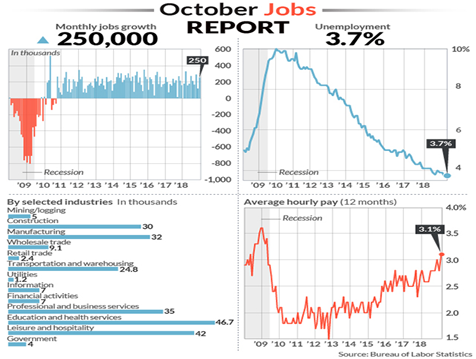
Total nonfarm payroll employment rose by 250,000 in October, and the unemployment rate was unchanged at 3.7 percent, the U.S. Bureau of Labor Statistics reported today. Job gains occurred in health care, in manufacturing, in construction, and in transportation and warehousing—in basically all sectors of the U.S. economy.

“The rapidly growing economy generated a sizzling 250,000 new jobs in October, keeping the unemployment rate at a 48-year low and pushing the increase in worker pay to the highest level in more than nine years,” said MarketWatch’s Jeffery Bartash.

The large increase in worker pay highlighted the unemployment report, as did government reports such as the BLS Job Openings and Labor Turnover Survey (JOLTS) that showed more than 7 million job openings, and a high Quits rate of voluntary separations that usually means workers are finding better jobs.

“The number of job openings reached a series high of 7.1 million on the last business day of August, the U.S. Bureau of Labor Statistics reported in October. Over the month, hires and separations were little changed at 5.8 million and 5.7 million, respectively. Within separations, the quits rate was unchanged at 2.4 percent and the layoffs and discharges rate was little changed at 1.2 percent.”

The 5.8 million hires really highlights the incredible jobs turnover rate each month in the $20.7 trillion U.S. economy. A major component of the unemployment report was the 32,000 new manufacturing jobs created in October that was highlighted in the BEA’s report on new factory orders.

image

Econoday.com

“Up a higher-than-expected 0.7 percent, factory orders in October added to September’s very strong gain which is now revised 3 tenths higher to 2.6 percent,” said Econoday. “October’s increase for durable goods, also at 0.7 percent, is revised 1 tenth lower from last week’s advance report with orders for non-durable goods, which are the fresh data in today’s report, up 0.6 percent reflecting gains for petroleum and chemical products.”

Why the lowest unemployment rate in many years? A major reason is the percentage of able-bodied Americans in the labor force from the ages 25 to 54 rose to 82.3 percent in October from 81.8 percent in the prior month. That marks the highest level since April 2010.

How about interest rates? The 10-year Treasury Bond yield rose to 3.15 percent once again, and the Fed is sure to raise their Fed Funds rate another one-quarter percent in December to 2.25 to 2.50 percent, which means the Prime rate will go to 5.50 percent. That hasn’t dented consumer spending yet, but it might in the New Year.

What with the election uncertainty, trade wars, jittery financial markets, and an administration fearful of its own survival, we don’t see how 2018 can be much better.

Harlan Green © 2018

Follow Harlan Green on Twitter: https://twitter.com/HarlanGreen

Posted in Consumers, Economy, Weekly Financial News | Tagged , , , , | Leave a comment

The Budget Buster-In-Chief Wants to Scare US

The Mortgage Corner

image

Federal Budget

The Treasury is on track to issue $1.34 trillion in new debt this year, more than double the amount in 2017. The Trump tax cuts and higher government spending are leading to higher borrowing needs, and Federal Reserve’s response is to continue to raise borrowing costs, which threatens to slow down consumer spending at holiday time.

Trump and Republicans cut $1.5 trillion in taxes with the promise it would pay down the national debt. Instead, our national debt is ballooning during a booming economy—not a good sign when the economy eventually slows down and revenues decline.

That’s why former Fed Chairwoman Janet Yellen said Tuesday that she’s worried about the longer-term deficit outlook. She called for entitlement reform and tax hikes to bring down the federal deficit.

Tax hikes?? That won’t happen with this administration that has built in benefits for just the top 10 percent income earners, and corporations, of course. It is something Repubs don’t want to talk about, which is why President Trump throws out misinformation about amending the 14th Amendment with an Executive Order; the amendment that allows citizenship for births in the U.S. to undocumented residents.

Amend the Constitution with an Executive Order?? Can’t happen without three-quarters of the states ratifying it, as anyone knows that has attended a civics class during their school years. Even educated Trump supporters have to know that fact.

Most developed countries also allow this for good reason. It replenishes the shrinking workforce in developed countries that have declining birthrates. The shrinking workforce is a big problem because it is population + labor productivity growths that determine economic growth.

The budget deficit is widening in a big way. In the first 11 months of the fiscal year, the deficit was $895 billion, which is $222 billion more than the previous year. Outlays have climbed 7 percent while revenue rose just 1 percent, and the national debt has climbed to $21.2 trillion.

The Congressional Budget Office reports, “Corporate taxes have plummeted by 30 percent this fiscal year, both because of the lower rate as well as the expanded ability to immediately deduct the full value of equipment purchases. Individual income and payroll taxes have climbed 4 percent, as increasing wages — mostly, due to more people having jobs — offset a lower withholding rate.”

Spending on Social Security and Medicare have also climbed 4 percent as more baby boomers retire, outlays on net interest on the debt have jumped 19 percent in part due to a higher rate of inflation triggering more payments to inflation-protected securities holders, and defense spending has jumped 6 percent.

image

U.S. total national debt has already reached 100 percent of GDP. Scary isn’t it? That’s why President Trump is trying to scare us even more with an “invasion” of several thousand Central Americans fleeing their countries’ poor economies and gang violence. But our national debt is scarier because it harms the prosperity of future generations.

“By 2028, America’s government debt burden could explode from this year’s $15.5 trillion to a staggering $33 trillion—more than 20 percent bigger than it would have been had Trump’s agenda not passed,” said a recent Forbes article. “At that point, interest payments would absorb more than $1 in $5 of federal revenue, crippling the government’s capacity to bolster the economy, and constraining the private sector too.”

Halloween is the time we scare children. But unless we return to responsible budgeting, it means a scarier future for everyone.

Harlan Green © 2018

Follow Harlan Green on Twitter: https://twitter.com/HarlanGreen

Posted in Consumers, Economy, Politics, Uncategorized | Tagged , , , , , | Leave a comment

Mr. President, Please Don’t Shoot Anyone!

Financial FAQs

image

Mother Jones/Wikipedia

Where is President Obama and other national leaders when we need them? Where is someone to refute the neo-Nazi lies of President Donald Trump, who no longer has to brag that he can shoot someone on Fifth Avenue, because his followers and those who believe his lies of Jewish conspiracies and immigrant invasions are carrying out the mass shootings and violence for him; with the Pittsburgh Tree of Life Synagogue shooter and Florida bomber the latest examples?

Any national leader’s voice will do, as this is happening because Donald Trump has been inciting his followers to avoid impeachment from a Democratic-elected congress in the upcoming November election.

Are there not even voices from his own Republican Party who will stand up to his relentless incitements of age-old fears?

It will take a clarion call from a moral national leader to refute the lies that there is an “invasion” of several thousand Central Americans seeking asylum from their own country’s violence, and who are about to overwhelm 325 million American citizens. There is no invasion of immigrants, as even a Fox News host has said.

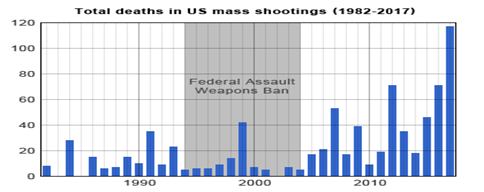
The number of mass shootings around the country in 2018 continues to climb.  According to data from the Gun Violence Archive, a total of 293 mass shooting incidents have occurred as of October 27.

Saturday’s mass shooting at a synagogue in Pittsburgh, with ‘multiple casualties’ and multiple officers injured, marks the 294th mass shooting. In 2017, the U.S. saw a total of 346 mass shootings. 

Where are our national leaders, including past presidents, who still believe in the rule of law and want to stop this President’s call to violence, a man who will do and say anything to stay in power?

Harlan Green © 2018

Follow Harlan Green on Twitter: https://twitter.com/HarlanGreen

Posted in Politics, Uncategorized | Tagged , , , | Leave a comment

No Need to Fear Inflation, Or Higher Interest Rates

Popular Economic Weekly

image

Calculated Risk

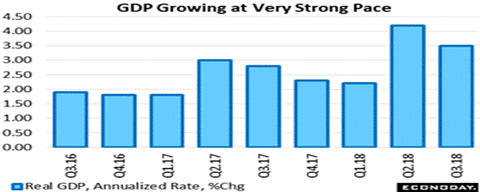
The benchmark 10-year Treasury Bond Yield fell back to 3.11 percent today with the stock market selloff, down from as high as 3.22 percent last week. And Gross Domestic Product rose 3.5 percent in Q3’s first estimate last week, following 4.2 percent growth in Q2.

This has to be confounding Federal Reserve Governors, to say the least, that want to raise short term rates another 2 to 4 times (i.e., 0.5 to 1 percent) over the next year. But inflation is not rising, and the Fed’s primary job is to balance economic growth—i.e., maintain growth that is not too hot or too cold—to prevent our economy from overheating. So there’s no need to fear higher inflation, or interest rates.

image

Graph: Econoday

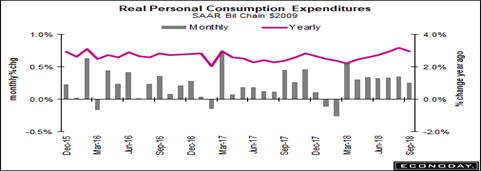
In other words, the U.S. economy isn’t overheating. The US Bureau of Economic Analysis just reported that the Personal Consumption Expenditure Index of inflation has been basically flat for months; at 2.0 percent, right on the Fed’s inflation target.

So robust growth with little inflation is the Goldilocks economy we all yearn for, and the stock market should be applauding, not fearing. The Trump tariff and trade wars will do little to damage the growth of either US or China because it’s a small fraction of US trade—16 percent, or $636 billion—which is just 3.2 percent of US GDP. It is possible that Trump’s economic ignorance could cause China to withdraw more of their $1 trillion in Treasury holdings. But such an action would unsettle financial markets, as well as boosting interest rates and damaging the value of China’s own foreign reserves that bolster their over-extended banks.

There is also another reason for the Fed to keep its powder dry and not raise interest rates further at the moment. It turns out Q3 GDP growth doesn’t look so good under further examination, according to the Wall Street Journal and MarketWatch.

Real investment in Q3, said MarketWatch — “in housing, business structures, equipment, software and intellectual property —laid a giant egg, shrinking at a 0.3% rate in the worst performance in years. And a drop in exports led to a big deduction from growth, with fears of worse to come seeming entirely reasonable if Trump follows through on vows of 25 percent tariffs on $200 billion of Chinese exports to the U.S.”

But “If businesses plow money into new software and machines,” said WSJ, “it increases the chances worker productivity will rise, allowing the economy to grow faster without causing inflation. Stronger productivity would take pressure off the central bank to keep raising interest rates. Without follow-through on business investment, the U.S. could face a different outcome: less growth and more inflation that requires the Fed to keep pushing rates higher.”

The real problem is our national debt. A ballooning national debt takes money away from productive investments. Alas, there seems to be no will by either government or the private sector to invest substantially in worker productivity, which hastens the likelihood of another recession, rather than higher inflation.

Harlan Green © 2018

Follow Harlan Green on Twitter: https://twitter.com/HarlanGreen
Posted in Economy, Politics, Weekly Financial News | Tagged , , , , , , | Leave a comment

Government Is the Solution Part II—Housing For the Homeless

Popular Economic Weekly

image

thelundreport.org

I said in an earlier column “that part of the solution to the housing and homeless crisis has to be the responsibility of governments.”

A recent Project Syndicate article by UC Berkeley economist Laura Tyson, and Lenny Mendonca, Chairman of New America, highlighted just how much government support will be needed to take some of the half million homeless off the streets, a number that has grown sharply just since 2017 as housing rents and prices have soared with the economic recovery.

According to the U.S. Department of Housing and Urban Development (HUD), there were roughly 554,000 homeless people living somewhere in the United States on a given night last year. “A total of 193,000 of those people were “unsheltered,” meaning that they were living on the streets and had no access to emergency shelters, transitional housing, or Safe Havens. Despite a booming stock market and strong economic growth, a large swathe of America is still struggling to make ends meet.”

And affordability is the real problem. “Of 3,007 counties in the US, a worker earning the federal minimum wage of $7.25 per hour can afford a one-bedroom rental in only 12,” said Project Syndicate. “In San Francisco, where the median house price is over $1.5 million, a single mother earning the minimum wage would have to work 120 hours per week to meet her basic needs. And even outside of high-cost regions, nearly two-thirds of US households lack the savings to cover a $500 shock such as a car repair or health-care expense. For these families, one bad turn can result in homelessness.”

The most common-sense solution would be to build more homes for all socio-economic strata, but surveys have shown that a majority of the home owning public thinks in NIMBY (Not-in-My-Backyard) terms; which means the most affordable housing is being built on least-desirable land usually far from population centers.

StrongTowns.org is one such advocate and clearing house for the building of affordable housing under its Mission Statement: “For the United States to be a prosperous country, it must have strong cities, towns and neighborhoods. Enduring prosperity for our communities cannot be artificially created from the outside but must be built from within, incrementally over time.”

For instance, California would need to build around 180,000 more new housing units each year – about 100,000 more than are currently being built – just to keep up with population growth. Since 2010, eight times as many jobs as housing units have been added in San Francisco, where the average cost of building “affordable apartments” has jumped to $425,000. King County, Washington, which includes Seattle, estimates that it would need 14,000 more units to house its homeless population.

Not providing lodgings and services for the homeless can be even more expensive. There are many studies that show how costly it can be to leave the homeless on America’s.

Many local and state governments have developed what have been called ‘Housing First’ programs to help subsidize the 30 percent of homeless with mental illnesses in particular. Chronically homeless people are regular visitors to emergency rooms, and each visit results in a hefty bill. They also frequently use mental health and addiction treatment services and tend to rack up arrests, leading to costly jail terms.

“Housing First is a homeless assistance approach that prioritizes providing permanent housing to people experiencing homelessness, thus ending their homelessness and serving as a platform from which they can pursue personal goals and improve their quality of life,” said its program statement. “This approach is guided by the belief that people need basic necessities like food and a place to live before attending to anything less critical, such as getting a job, budgeting properly, or attending to substance use issues.”

Philip Mangano, the former homeless policy czar under President George W. Bush was an early government official that had the foresight to expand housing-first programs — with federal dollars behind them — into cities around the country.

Using data from the 65 cities — of all different sizes and demographics — the cost of keeping people on the street added up to between $35,000 and $150,000 per person per year, said Mangano.

Conversely, after the housing-first programs had been established, Mangano said he looked at the cost of keeping formerly homeless people housed. That range: $13,000 to $25,000 per person per year.

We must find a way to care for the homeless and those rendered hopeless by the Great Recession, loss of good-paying jobs and record income inequality that has now lasted decades. Or, the richest country on earth risks becoming the poorest provider of care for our citizens, the hallmark of a healthy democracy.

Harlan Green © 2018

Follow Harlan Green on Twitter: https://twitter.com/HarlanGreen
Posted in Politics, Uncategorized | Tagged , , , | Leave a comment

Why Still A Housing Shortage?

The Mortgage Corner

image

Graph: Econoday

A recent survey of California’s housing market reaffirmed the well-known fact that California has an affordability problem. The median home price is now $544,900, up 80 percent from 2011—though that’s a deceptive comparison because mostly due to bottoming of housing prices during the busted housing bubble when the median price sank below $400k.

And the California Association of Realtors (CAR) reports the California Housing Market Experiencing Shift as Home Sales Continue Descent in September, per Calculated Risk. “The California housing market posted its largest year-over-year sales decline since March 2014 and remained below the 400,000-level sales benchmark for the second consecutive month in September, indicating that the market is slowing as many potential buyers put their homeownership plans on hold,” said the CAR

California has always been a trend setter.  So what is causing the affordability problem? Most respondents (28 percent) in the USC survey thought the lack of affordability was due to the lack of strong rent control laws, while 24 percent said it was due to lack of low-income housing funds. Sixth on the list was insufficient homebuilding.

There is a statewide rent control law that allows landlords to raise rents to market rates when tenants move out, but otherwise increases are capped at 2 percent annually. This obviously hasn’t been enough to slow rising rents in pricey California.

That’s in large part because the 1995 Costa-Hawkins Rental Housing Act said any local rent control passed after February 1995 would not apply to large amounts of housing stock, including new apartment buildings occupied after that date, single-family homes, duplexes and condominiums. Local politicians and activists wanting to pass new laws could only limit rent increases for tenants living in housing built before that year.

Then what does that tell us about the housing shortage and affordability? Californians, at least, don’t want to see more homes built, or higher density zoning laws enacted that over crowd neighborhoods, but would rather be NIMBYs that want affordable housing built in someone else’s neighborhood.

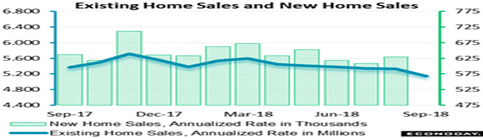
National housing starts in September came in on the low side of expectations, down 5.3 percent to a 1.201 million annualized rate with completions very weak, down 4.1 percent to a 1.162 million rate that’s the lowest since November last year. Hurricane Florence certainly didn’t help the South where starts fell 13.7 percent but the Midwest, which was not affected by the hurricane, saw starts fall 14.0 percent.

Existing home sales were also disappointing. Sales of existing homes fell 3.4 percent in September to a 5.150 million annualized rate. September’s result is the weakest in nearly three years, since November 2015.

image

This weakness on the national level happened despite price discounting by sellers, said Econoday. The median sales price for an existing home fell a monthly 2.8 percent in September to $258,100. A comparison of year-on-year rates, at plus 4.2 percent for prices, with the sales rate, at minus 4.1 percent, suggests that prices may have further down to go.

So despite the housing shortage, many neighborhoods are reluctant to add to their housing shortage. And rising mortgage rates are also denting demand. What about rents? Apartment List reports that nationally, real spending on new multifamily construction showed a long-term upward trend prior to the collapse of the housing bubble, and it has rebounded strongly in the aftermath of the collapse, such that it is currently near its 2006 all-time high.

This is resulting in lower rent increases in many large cities. Of the 25 biggest cities in the U.S., Apartment List found seven — Baltimore, Chicago, Pittsburgh, Portland, Seattle, St. Louis and Washington, D.C. — where median rental rates actually decreased year over year—another reason new homebuyers are holding back.

Economists at Freddie Mac that analyzed the pace of new housing construction found that years of underbuilding has left the U.S. with a cumulative shortfall — that is, supply compared to historical averages — of 4.6 million housing units in the years since 2000, as I said recently. That number is especially stark considering that builders constructed a 1 million unit surplus of homes in the bubble years of the last decade.

There is still a housing shortage, in other words, with affordability the main problem holding back sales.  So no housing bubble, yet!

Harlan Green © 2018

Follow Harlan Green on Twitter: https://twitter.com/HarlanGreen
Posted in Consumers, Housing, housing market, Weekly Financial News | Tagged , , | Leave a comment

Government Is the Solution, Not the Problem

ANSWERING THE KENNEDYS CALL

image

Graph: NOAA.gov

“With clear benefits to people and natural ecosystems, limiting global warming to 1.5ºC compared to 2ºC could go hand in hand with ensuring a more sustainable and equitable society, the Intergovernmental Panel on Climate Change (IPCC),” said on Monday in its prelease.

And that can’t happen without the support of governments. Ninety-one authors and review editors from 40 countries prepared the IPCC report in response to an invitation from the United Nations Framework Convention on Climate Change (UNFCCC) when it adopted the Paris Agreement in 2015.

This means the U.S. should rejoin the Paris Agreement on global warming, or voters select a more climate-friendly administration as soon as possible. The Trump administration is doing everything in its power to deny and defeat any support for mitigating the effects of global warming, even recently transferring funds from FEMA that aid hurricane and tornado victims occurring with more frequency to fund its border wall and zero immigration policy.

Best-selling author Michael Lewis in his latest book, The Fifth Risk, details how the Trump administration is doing everything in its power to neuter any government functions that hinder the profitability of his mega-donor supporters at a time when government is most needed to protect Americans from any number hazards—not only the environmental hazards from global warming, but growing costs of healthcare, and record income inequality.

Lewis says the risk a society runs in thinking short term, rather than long-term solutions, “…is the innovation that never occurs and the knowledge edge that is never created, because you have ceased to lay the groundwork for it.”

“Government is the problem” was President Reagan’s call to downsize government, which he characterized as full of waste and inefficiency, when tried to convince Americans private enterprise was a paragon of efficiency and prosperity for all.

Yet history has shown that none of this prosperity and progress would have happened without government research and support. We wouldn’t have built our highway system, gone to the moon, invented the internet, or even constructed the energy grid without government mandates.

Such progress has always required strong national leadership, with an ethos that it should benefit all Americans, not just the wealthiest. “Government is the problem” has always meant cutting taxes that take away programs lifting the many, and benefit the few most favored by circumstances or birth.

And now we have the dangers that arise from global warming scientific research tells us is man-made, and only leadership from governments can mitigate.

A recent New York Times article highlighted the necessity of government support. “None of the major technological transformations of the 19th and 20th centuries were the product of the private sector acting alone and responding only to the market. Railroads, radio, telegraph, telephone, electricity and the internet were all the result of public-private partnerships,” said its authors, science historians Naomi Oreskes and Erik Conway. “None was delivered by the “invisible hand” of the marketplace (a favorite rationale of conservative economists). “All involved significant interventions by the visible hand of government.”

In fact, “The internet was created by scientists funded by the federal government’s Advanced Research Projects Agency,” said the authors. “Al Gore didn’t build it, but he did sponsor the 1991 legislation that made it public, which laid the foundation for the World Wide Web, Silicon Valley, smartphones and our information-driven society.”

image

Union of Concerned Scientists

Australia, the U.S., and Canada lead the world in per capita emissions of CO2, yet the Trump administration withdrew from the Paris Accord within months of his inauguration in a sop to the fossil fuel magnates that funded much of his campaign. It was pay-and-play, politics as usual, in a deeply cynical ploy that endangers not only Americans, but the rest of the world, as Americans with only 5 percent of the world’s population consume 25 percent of its resources.

“Mr. Trump’s decision to abandon the agreement for environmental action signed by 195 nations is a remarkable rebuke to heads of state, climate activists, corporate executives and members of the president’s own staff, who all failed to change his mind with an intense, last-minute lobbying blitz,” said the NYTimes then. “The Paris agreement was intended to bind the world community into battling rising temperatures in concert, and the departure of the Earth’s second-largest polluter is a major blow.”

Need we say more about the necessity of making government the solution to our problems, not the problem?

Harlan Green © 2018

Follow Harlan Green on Twitter: https://twitter.com/HarlanGreen

Posted in Economy, Politics, Uncategorized | Tagged , , , | Leave a comment

Record Income Inequality = U.S. Credit Downgrade?

Financial FAQs

image

Graph: MarketWatch

The current debate whether the U.S. will escape the ‘new normal’ of slower economic growth since the Great Recession (when homeowners lost a collective $9 trillion in value) is taking a new turn with Moody’s Investor Services now warning of a credit rating downgrade of U.S. Treasury securities from its AAA rating, something Standard & Poor’s had already done in 2011 when Republicans threatened to shut down the Federal government over their refusal to raise the debt ceiling.

Why the Moody’s downgrade now, when it has kept U.S. sovereign debt at AAA rating? America’s income inequality has worsened since the Great Recession and more pressure will be put on our government to increase so-called transfer payments—especially social security, Medicare, Medicaid, and other government benefits paid to seniors and lower income household just to keep them out of poverty—at a time of record federal debt, said Moody’s.

Only the top 10 percent income earners have seen their incomes increase since the Great Recession. Most American households have seen either flat income growth or an actual decline for the bottom 40 percent of income earners.

In fact, the income declines have been happening since the 1970s, as globalization of the workforce by multi-national U.S. corporations have steadily shipped many of the best paying manufacturing jobs to cheaper countries and regions, while American workers’ salary bargaining rights have been steadily chipped away by more conservative congresses and compliant Republican and Democratic administrations.

Now new evidence has surfaced of another reason for decline in higher-paying jobs—robots, mainly concentrated in manufacturing regions. The Brookings Institute originated a study on the effects of robots replacing mainly manufacturing jobs. To no one’s surprise, most of the robots are concentrated in ‘rust-belt’ manufacturing right-to-work states in the Midwest and South that severely restrict union collective bargaining rights.

image

Brookings Institute

Brookings’ analysis of data from the International Federation for Robotics determined that more than half of more than 233,000 industrial robots in the country are found in just 10 Midwestern and Southern states, led by Michigan, Ohio, and Indiana. As of 2016, the overall national average for red states” was 2.5 robots per thousand workers. The national average for blue states that mainly vote Democrat was 1.1 per thousand.

Moody’s has become decidedly pessimistic about the future of America’s credit worthiness because it sees little that the U.S. can do to mitigate the increased income inequality, the worst in developed countries “…fiscal consolidation efforts that attempt to reduce the burden of entitlement spending, by hiking payroll taxes or cutting benefits, would ultimately exacerbate inequality,” said Moody’s.

What can be done to reduce the worst household income inequality since 1928, just prior to the Great Depression? The CIA World Factbook ranks the U.S. 39th from the bottom in the distribution of family income based on the Gini Coefficient Index that measures income inequality.

I respectively disagree with Moody’s pessimism about the prospects for improving U.S. credit worthiness. Cutting benefits would certainly harm growth, taking away incomes that increases consumer spending of the bottom 40 percent; spending that in turn increases tax revenues. And states with the political will to restore bargaining rights of union and government workers would restore some of the lost wages that increase tax revenues.

Then there is a need for massive investments in public infrastructure in all the sectors that increase efficiency and labor productivity—from physical structures to education and R&D that sent us to the moon and created the Internet. Studies show they more than pay for themselves, which also increases tax revenues and pays down federal debt.

There is in fact no reason for pessimism if such ‘antidotes’ are applied to America’s ailing fiscal health, and Moody’s as a responsible credit rating agency should be the first to recommend them.

Harlan Green © 2018

Follow Harlan Green on Twitter: https://twitter.com/HarlanGreen

Posted in Consumers, Economy, Macro Economics, Weekly Financial News | Tagged , , , , | Leave a comment