
Financial FAQs
“Thus for the first time since his creation man will be faced with his real, his permanent problem-how to use his freedom from pressing economic cares, how to occupy the leisure, which science and compound interest will have won for him, to live wisely and agreeably and well.” JM Keynes
The 2026 UCSB Economic Forecast Summit was not only a report on the economic well-being of the Tricounties but also how artificial intelligence (A.I.) is beginning to change our lives for better (or worse).
Santa Barbara County’s economy is growing very well, UCSB Professor Rupert said in his headline for his 2026 Economic Forecast report, even better than California’s and the national economy:
Santa Barbara County real GDP rose 4.4% in 2024, outpacing the U.S. at 2.8% and California at 3.2%.
California grew 3.2% over the same year, and the United States grew 2.8%. Among Central Coast peers, San Luis Obispo County edged Santa Barbara at 4.6%, while Ventura County grew 3.6%. This was the last full year the data was available. That’s why California has the fourth largest economy in the world, behind the U.S., China and Japan.
Artificial intelligence is creating an economic future first pondered by British economist John Maynard Keynes in a 1930 essay entitled Economic Possibilities for our Grandchildren that was quoted above.
Keynes’s quote was the theme of the speakers at the packed Granada Theatre audience moderated by Forecast Director Rupert. We heard that we are experiencing a new renaissance created by technologies that give us the means to create a world of abundance for all if used wisely.
Lord Keynes, one of the architects of modern economic theory, was the first to ask, how will humanity use our time when we are freed from producing the necessities of life?
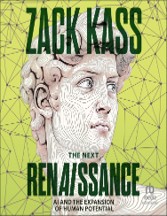
Artificial intelligence will enable such freedoms for us, touted speaker and A.I. pioneer Zack Kass, author of bestseller, The Next RENAISSANCE: AI and the Expansion of Human Potential, in which he said:
“If directed wisely, it will secure our needs, accelerate discoveries that serve human flourishing and unlike the products that commoditize our attention today, free us to invest in connections creativity and love.”
Igor Mezic, UCSB Professor of Mechanical Engineering, put it another way in his presentation. A.I. is growing so fast that its digital network capacity may soon surpass the billions of neural pathways in the human brain but think much faster, so we had better prepare for it!
How will humanity change because of it? Clerical jobs are already being lost but Kass cites the World Economic Forum’s 2025 Future of Jobs report that by 2030 we will see a net gain of 78 million jobs globally, but they will be in jobs that require more human interaction, such as by healthcare workers, teachers, and scientists making new discoveries.
“I see us free, therefore,” said Keynes, “to return to some of the most sure and certain principles of religion and traditional virtue…We shall once more value ends above means and prefer the good to the useful. We shall honour those who can teach us how to pluck the hour and the day virtuously and well, the delightful people who are capable of taking direct enjoyment in things, the lilies of the field who toil not, neither do they spin.”
Will this be possible in today’s chaotic world? The lessons we should take from our history is that the U.S. and world economies have been able to grow, regardless of the wars, pandemics, and depressions that have occurred, averaging 2-2.5 percent annual growth since the mid-1800s, said Professor Rupert.
Harlan Green © 2026
Follow Harlan Green on Twitter: https://twitter.com/HarlanGreen


