Americans are Returning to Work

Financial FAQs

FREDselfemployed

Why aren’t more Americans returning to their old jobs? Many are becoming self-employed, thanks to the pandemic that encourages more work from home, and the Internet with its many marketing opportunities.

The Wall Street Journal reports that 10.2 million workers in October, seasonally adjusted, have become self-employed.

“That is the highest total since the financial-crisis year 2008, except for this summer. The total amounts to an increase of 6% in the self-employed, while the overall U.S. employment total remains nearly 3% lower than before the pandemic,” says WSJ.

So maybe the problem isn’t so much that many Americans are retiring, or holding out for better jobs, but that many are finding different career paths. More than 50 percent of Millennials aged 18-22, for instance, have begun their careers self-employed, according to Upwork, Inc.

The use of remote freelancing has also dramatically increased because of the pandemic and will continue to rise in the future, says Upwork. The change to fully remote workforces has led to changes across organizations, far beyond where their workforce is located.

In fact, 67 percent of businesses reported that there were more changes to long-term management practices than a normal year, excluding temporary pandemic-led changes.

“Remote work has become, what economists call, a general-purpose technology,” says Upwork Chief Economist Adam Ozimek. “It has a wide range of uses that is embraced across the economy and creates a variety of spillover effects and we are already seeing the signs of these effects. The embrace of a more fully remote workforce has enabled businesses to embrace new technology, reimagine how they onboard and train, and even allowed hiring managers to embrace the use of freelancers.”

FRED

And today’s ADP payroll report said private sector employment increased by 534,000 jobs from October to November according to the November ADP® National Employment ReportTM.

This could be a predictor of the official Labor Department report on nonfarm payrolls out this Friday. The above graph show there hasn’t been much variance between the ADP and BLS government reports. If Friday’s BLS report is similar, it is more good news for the recovery.

“The labor market recovery continued to power through its challenges last month,” said Nela Richardson, chief economist, ADP. “November’s job gains bring the three-month average to 543,000 monthly jobs added, a modest uptick from the job pace earlier this year. Job gains have eclipsed 15 million since the recovery began, though 5 million jobs short of pre-pandemic levels. Service providers, which are more vulnerable to the pandemic, have dominated job gains this year. It’s too early to tell if the Omicron variant could potentially slow the jobs recovery in coming months.”

All-in-all, contrary to the pundits that are predicting another downturn because of rising inflation (or the latest Omicron variant), more American workers are returning to work, either as employees or self-employed.

And supply chains are easing, according to various reports, with anchored shipping waiting to offload to the LA and Long Beach ports down more than 20 percent in just the last week, according to the White House, which will ease supply-chain and inflation worries as well.

Harlan Green © 2021

Follow Harlan Green on Twitter: https://twitter.com/HarlanGreen

Posted in Consumers, COVID-19, Economy, Weekly Financial News | Leave a comment

Does America Care Again?

Financial FAQs

PEW Research

The American Rescue Plan, The Infrastructure Investment and Jobs Act, and the soon to pass Build Back Better Plan show that the American ‘can do’ spirit is alive, the innate generosity and optimism that is so much a part of the American spirit is returning.

Will a revival of that spirit last, in spite of the ongoing pandemic, red vs. blue state civil war, and still record joblessness?

The truest expressions of Americans’ character have come out during past catastrophes, such as the Great Depression and World War Two. And almost 10 years of unparalleled growth followed the horrors of World War One and the 1918 Spanish Flu pandemic. 

The coronavirus pandemic is bringing about a similar transformation of character and culture that was always there but sometimes hidden when times were good.

Record economic growth is also following this pandemic; with Q1 and Q2 2021 GDP up more than 6 percent, and the fourth quarter possibly growing at the same pace after the third quarter pause due to the Delta variant surge.

Americans are showing that they care for each other with these bills—that lifting children and the poorest out of poverty also lifts themselves. That renewing our roads, bridges, energy grids, and confronting the greatest threat to our future, climate change, will ensure a country that our children can be proud of and prosper in.

It’s obvious that the American Rescue Plan saved many lives and livelihoods, and the Infrastructure bill means caring for the planet as well as each other with its $billions spent on climate change and improving health and sanitation.

It’s less obvious what spending on social infrastructure does. Investing in children, improved healthcare, and paid family leave strengthens families, something both political parties should be for, but conservatives have opposed since FDR’s New Deal.

Who will get most of the good jobs in construction from rebuilding our physical infrastructure? Some 80 percent go to less-then-college-educated workers, says the White House in its initial announcement of the Infrastructure Investment and Jobs Act.

In part because of the recovery money already distributed during the pandemic, median household income has resumed its climb for the first time since 2000, as shown in the above PEW research graph. It had dropped from $70,800 in 2000 to $65,100 after the Great Recession.

In 2018, the median income of U.S. households stood at $74,600. This was 49 percent higher than its level in 1970, when the median income was $50,200. (Incomes are expressed in 2018 dollars.)

The pandemic is bringing about a whole transformation of America that will last because it is bringing Americans together again in common cause, and history shows this brings out the best in us.

Harlan Green © 2021

Follow Harlan Green on Twitter: https://twitter.com/HarlanGreen

Posted in Consumers, COVID-19, Economy, Keynesian economics, Politics, Weekly Financial News | Leave a comment

Why are So Many Quitting?

Popular Economics Weekly

Calculated Risk

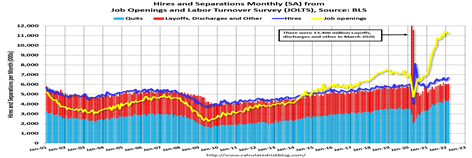
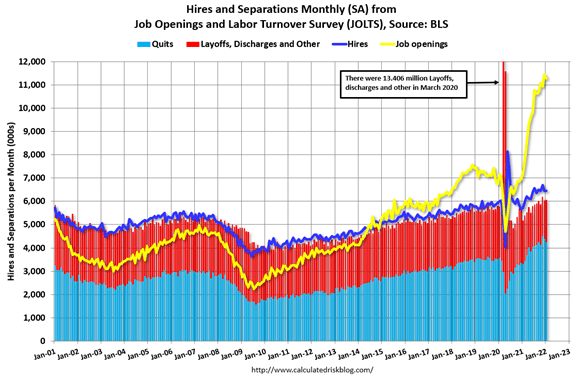
Several headlines last Friday screamed 4.4 Million Workers Quit Their Jobs, as if that was the most important takeaway from the Labor Department’s October JOLTS report.

But there were also 6.5 million hires (dark blue line in graph) and 10.4 million separations (yellow line).

In fact, many of those quitting were shifting to better jobs, not leaving the workforce. Quits were up 34 percent year-over-year to a new record high. These are voluntary separations that generally mean they are finding better jobs. (see light blue columns for “quits”).

Another indication job formation is heading in the right direction is that 4th Quarter GDP growth predictions are between 6 to 8 percent, up from the Q3 growth slowdown to 2 percent, due largely to the expectation that Delta infection rates are falling.

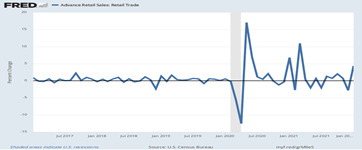
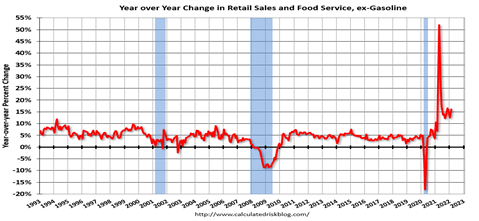
This is huge and predicates many more job hires as producers race to stock their shelves in the face of shortages. They had better stock up soon, as consumers are buying like never before. Retail and trade sales surged 1.7 percent last month, the government said today, and are up 16.3 percent YoY.

That’s the biggest gain since the government last doled out billions of dollars in stimulus money to families with the American Rescue Plan in March that kept many families and businesses solvent. It delivered $1400 to millions of American families, extended enhanced unemployment benefits and boosted funding to ramp up vaccine distribution and reopen schools.

Retail sales rose 4 percent last month at internet retailers, 3.8 percent at electronics and appliance stores and 2.2 percent at department stores to lead the way in October, all strong numbers. Sales also climbed 1.8 percent at auto dealers, but partly because of record prices. Automakers can’t make enough cars to satisfy demand due to a global parts shortage. Gas prices also surged 3.9 percent last month because of higher oil prices.

If autos and gas are set aside, U.S. retail sales rose a smaller 1.4 percent last month. Those two categories often exaggerate ups and downs in consumer spending and aren’t always good indicators of how much households are willing to spend.

Nor is it a reliable indicator of inflation, as retail sales are not inflation-adjusted. Consumers are pushing up prices because they have so much money to spend, and the supply bottlenecks won’t subside until next year; after the holidays when consumers traditionally become stingier.

So now isn’t the time to fret about inflation.

CDCCovidTracker

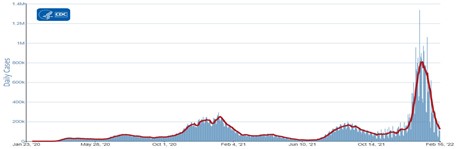
Another pandemic surge is much more worrisome, as infection rates are declining more slowly at the start of cold weather when Americans go indoors, which is a real reason to worry about what may happen next year.

“The current 7-day moving average of daily new cases (70,431) decreased 1.4% compared with the previous 7-day moving average (71,450). A total of 46,180,190 COVID-19 cases have been reported as of November 3, 2021.”

So the best holiday wish for this week is that we all stay as healthy and wealthy as possible!

Harlan Green © 2021

Follow Harlan Green on Twitter: https://twitter.com/HarlanGreen
Posted in Consumers, COVID-19, Economy, housing market, Weekly Financial News | Leave a comment

Where are the Truck Drivers?

Financial FAQs

@PaulKrugman

If one picture can save 1,000 words, then maybe Nobel Laureate Paul Krugman’s citing of the huge decline in average hourly wages of Production and Non-supervisory Employees in Transportation and Warehousing since the 1970s goes a long way to explaining the current supply-chain bottleneck and concurrent inflation surge.

It explains even more—why so many Americans are refusing to return to their workplaces. The COVID pandemic has exposed the consequences of the overall decline in working Americans’ wages and standard of living that has shrunk the middle class and endangered our democracy.

Of course, the coincidence of declining wages and truck-driver shortages doesn’t necessarily spell causation, but at a time of soaring demand by consumers and producers for the products they deliver, they have one of the most demanding 24/7 jobs for less than college-educated workers.

And there is much anecdotal evidence from independent truckers that confirms the existing pay scale is not worth it. In October, the American Trucking Association said the U.S. needed 80,000 more truck drivers.

Shauntai Robinson, an owner operator out of the ports in South Carolina, in a post on Medium cited by Yahoo News, said that after 16 years in the industry, she was beginning to question the viability of a career as a truck driver.

“There are thousands of valid class A CDL holders, across the United States, who have elected to not drive a truck anymore,” Robinson wrote. “These people have not relinquished their credentials. Instead, these valuable people have been forced to seek alternative forms of employment in order to be able to provide for their families.”

On average, truck drivers working full time, year-round, earn about $43,252 annually, lower than the median for all full-time workers ($47,016), but exceed those of other blue-collar jobs, says the US Census Bureau.

FREDwages

The huge decline in transportation and warehousing wages actually mirrors the sharp decline in average hourly wages of all production and non-supervisory workers that began in 1980, as can be seen from the above FRED graph (gray bars are recessions).

That was when Big Business began its lobbying campaign to influence economic policies—morphing into what came to be known as trickle-down economic policies with the election of President Ronald Reagan in 1980.

Reaganomics accelerated the deregulation of whole industries that began in the 1970s, with directly suppressing the collective bargaining rights of workers to such an extent that there are now 26 so-called right-to-work (red) states that say a worker can work in a company employing unionized workers, and enjoying its benefits, without having to pay union dues!

So the millions of workers holding back from reentering the workforce because of the worst pandemic in 100 years has perhaps awakened more than truck drivers to the need to hold out for a better economic system that has impoverished them since the 1980s, when conservative economic policies took away workers’ rights as well as drastically reduced their incomes.

President Biden’s $1.2 trillion Infrastructure Investment and Jobs Act (IIJA) was passed just in time to make a difference for working families by providing jobs that can support families.

“The bill is a significant down payment on the $2.5 trillion infrastructure investment gap that was identified in the 2021 Report Card and will benefit American businesses and families for years to come,” according to the American Society of Civil Engineers (ASCE), as I reported last week.

The COVID pandemic is bringing about a wholesale transformation of American capitalism, including an opportunity for American workers to have a voice in transforming it.

Harlan Green © 2021

Follow Harlan Green on Twitter: https://twitter.com/HarlanGreen
Posted in Consumers, COVID-19, Economy, Keynesian economics, Politics, Weekly Financial News | Leave a comment

“It’s the COVID Pandemic, Stupid!”

Financial FAQs

FREDcpi

Why the supply-chain bottlenecks and soaring inflation? “It’s the COVID pandemic, stupid.” say many economists.

President Biden’s $1.2 trillion Infrastructure Investment and Jobs Act (IIJA) was passed just in time to slow the inflation climb and make for a merrier Christmas.

Consumers and producers are worried because the consumer price index jumped 0.9% last month, the government said Wednesday. The pace of inflation over the past year marched to 6.2% in October from 5.4% in the prior month. That’s triple the Federal Reserve’s 2% target and is the highest rate since November 1990.

But even the latest price spike following last year’s pandemic-induced recession was barely higher than that following the 2007-9 recession (gray bar), per the above FRED graph of CPI inflation rates.

Economists such as Obama’s chief economic advisor, Austin Goolsby, are saying this is a one-of-a-kind slowdown caused by the pandemic. “The most important thing to watch if you want to understand the economy is, as has been the case for a year and a half now, the progress made against the virus,” said Goolsby in a recent NYTimes Op-ed.

Why will the new infrastructure bill create a merrier holiday season? Because it jump-starts a renewal of public investment in America’s future with the largest spending programs since Roosevelt’s New Deal.

The bill provides $110 billion to repair the nation’s aging highways, bridges and roads. According to the White House, 173,000 total miles of America’s highways and major roads and 45,000 bridges are in poor condition. And the almost $40 billion for bridges is the single largest dedicated bridge investment since the construction of the interstate highway system, according to the Biden administration.

“The bill is a significant down payment on the $2.5 trillion infrastructure investment gap that was identified in the 2021 Report Card and will benefit American businesses and families for years to come,” says the American Society of Civil Engineers (ASCE).

“The bill represents a historic, once-in-a-generation investment in our roads, bridges, water and wastewater networks, ports, electric grid, dams, and more. It increases funding, makes smart improvements to policy such as streamlining permitting, and it creates new programs targeted at almost all 17 categories in the 2021 Report Card for America’s Infrastructure, according to the ASCE.

Specifically, the IIJA includes a reauthorization of our surface transportation programs, the Drinking Water and Wastewater Infrastructure Act, as well as an additional $559 billion in new spending that is a combination of targeted funds for overdue state of good repair projects, but also forward-looking programs and policy to make our infrastructure more resilient, said ASCE.

These funds include:

  • $110 billion for roads, bridges, and major projects;
  • $66 billion for passenger and freight rail;
  • $65 billion for broadband internet;
  • $46 billion for resilience to help states and cities prepare for droughts, wildfires, climate change, and more;
  • $39 billion for public transit; and
  • $17 billion for ports and waterways.

This is just a down payment on what needs to be done to bring the American economy into the 21st century, according to the Federal Reserve Chair Janet Yellen: “We are now engaged in the most important economic project in recent history: Repairing the broken foundations of our economy, and on top of them, building something stronger and fairer than what came before.”

Consumers will continue to worry about inflation as much as the pandemic in the coming months. But the inflation rate is tied to COVID the infection rate. How? Supply-chain shortages are causing the price hikes. And when millions more return to work (such as truck drivers) once the pandemic subsides sufficiently, this should in turn loosen the supply-chain constrictions, bringing down prices.

So, instead of saying, “It’s the economy, stupid.” we can say, “It’s the pandemic, stupid” that’s holding up the recovery.

Harlan Green © 2021

Follow Harlan Green on Twitter: https://twitter.com/HarlanGreen
Posted in Consumers, COVID-19, Economy, Keynesian economics, Weekly Financial News | Leave a comment

Payroll Employment Roars Back

Popular Economics Weekly

MarketWatch

Who said the labor shortage is holding back job gains? Not for the moment. It looks like the roaring 2020s are beginning to roar in earnest this fall as we slowly exit the pandemic.

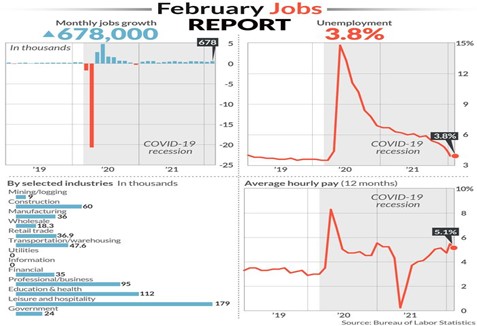
Total nonfarm payroll employment rose by 531,000 in October, and the unemployment rate edged down by 0.2 percentage point to 4.6 percent, the U.S. Bureau of Labor Statistics reported today.

“Job growth was widespread, with notable job gains in leisure and hospitality, in professional and business services, in manufacturing, and in transportation and warehousing. Employment in public education declined over the month.”

People are returning to work, in part because 9 million lost jobless benefits in September as the federal extended unemployment insurance program was terminated.

The government revised the number of new jobs created in September to 312,000 from 194,000, based on new information from the businesses surveyed, said MarketWatch. And the job gains in August were raised to 483,000 from 366,000.

A total of 5.6 million payroll jobs have been created this year to date and average hourly wages have increased 4.6 percent. President Biden touted that these numbers showed that the U.S. now had the fastest job growth in the developed world.

Leisure and Hospitality, Education & Health, and Professional/Business added 320,000 jobs, manufacturing and construction added 104,000 jobs, while governments lost 73,000 jobs (from a loss in public education).

The service sector is roaring back, in other words, as restaurants, hotels, theaters and other companies in the hospitality business created 164,000 new jobs last month.

The jump in payroll employment was presaged by a recent poll of senior business executives in service-oriented companies, such as retailers and banks that rebounded to a three-month high of 58.2 from 54.9 in September, IHS Markit said Friday.

A similar survey of manufacturing activity slipped to 59.2 from 60.7, but it was still quite high. Any reading over 50 signals growth and numbers are above 55 are exceptional.

CDC.gov

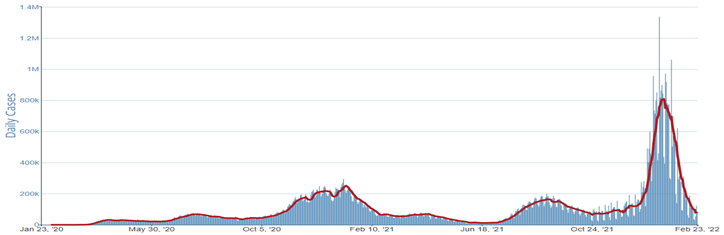
Another reason for the payroll surge is the COVID infection rate continues to decline. This is in part because 70 percent of Americans have been fully vaccinated, a total of 193 million Americans

“The current 7-day moving average of daily new cases (68,793) decreased 7.4% compared with the previous 7-day moving average (74,290). A total of 45,655,635 COVID-19 cases have been reported as of October 27, 2021,” reported the CDC.

And there is reason to believe even more workers will return to their jobs this fall and winter—especially moms as their children return to schools and become vaccinated with the new children’s’ vaccines.

What could dim this optimistic prediction? Very little, in my opinion. Euro area economies are also roaring back with a 9 percent annual growth rate last quarter, according to Nobel Laureate Paul Krugman.

And the rest of the world is slowly recovering from the pandemic. It’s really a matter of continuing to vaccinate the un-vaccinated worldwide, which means restoring the supply-chains in this deeply interconnected world.

Is there anything that could prevent it from being restored? Maybe another war with…? Let’s hope not.

Harlan Green © 2021

Follow Harlan Green on Twitter: https://twitter.com/HarlanGreen
Posted in Consumers, COVID-19, Economy, Weekly Financial News | Leave a comment

Manufacturing, Service Sector Growth Prolong Recovery

Financial FAQs

FREDmanufacturing

U.S. manufacturing and service sector activity continued to climb, despite the price hikes and supply bottlenecks. And we are just at the beginning of the holiday shopping season. Both economic sectors per the ISM supply managers’ indexes show a continuing red-hot demand for goods and services.

Inflation worriers can worry less, as production speeds up. Manufacturing output alone increased 14.8 percent in the second quarter YoY (see FRED graph), reducing price pressures. Eventually resolving the supply-chain issues of clogged ports and container shipments will cause supplies to catch up to the demand for goods.

Timothy R. Fiore, ISM Manufacturing Chair, said “Business Survey Committee panelists reported that their companies and suppliers continue to deal with an unprecedented number of hurdles to meet increasing demand. All segments of the manufacturing economy are impacted by record-long raw materials lead times, continued shortages of critical materials, rising commodities prices and difficulties in transporting products. Global pandemic-related issues — worker absenteeism, short-term shutdowns due to parts shortages, difficulties in filling open positions and overseas supply chain problems — continue to limit manufacturing growth potential.”

The ISM services index measuring economic activity in industries such as Retail Trade; Transportation & Warehousing; Real Estate, Rental & Leasing; Arts, Entertainment & Recreation; jumped to an all-time high of nearly 67 in October, the Institute for Supply Management said Wednesday. The Business Activity and New Orders indexes reached 69.8 percent.

“In October, strong growth continued for the services sector, which has expanded for all but two of the last 141 months,” said ISM chair Anthony Nieves in a statement. “However, ongoing challenges — including supply chain disruptions and shortages of labor and materials — are constraining capacity and impacting overall business conditions.”

Though the huge obstacles to supply are causing some uncertainty, any figure above the 50 percent ISM survey breakeven point shows expansion. This is a sign that businesses are just beginning the replacement cycle of plants and equipment, rather than any imminent slowdown of activity caused by the bottlenecks and labor shortages.

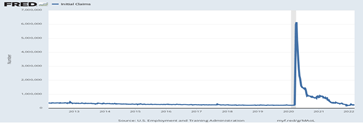
As a side note, the number of Americans who applied for unemployment benefits in late October fell to yet another pandemic low in the latest week, reflecting an urgent need by companies to hold onto to current employees and find new ones. New jobless benefit claims dropped by 14,000 to 269,000 in the seven days ended Oct. 30, the government said Thursday.

Some five million have not returned to work that were employed before the pandemic and there are 10 million job openings, so it’s not yet possible to know when and if the current labor shortage will continue to put a drag on growth.

But, in a way, this might cool demand enough that economic growth doesn’t overheat and bring on another asset bubble, and maybe tame the inflation tiger as well.

Harlan Green © 2021

Follow Harlan Green on Twitter: https://twitter.com/HarlanGreen
Posted in Consumers, COVID-19, Economy, Macro Economics, Weekly Financial News | Leave a comment

Home Prices Keep Rising

The Mortgage Corner

Calculated Risk

I said last month the housing market was cooling with the fall weather, but maybe not yet. Because housing prices are still rising in double digits, although they may be leveling off.

The S&P CoreLogic Case-Shiller U.S. National Home Price NSA Index of single-family price changes, covering all nine U.S. census divisions, reported a 19.8 percent annual gain in August, remaining the same as the previous month. It’s a 3-month average for 20 metropolitan areas of same-home prices, so in some cities’ prices are rising even faster.

Phoenix led the way with a 33.3 percent year-over-year price increase, followed by San Diego with a 26.2 percent increase and Tampa with a 25.9 percent increase. Eight of the 20 cities reported higher price increases in the year ending August 2021 versus the year ending July 2021.

How about that for some irrational exuberance in the housing market? Are we seeing a repeat of the housing bubble, when prices rose double-digits in the early 2000s and again in 2014 (see above graph)?

I don’t think so. While Fed Chair Greenspan was pushing interest rates close to zero then to finance GW’s wars on terror, credit conditions today are much tighter and lenders no longer offer so-called liar loans that hid the real interest rate.

It’s not good news for those having difficulty in finding affordable housing, given the low for-sale inventory. But interest rates still remain at record lows, with 30-year conforming and super-conforming fixed rates around 3.0 percent.

Will housing prices eventually stabilize? Only when enough residences are built to satisfy the pent-up demand that came from a steep drop in new housing construction since the end of the Great Recession.

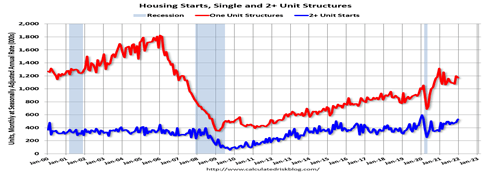
The Commerce Department said sales of new single-family homes surged 14.0 percent to a seasonally adjusted annual rate of 800,000 units in September, so there’s some hope for increasing supply. But sales were as high as 1,400,000 per year during the height of the housing bubble.

Unfortunately, Calculated Risk reports that just 36,000 new homes were available for sale in September, while106,000 new homes have yet to be completed. That leaves a 0.5- month inventory, close to a record low, when 3 to 4 months was the norm.

Calculated Risk

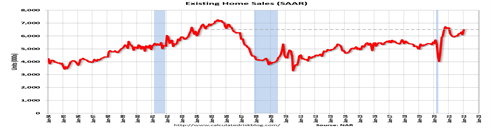
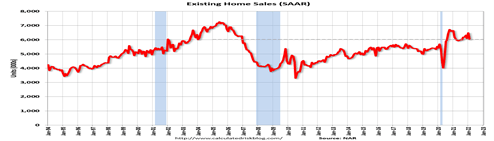
Existing-home sales also rebounded in September after seeing sales wane the previous month, according to the National Association of Realtors®. Each of the four major U.S. regions witnessed increases on a month-over-month basis.

The NAR reported total existing-home sales,1 https://www.nar.realtor/existing-home-sales, completed transactions that include single-family homes, townhomes, condominiums and co-ops, rose 7.0 percent from August to a seasonally adjusted annual rate of 6.29 million in September. However, sales decreased 2.3 percent from a year ago (6.44 million in September 2020).

“Some improvement in supply during prior months helped nudge up sales in September,” said Lawrence Yun, NAR’s chief economist. “Housing demand remains strong as buyers likely want to secure a home before mortgage rates increase even further next year.”

“The housing sector is clearly settling down,” said Yun, who described the surge of home buying in late 2020 and early 2021 as an anomaly.

Home sales last peaked in 2020 at the beginning of the pandemic, but inventories are now at historic lows. Housing prices began their current steep climb at the same time. Unless builders and governments find ways to build more affordable housing, the housing shortage could continue for years and leave a whole generation wanting a home.

Harlan Green © 2021

Follow Harlan Green on Twitter: https://twitter.com/HarlanGreen
Posted in Uncategorized | Tagged , | Leave a comment

No Real Slowdown in US Recovery

Popular Economics Weekly

FRED

The latest survey of US businesses shows little diminishing of economic activity in the near future. A survey of senior business executives in service-oriented companies, such as retailers and banks, rebounded to a three-month high of 58.2 from 54.9 in September, IHS Markit said Friday.

A similar survey of manufacturing activity slipped to 59.2 from 60.7, but it was still quite high. Any reading over 50 signals growth and numbers are above 55 are exceptional.

So now pundits and some economists worry about overheating and a prolonged inflation cycle that might short circuit long term growth prospects. But consumers are sensing the danger and acting rationally without the need for the Federal Reserve to raise interest rates prematurely; at least according to recent sentiment surveys.

“U.S. private sector businesses recorded a sharp and accelerated upturn in output led by the service sector during October, with growth the strongest for three months, albeit still much weaker than seen earlier in the year,” said IHS Markit’s press release.

GDP grew,+16.75 percent year-over-year in the second quarter 2021. It had declined -8 percent in Q2 2020 from its pre-pandemic high such was the impact of the pandemic lockdowns.

We have seen nothing like this GDP recovery since 1980; the recovery from the decade of the Arab Oil Embargo; or the 1950s recovery from World War Two, as shown in the above graph.

What does such growth mean for American consumers and businesses? Firstly, it means rising wages and benefits for employees. There are currently two million more job vacancies than workers looking for work because the demand for goods and service has grown so quickly since last summer and the decline in infection rates.

Secondly, it should mean a continued high level of growth for several years as businesses ramp up capital expenditures for a rebuild of the American economy transformed by the pandemic.

Am I being rash in predicting such growth? I don’t think so, since all US economic sectors are not only playing catch up because of the pandemic, but they see good prospects for years to come.

The worry about ongoing labor shortages and supply bottlenecks is actually helping to cool down the red-hot demand that is causing the current inflation surge, thus tempering price increases that would put a brake on sustained growth.

Conference Board

Hence the recent decline in consumer confidence.

“Consumer confidence dropped in September as the spread of the Delta variant continued to dampen optimism,” said Lynn Franco, Senior Director of Economic Indicators at The Conference Board. “Concerns about the state of the economy and short-term growth prospects deepened, while spending intentions for homes, autos, and major appliances all retreated again.”

This is while actual retail sales are up a huge 12 percent in a year, and home prices are rising in double digits annually. It might be a good thing if consumers retreat slightly, as an antidote to the irrational exuberance that is currently infecting the financial and real estate markets.

Fed Chair Janet Yellen just reported that she sees inflation returning to a more normal level next year.

When asked by CNN’s Jake Tapper when inflation would fall back to around the 2 percent, longer-term target area, Yellen said: “Well, I expect that to happen next year …  On a 12-month basis, the inflation rate will remain high into next year because of what’s already happened. But I expect improvement … by the middle to end of next year, second half of next year.”

Consumers are in fact acting rationally if they pause and allow the markets to cool down. By preventing prolonged overheating (and possible asset bubbles forming), their actions will prolong this growth cycle.

Harlan Green © 2021

Follow Harlan Green on Twitter: https://twitter.com/HarlanGreen
Posted in Uncategorized | Tagged , , | Leave a comment

Retail Sales Confirm Holiday Rally

Financial FAQs

FRED

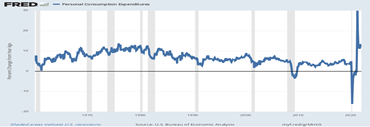
September retail sales and food services presage a holiday season worth celebrating, despite supply shortages, worker shortages, and the pandemic. Seasonally adjusted retail sales are up 12 percent over last September, which means that the demand for goods is at a historical high.

So the shortages are due to consumers and businesses buying more than ever, more than last year and all the years before, in spite of the supply shortages.

There’s little evidence of production shortages, per se, as much as a slowdown in getting to their destinations in ports such as Los Angeles and Long Beach, where more than half of all imports to the U.S. arrive.

NY Times Paul Krugman put up a FRED graph that illustrates the huge surge in the demand for durable goods—goods like appliances and vehicles that last more than three years. It tells us that said demand can continue above the average dotted trend line into the year end holidays.

FRED

The demand for services such as leisure activities and travel is lagging because the pandemic has kept many consumers at home. But that will pick up as well once the Pandemic is subdued.

And what if the Infrastructure and Build Back Better bills pass would add additional $ trillions to programs that boost businesses and improve consumers’ lives? Then the boost in demand for goods and services could be prolonged for…years.

Should we worry about inflation because too much money is in circulation, driving up prices? Not if it’s put to productive uses, as I’ve been saying. Both physical and so-called social infrastructure spending go into increasing productivity, hence a greater supply of goods and services, not excessive speculation in the financial markets as have past tax cuts from which the wealthiest most benefited.

Studies have shown that parents in such states as California that have some of the social infrastructure proposals in President Biden’s Build Back Better Act, such as paid family leave and child care, allow them more family time and resources to raise their children, thus reducing the number of children trapped in a cycle of poverty.

And better physical infrastructure will help to cure the supply bottlenecks. “In the longer run, investments in infrastructure could help much more: U.S. ports, rail lines and so on are shabby compared with their counterparts in other countries and could be much improved.” says Krugman.

So we really need to grow what one political scientist has termed our social capital as much as physical infrastructure, if we want a sustainable recovery. It can be done by improving people’s lives.

Harlan Green © 2021

Follow Harlan Green on Twitter: https://twitter.com/HarlanGreen
Posted in Uncategorized | Tagged , | Leave a comment