Cesar Chavez And The United Farmworkers Union

Building Community Answering Kennedy’s Call

The Calexico Funeral

Chapter Nine

César was brilliant at publicizing farmworker conditions and took advantage of another tragedy to make national news. He had me film and photograph the funeral ceremony for that reason.

Forty-five farmworkers were being driven to work before dawn near Blythe, California, in the Imperial Valley that same winter. The bus driver was either drowsy or driving too fast and missed a 90-degree turn in the darkness after the 100-mile, two-hour drive, plunging off the embankment that bordered an 18-foot-deep irrigation canal. Nineteen of the 45 farm workers on the bus were trapped in 10 feet of water unable to escape in the darkness, with many crushed from the impact.

César then organized a funeral and marched 19 caskets that accounted for the dead farmworkers across the Calexico border to a Mexicali cemetery on Avenida Francisco Madera where the drowned victims were buried. It was a magnificent procession with crowds lining the way into Mexico, the borders wide open to let them through.

The Bishop of Baja, California, first gave them a very impressive and special mass and benediction in Calexico’s National Guard Armory before 1,000 mourners, caskets draped with the Aztec eagle, the UFW flag.

It was an incredibly moving sight, as if they were being honored as veterans returned from a war. Few knew at the time that some of those caskets were empty. Many of the bodies had already been taken to the homes of families in Mexico to be mourned. But it was important that 19 caskets crossed the border to commemorate and honor all of them.

The labor contractor who owned the bus, Jesus Ayala, was a well-known scab herder and strikebreaker, said a newspaper description of the accident. The Yuma Sun reported:

The driver, fifty-five-year-old Pablo Navarro Arellano, was in the midst of an eighteen-hour workday when the accident occurred. Typically, his job began at two a.m., when he went to the enormous shape-up at el hoyo, the hole, in Calexico, picked up the workers, and then drove about 130 miles to the farm. There he supervised the lettuce thinning for ten hours, drove back to el hoyo, dropped off the workers, cleaned out the bus, and finally left for home and a few hours’ sleep. The lettuce thinners were paid nothing for the four hours’ travel time between the hole and High and Mighty Farms.

“This tragedy happened because of the greed of the big growers who do not care about the safety of the workers and expose them to grave dangers when they transport them in wheeled coffins to the fields,” UFW leader César Chávez told the crowd, according to a commentary he published in the Los Angeles Times in 1974.1

https://www.latimes.com/archives/lapm-1999-aug-27-me-4246- story.html

My poem better describes what we felt witnessing the tragedy:

The Drowned Bus

The nineteen farmworkers Still looked asleep,

As their bus rose slowly,

Windows streaming water,

Pulled from the irrigation ditch.

Most had been dozing

From the border crossing,

That early morning,

To harvest before sunrise

Penetrated the fields too deeply.

Only such sweat

From the irrigated desert,

Brought melons and strawberries,

To our breakfast tables,

Cool and ready to eat.

They picked what was ripe,

Quit every hot afternoon,

Until their driver,

Dazed by sleepless nights,

Missed his turn.

Those nineteen coffins,

Returned to their casas,

Draped with Aztec eagles

Was such a grand event,

When blessed by Baja’s Bishop.

The writhing procession slowly

Wound its snakelike way

Across the Mexican border that day,

Carrying hissing eagles on its back,

No green cards were needed,

For those now liberated from their past.

Posted in Uncategorized | Tagged , | Leave a comment

Is Inflation Scare Over?

Financial FAQs

BLS.gov

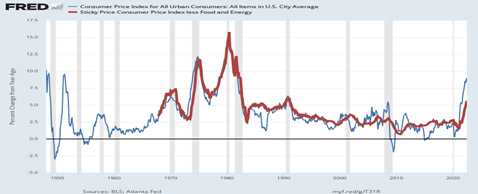
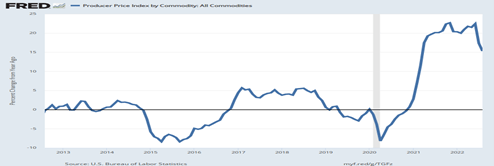
Both the retail Consumer Price Index (CPI) and wholesale inflation index for raw materials—the Producer Price Index (PPI)—fell in July. Since the PPI feeds into retail prices, it’s a sure sign that inflation is on the wane.

The more important U.S. CPI index was unchanged in July, the Labor Department said Wednesday, compared with the 1.3 percent gain in the prior month. The rate of inflation in the 12 months ended in July retreated to 8.5 percent from a 41-year high of 9.1 percent in June. Energy prices were the main culprit, up 33 percent YoY (black bar in BLS graph.).

But gas prices have been plummeting of late. The nationwide average price for a gallon of gas dropped to $3.99 on Thursday, according to AAA. That’s down 20 percent from the mid-June high, and it’s the first time the average has dipped below $4 since early March..

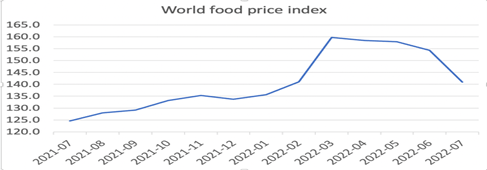
Both indexes brought the annual increase of core products without volatile food and energy fluctuations back into the 5 percent range, which is till high, but causing markets to breathe easier, because it substantiates that most of the price pressure was due to short term events, like a return to more normal activity from the COVID pandemic, which was a 100-year event, and the Ukraine war’s effect on energy and food shortages.

There are still supply-chain shortages as other countries begin to catch up to the surging demand by American consumers to buy anything and everything available in goods and services.

And there is some good news on that front as well. The Biden administration signed into law the Ocean Shipping Reform Act last June, which is engineered to bolster the maritime commission’s authority to regulate shipping that goes into American ports, which is dominated by foreign carriers.

“The law directs the agency to bulk up enforcement while creating systems that make it easier for aggrieved shippers to file complaints,” says Peter Goodman of the NY Times. “It increases the agency’s funding 50 percent by 2025.”

“The passage of the law has already had an impact, say exporters,” continues Goodman, “prompting ocean carriers to make more containers available at West Coast ports. It has also changed perceptions about the commission’s once-cozy dealings with the carriers.”

Nine container ship carriers dominate the Asia to North America imports, which the U.S. importers would have no control over without more government oversight and regulation. It’s one more example of the U.S. government’s role in keeping us growing during the trying times Americans are currently experiencing.

The closely watched “core” CPI measure of inflation that omits volatile food and energy rose 0.3 percent in July, down from a 0.7 percent gain in the prior month. The 12-month rate remained steady at 5.9 percent.

The U.S. producer price index fell 0.5 percent in July, the Labor Department said today. That’s down from a 1.0 percent jump in June and the first negative monthly print since April 2020.

Core PPI prices are up 5.8 percent from a year earlier, down from 6.4 percent in June. And the cost of goods fell 1.8 percent in July, the largest decline since the 2020 pandemic recession (my emphasis).

These results show that it will take a concerted private-public effort to further tame our inflationary impulses if we want to slow down the Fed’s rate increases and return economic growth to the plus column for the rest of this year.

In fact, governments working together to fix the energy and food shortages worldwide would have the greatest effect on inflation and return all of us to less trying times.

Harlan Green © 2022

Follow Harlan Green on Twitter: https://twitter.com/HarlanGreen

Posted in Uncategorized | Tagged , , , | Leave a comment

The Second Year Can Be Most Difficult

Answering Kennedy’s Call

Chapter Four

It was becoming obvious that I wasn’t tolerating village life well by the end of my second year in Ismet Pasha, a village settled by Bulgarian Turks in the 1920s after the breakup of the Ottoman Empire. Though I involved myself as much as possible in village activities, and even donated a set of the annotated Koran in Turkish to their new library, I began to make longer trips to visit other volunteers to know what they were seeing and doing.

Clair, my female counterpart, had left after the first year and married another volunteer in our group. I was sad to see them leave because they were terrific workers, but Peace Corps rules were no cohabitation of partners unless already married!

I was even anxious when riding the buses for fear of being in an accident, becoming a nervous wreck who smoked a pack- a-day of their “Askerli” cigarettes in that second year. Its brand name was the Turkish word for soldier, and I never knew if it was created to provide the poorly paid Turkish soldier with something he could afford, since a pack cost 40 Kurush, $0.04 cents at the current exchange rate.

The tediousness of becoming a single volunteer was spelled by 45 days of paid vacation leave allowed by the Peace Corps during the two years of service, and semi-annual conferences that brought everyone together for progress reports.

We village volunteers were considered well paid at 60 dollars per month, the equivalent of a Turkish teacher’s salary. To put that in perspective, we could have a good restaurant meal for one dollar, and a haircut for 25 cents. In addition, we were allowed $7.50 per day of vacation allowance. I had money to travel on, as my rent for a small, one room adobe cottage was just $3 per month that second year.

Our own volunteer liaisons were made during holidays and our vacations. I and a female volunteer unfortunately overstayed our vacation time on the island of Rhodes during the winter school break because of a severe Mediterranean storm that capsized a tourist boat with the loss of 40 lives, isolating us long enough so that she was late for her assignment teaching English at a high school.

I was reprimanded for assisting in her delinquency through no fault of her own, and our Peace Corps country director at the time withdrew his offer to put me on training staff after completion of my two years. My loneliness had cost me the possibility of remaining in Turkey for a third year.

Not spending another year in Turkey was probably a good thing, as I was feeling more sad than happy as my two years of service came to an end. As difficult as it was to live in and absorb so much of a foreign culture, it was just as difficult to leave such an intensely emotional and personal experience. Turkish culture was based on very intense relationships; close emotional bonds of either love or hate in friendships as well as families, including strict behavioral guidelines we had to follow between the sexes.

We of Turkey V, the first volunteer rural community development group to serve in any Muslim country, were finally discharged in June of 1966, and it could not have been a day later for me. I had dodged attacks by Turkish sheepdogs, part of the feared and famous Anatolian Mastiff breed, ridden on horseback through sparkling winter snows under the clearest blue skies, weathered some scary illnesses, and was ready to return to western culture.

Had I made a difference, and what did the villagers end up thinking of me? There were so many highs and lows—the companionship with other volunteers that broke the tedium of village life, the vacation travel, visits to ancient, storied civilizations, and being part of such an ancient way of life that was barely changed by a few tractors and combines that sped up the planting and harvest.

Turkey in Later Years

As the Vietnam War dragged on, Americans and the American way did not look so peaceful to the rest of the world. This was one reason Peace Corps left Turkey after 10 years during which some 1600 hundred volunteers had served.

Opposition to the Vietnam War had grown in many European countries, and educated Turkish students were no exception. There were also serious gaffes by American officials, such as appointing former CIA employee Robert Comer to be the next U.S. Ambassador to Turkey. He had overseen the South Vietnamese village pacification plan, and his appointment as Ambassador to Turkey so enraged students that they overturned and burned his car during one of the many anti-war protests.

His predecessor, our own Peace Corps director, had earlier killed an elderly woman dressed in black while driving in Ankara one dark and rainy night. Because he had diplomatic immunity, he was spirited out of Turkey to avoid being charged with manslaughter.

That was not well-received by the students, either. Turkey and the Peace Corps administration agreed it was time to phase out the Peace Corps program that had lasted from 1961 to 1971, after students at several of the technical schools where Peace Corps volunteers taught held a vote and decided that the Peace Corps was no longer welcome.

My last year had been a very lonely, but productive, year, and I had no illusions that most villagers in this part of Anatolia with its semi-arid and mostly treeless environment would stay in their villages much longer. Their industrial revolution was now in full swing.

I hoped our presence there as volunteers had helped them consider us as their friends rather than obnoxious foreigners. I also hoped they saw us presenting a better, more peaceful side of American foreign policy that was more in line with the true face of the America I believed in, despite the Vietnam War.

I believe the Peace Corps Volunteers serving in Turkey did make a difference. We encouraged many of our villagers to work to develop their own land, instead of moving to the cities. Ismet Pasha’s villagers that remained were usually the most prosperous landowners that could exploit more modern farming techniques that I had helped to develop.

There was also talk of the Turks forming their own domestic volunteer corps that had a Turkish precedent. Educated Turkish males already had the option to teach in a village school instead of wearing a military uniform because Turkey had universal male military conscription. But I never knew if it was expanded into something that resembled the Peace Corps, in part because Turkey was changing so fast.

The Return to Turkey

Though today Turkey’s rural population has continued to grow, the percentage of the total population living in villages has declined because of rural-to-urban migration.

In 1970 about 67 percent of the population lived in villages. In 1980 the rural population had declined to 54 percent. Less than 21 percent of Turkey’s population still lived in villages in 2020, according to the World Bank.

That is why I was so startled on a return trip to Turkey. More than 30 years had passed since I left in 1966 and I wanted to know what remained of my work in Ismet Pasha. I had organized a tour group that landed at Istanbul’s Ataturk Airport during a national holiday. It was a shock to see the streets lined with many women covered from head to foot in traditional clothing as we were driven to our hotel. They had to be from the villages to dress so conservatively. It was evidence of the mass migration to cities and how much Istanbul, Turkey’s most European and cosmopolitan city, had changed.

I made a point of visiting Ismet Pasha during the tour, but it seemed a shell of its former self on my return. The mill that produced their flour was gone, a sign of the decline of village life. Its huge grindstone lay beside the road in front of the abandoned bakery building. The villagers no longer baked their own stone ground wheat bread that I remembered; giant kilo loaves steaming just out of the oven that I had enjoyed at meals when invited to dine with them.

The ethnic Turks who still lived in Ismet Pasha, including the son of the Mukhtar I had worked with during my two years, were doing well. Irrigation water was now plentiful from a fully developed irrigation system that watered a large sugar beet crop via elevated concrete canals that funneled water into the fields.

Ismet Pasha that had dirt roads and no electricity when I lived there, now had electricity and a paved main road that give them greater access to markets for their produce in all seasons, so their economic future looked bright.

But the village was also full of Kurds newly arrived from their homeland in eastern Turkey. They were the victims of Turkey’s ongoing war with Kurdish militants belonging to the PKK, their most radical political party that wanted an independent country of their own.

The war had dragged on for years and did not look like it would come to any resolution soon. Millions of Kurds still lived in Turkey and were forbidden to teach their language in the schools at the time.

The ethnic Turks to whom I spoke looked down on the Kurds as bad farmers, transplants that really did not fit in. The Kurds were thought of as a semi-nomadic herding culture, since many of them still lived in the mountains of Syria, Iran, and Turkey. But maybe all the good land around Ismet Pasha was taken, so there was nothing else for the Kurds forcibly transplanted from their homeland to do than raise lifestock? It looked like only families with the largest landholdings were able to take advantage of the new irrigation wells I first brought to the village.

But will Turkey ever become a sectarian democracy ruled by civil law rather than religious law? Or will they be saddled with their current devoutly religious President, Recep Tayyip Erdoğan, an aspiring President-for-life intent on imposing a more religious theocracy rather than continuing their sputtering attemp and most of the remote rural villages ts to join the European Union?

I also saw that the community development precepts I learned in Peace Corps training worked in a Turkish village, because they were much like us, a practical people who believed success in the secular world was as important as the world promised by Islam. Who knows what future might be possible for such a hardworking people?

I felt good about what I had done, and it was now time to move on to find another community I might contribute to.

Harlan Green © 2022

Follow Harlan Green on Twitter: https://twitter.com/HarlanGreen
Posted in Uncategorized | 3 Comments

Labor Market Even Hotter!

Popular Economics Weekly

MarketWatch

I said last month that the June labor market was hot. It was even hotter in July. Every industry in the Labor Department’s unemployment report had positive job growth in July, with Education and Health alone adding 122,000 jobs. Professional/Business, Leisure and Hospitality, and Government added another 242,000 jobs.

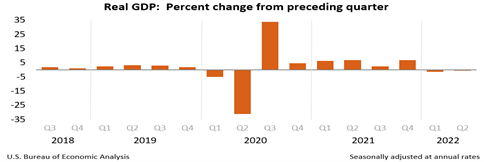
How is this possible with all the talk of a looming recession? Maybe the minus-1.25 percent negative cumulative GDP growth in Q1 and Q2 was just a blip that may or may not have been a technical recession, and it’s already over?

Hiring was broad based as businesses created the most jobs in five months, said MarketWatch. And the number of people working finally returned to February 2020 levels — the last month before the pandemic (my emphasis). The unemployment rate, meanwhile, slipped to 3.5 percent from 3.6 percent, the government said Friday, matching the lowest level since the late 1960s.

Let us now see how much higher the Federal Reserve dares to push interest rates because of fears such robust hiring is a sign of surging growth, not the slowdown in demand it is attempting to engineer.

In fact, inflation is already declining, mainly because world oil prices have plunged, and food prices may also soften with the good news that grain shipments from the Ukraine have finally begun.

That’s in part because U.S. consumers’ expectations for where inflation will be in a year and three years dropped sharply in July, a New York Federal Reserve survey showed on Monday, as reported by Reuters, indicating U.S. central bankers might be winning the fight to keep the outlook for price growth as they battle to tame high inflation—although official CPI inflation numbers out later this week will confirm or deny whether said expectations are reliable.

“Median expectations for where inflation will be in one year tumbled 0.6 percentage point to 6.2 percent and the three-year outlook fell 0.4 percentage point to 3.2 percent, the lowest levels since February of this year and April of last year, respectively,” said Reuters.

For the one-year outlook, the fall in expectations was driven by big drops in year-ahead price growth changes for gasoline and food, with the decline in anticipated gasoline price growth being the second largest in the survey’s nine-year history and the decline in food price growth the largest ever.

In fact, the current hiring surge may be helpful to inflation. The inflation surge is mainly caused by supply shortages, and more jobs means more workers producing goods and services which increases the supply of things.

MarketWatch

But MarketWatch economist Rex Nutting is warning of one obstacle to continued jobs growth, a looming shortage of working-age adults, I said last week. The baby boomer population bulge of the 1970s has reached retirement age, and the millennials cohort of the 1990s, their offspring, will be approaching retirement age as well, as is seen in his graph of population growth rates.

“But now the tide is going out. Next year, the working-age population is expected to grow by just 400,000. In 2024, it’s expected to grow by 300,000 and by just 200,000 in 2025. The pool of workers will begin to grow a bit faster later in the decade and throughout the 2030s, but current projections through 2060 don’t foresee the labor supply returning to the same growth rate we’ve gotten used to over the past 70 years.”

And that means slowing economic growth as well, unless we allow more working-age adults to immigrate and invest in more productive technologies, since more workers producing more goods and services powers economic growth.

Harlan Green © 2022

Follow Harlan Green on Twitter: https://twitter.com/HarlanGreen
Posted in Consumers, COVID-19, Economy, Weekly Financial News | Leave a comment

Cesar Chavez and The United Farmworkers of America

Answering Kennedy’s Call

Chapter Seven

I had heard of the United Farmworkers Union several years earlier while working as a television news cameraman for KTTV Channel 11, a Sacramento TV station.

One shoot was a weekend special report on the US Immigration Service in action to show their prowess in protecting the borders. We reported on the Immigration Service rounding up undocumented aliens in the fields—Mexican and Central American seasonal workers—while they were working.

I thought then it was an unjust system, as I filmed these so- called “illegals” being chased down and herded like cattle by “La Migra”, their term for the Immigration Service. The growers, of course, knew many of the workers did not have valid Green Card work visas and had turned a blind eye to the labor contractors that smuggled them across the border.

I learned much about California labor relations while filming for KTTV and watching how the growers operated. Farm workers had almost no protections in those days, since even those with legal work visas weren’t given adequate housing or benefits.

It was a brutal system, so when Cousin John asked if I wanted to help him out with whatever needed to be done in La Paz to support the United Farmworkers Union, I thought it a worthy cause. I had little idea of what that meant at the time even though I had worked with farmworkers in a Turkish village as a Peace Corps Volunteer for two years.

It was easy to see that the UFW needed lots of help. I met César Chávez at a low point in the UFW. La Paz had a small staff for several reasons. The United Farmworkers Union had just 6,000 members then. This was after many growers had signed Teamster ‘sweetheart’ contracts to avoid re-signing expired UFW labor contracts. Its membership was as high as 70,000 in the early 1970s.

César had purchased the former Kern County TB sanitarium in 1971 that had been abandoned when modern wonder drugs made the quarantine of TB patients no longer necessary. The UFW had outgrown its original Delano headquarters in the San Joaquin valley as union membership grew.

Re-named Nuestra Senora Reina de la Paz, or Our Lady Queen of Peace, it contained dormitories for the farmworkers, a hospital, and staff for those who worked there. The former sanitarium was leased from Edward Lewis, a Hollywood film producer who supported many social causes. He had to be the straw buyer of record of La Paz from its Kern County owners, since Kern County’s decision- makers were no friend to the UFW.

There was a lot of work to be done at La Paz to make it habitable for farmworkers and staff. Cousin John had already begun to renovate the dormitories to house farmworkers and staff, as well as modernize the hospital. The place had been abandoned for years, and since I had worked as a carpenter several summers to pay for my UC education, I was happy to assist.

I soon began spending weeks instead of weekends at La Paz, and hoped I would have the opportunity to use my film and photography skills as I did with the Environmental Protection Agency, since this was a chance to record history in the making. It seemed to be a call to work in another new frontier that President Kennedy had spoken of, advancing human rights using peaceful means to better farmworkers’ lives.

So, I became a fulltime resident of La Paz in January 1974, whereas Cousin John still lived and worked in Los Angeles.

But he could be called upon to bring up any necessary skilled labor. In fact, without the skilled union carpenters, plumbers, plasterers and electricians John was always bringing from Los Angeles, César couldn’t have completed the Agbayani Retirement Village for retired Filipino farmworkers to honor those who were some of the first to join the UFW. He wanted to honor them because they were the first to strike for better working conditions and join the UFW. He said many times

Agbayani Village was an example of benefits that would be possible for UFW members.

Harlan Green © 2022

Follow Harlan Green on Twitter: https://twitter.com/HarlanGreen
Posted in Politics, Uncategorized | Leave a comment

Is the Recession Already Over?

Financial FAQs

Calculated Risk

I was being a bit facetious last week when I said that calling a recession at this time because we may have two consecutive quarters of negative GDP growth is almost irrelevant, because it may be over as quickly as the artificially induced two-month recession in April-May 2020, when the pandemic was building a head of steam.

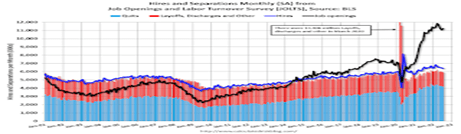
But another indicator, the JOLTS report that measures the number of job openings (black line in graph) decreased to 10.7 million on the last business day of June, the U.S. Bureau of Labor Statistics reported today. The slight decline in openings was too small to be conclusive of an extended downturn

Hires and total separations were little changed at 6.4 million and 5.9 million, respectively. Within separations, quits (4.2 million) and layoffs and discharges (1.3 million) were little changed.

The number of job opening didn’t rise above the longer term normal of 6-7 million openings until January 2017, per the Calculated Risk graph. That is when economic growth began to take off, and it rose sharply to its current nosebleed range of 11 million openings after the two-month 2020 recession.

The number of hires (blue line) and Layoffs (red bar) leveled off and began to taper in January 2022 per the graph, so there began a slight downturn in job formation that could predict negative GDP growth in the first two quarters .

What better proxy for the beginning of a recession than the slowing of job growth? I also mentioned last week that consumer confidence was another good proxy, which is still in decline.

We will know more this Friday with release of the government’s July unemployment report. The rate has been below 4 percent since last December.

But we have now the just released ISM non-manufacturing survey of supply managers beginning to rise again. The ISM barometer of business conditions at companies such as restaurants and hotels that employ most workers rose to a three-month high of 56.7 percent in July, suggesting the economy is beginning to expand again in the face of growing headwinds.

“According to the Services PMI®, 13 industries reported growth,” reported Anthony Nieves, Chair of the Institute for Supply Management® (ISM®) Services Business Survey Committee. “The composite index indicated growth for the 26th consecutive month after a two-month contraction in April and May 2020. Growth continues — at a faster rate — for the services sector, which has expanded for all but two of the last 150 months. The slight increase in services sector growth was due to an increase in business activity and new orders.”

Orders and production rose, hiring improved and intense inflationary pressures eased somewhat last month, business executives told the Institute for Supply Management.

Even U.S. factory orders rose 2 percent in June, the government said Wednesday, in a report that offered some good news .Orders for durable goods made to last at least three years climbed a revised 2 percent in June, up from an initial 1.9 percent. Most of the increase was in autos and military planes. Orders for nondurable goods such as clothing and food products also rose 2 percent. Orders for nondefense capital goods, excluding aircraft rose a revised 0.7 percent, up from the prior reading of a 0.5 percent gain. Manufacturers are growing more slowly as the economy decelerates, but they are still growing.

This means we could already have reached a ‘trough’ in growth, or the bottom of the down cycle. And that confuses things even further! Stay tuned for Friday’s unemployment report to know more.

Harlan Green © 2022

Follow Harlan Green on Twitter: https://twitter.com/HarlanGreen

Posted in Consumers, COVID-19, Economy, Weekly Financial News | 1 Comment

‘Armed and Ready’…for What?

Answering Kennedy’s Call

NYTimes.com

The NY Times front-page picture of a teacher “armed and ready” to wear a gun in her classroom shocked and disheartened me. I remember the fear I felt as a small child hunkering under classroom desks in civil defense drills during the cold war.

And the irony of teachers wanting to arm themselves to protect their schools shouldn’t be lost with the current celebration of the killing of Al Qaeda’s number two—Ayman al Zuwahiri. This is looking in the rear-view mirror of foreign terrorism now vanquished, when domestic terrorism holds the greatest threat to our national security.

How does that teacher think her children will feel seeing her arming herself, and other staff whose job it is to care for them?

“Today, after a seemingly endless series of mass shootings,’ said the NYTimes, “the strategy has become a leading solution promoted by Republicans and gun rights advocates, who say that allowing teachers, principals and superintendents to be ar.med gives schools a fighting chance in case of attack.”

Really? I fear children will learn that violence is the only answer to combat terrorists in schools, in a country that allows weapons of mass destruction to be owned by 18-year-olds as happened in Uvalde, Texas.

More guns have never been the solution to reducing gun violence, as Australia’s history has shown. Australian demographics are similar in many ways to America’s—similar age distribution, wealth distribution, etc.—yet Australia has only had three mass shootings since it banned military-style assault rifles.

That happened because of a 1996 massacre in Port Arthur, Tasmania. During that event, a gunman killed 35 people and wounded 28 others with a semi-automatic weapon he bought from an ad in the newspaper. Twenty of those people were killed in just a minute and 15 seconds.

Will we ever subdue gun violence in America, which means enforcing the real intent of the Second Amendment by disarming our unregulated militias?

A country such as ours that cannot protect its children from domestic violence is a country that does not care for the welfare of its future generations that once again will have its children cowering under desks because of the threat of legally acquired assault rifles, which are literally weapons of mass destruction.

Harlan Green © 2022

Follow Harlan Green on Twitter: https://twitter.com/HarlanGreen

Posted in Politics, Uncategorized | Leave a comment

So When Do We Call a Recession?

Financial FAQs

Conference-Board.org

Calling a recession at this time because we may have two consecutive quarters of negative GDP growth is almost irrelevant, because it may be over as quickly as the artificially induced 2-month recession in April-May 2020 (see thin gray bar in above graph) when the pandemic was building a head of steam.

Record growth followed last year because of the $6 trillion in government largesse, and consumers are beginning to have a hangover from the record spending spree that has ignited this inflation spike.

So how do we determine when and if the next recession that everyone is predicting will happen? I like to follow consumer confidence surveys, because as the above graph indicates, consumer confidence closely tracks recessions.

The Conference Board’s monthly survey has been trending down since January, just as has GDP growth. It’s the simplest way for the lay person to see the larger picture, since consumer spending makes up approximately two-thirds of economic growth—and it continued to decline in July.

The Conference Board just announced its Consumer Confidence Index® decreased in July, following a larger decline in June. The Index now stands at 95.7 (1985=100), down 2.7 points from 98.4 in June. The Present Situation Index—based on consumers’ assessment of current business and labor market conditions—fell to 141.3 from 147.2 last month. The Expectations Index—based on consumers’ short-term outlook for income, business, and labor market conditions—ticked down to 65.3 from 65.8. 

“Consumer confidence fell for a third consecutive month in July,” said Lynn Franco, Senior Director of Economic Indicators at The Conference Board. “The decrease was driven primarily by a decline in the Present Situation Index—a sign growth has slowed at the start of Q3. The Expectations Index held relatively steady, but remained well below a reading of 80, suggesting recession risks persist. Concerns about inflation—rising gas and food prices, in particular—continued to weigh on consumers.”

“As the Fed raises interest rates to rein in inflation, purchasing intentions for cars, homes, and major appliances all pulled back further in July” continued Franco. “Looking ahead, inflation and additional rate hikes are likely to continue posing strong headwinds for consumer spending and economic growth over the next six months.”

U.S. retail sales rebounded strongly in June as Americans spent more on gasoline and other goods amid soaring inflation, so their ‘headache’ hasn’t yet spread to most businesses, as they continue to create jobs and the unemployment rate is still at a record low. It’s difficult to call a recession with a fully employed economy, in other words.

So, I’m going to make a rash prediction. This recession has already begun for the simple reason that growth has stalled, and several indicators used by the National Bureau of Economic Research are already trending down. Consumer spending and personal incomes are beginning to decline and industrial production is also slowing.

What has caused the inflation surge since February, and sudden rise in gas and food prices that worry consumers? The Ukraine invasion, of course, followed by China’s inability to control its own COVID epidemic.

We will reach bottom in this growth trough and begin to uptrend again when the Ukraine, Russia and China resolve their various issues that are restricting supplies of almost everything that consumers depend upon.

And who knows when this might happen? The whole world wants it to happen, so maybe enough pressure will be applied to end the Ukraine conflict and encourage China to fix its COVID problem so that the world can return to what is the real problem, global warming that has far worse consequences than a temporary and artificially induced recession.

Harlan Green © 2022

Follow Harlan Green on Twitter: https://twitter.com/HarlanGreen
Posted in Consumers, COVID-19, Economy, Weekly Financial News | Leave a comment

Retail Sales Could Keep US Growing

Financial FAQs

FREDretailsales

U.S. retail sales rebounded strongly in June as Americans spent more on gasoline and other goods amid soaring inflation, which could allay fears of an imminent recession but not change the view that economic growth in the second quarter was tepid, if not slightly negative.

Is it good enough to stave off a recession next year? Consumer spending drives almost two-thirds of economic growth, with retail sales half of spending. The post-pandemic spending spike has slowly subsided from a 100-mph speed aided by government subsidies to its present 60-mph cruising speed, as I said last week; still above average per the FRED graph.

This depends in part on the inflation picture, of course, which will slowly subside as the supply-shocks diminish. Gas prices, for instance, have dropped more than 40 cents over the past month, which is a large part of the recent inflation surge.

Reuters reports the nearly broad increase in retail sales last month was led by receipts at auto dealerships, which rebounded 0.8 percent after declining 3.0 percent in May amid shortages. Sales at service stations increased 3.6 percent.

“Gasoline prices surged in June, averaging above $5 per gallon,” said Reuters, “according to data from motorist advocacy group AAA. Prices at the pump have since declined from last month’s record peaks and were averaging $4.577 per gallon on Friday.

Receipts at bars and restaurants, the only services category in the retail sales report, increased 1.0 percent, another sign of strength. There were strong gains in sales at furniture and electronics and appliance retailers. Receipts at sporting goods, hobby, musical instruments, and bookstores also rose. Online store sales rebounded 2.2 percent.

The annual CPI retail rate in the US accelerated to 9.1 percent in June of 2022, the highest since November of 1981, from 8.6 percent in May and above market forecasts of 8.8 percent.

It was mainly energy prices that rose 41.6 percent, the most since April 1980, boosted by gasoline (59.9 percent), fuel oil (98.5 percent), electricity (13.7 percent, the largest increase since April 2006), and natural gas (38.4 percent, the largest increase since October 2005).

Consumer spending is keeping up with inflation to date, with personal consumption expenditures (PCE) still up 7.2 percent overall, 5.2 percent YoY without more volatile food and energy prices, which is causing most of the current inflationary spike.

Concern about inflation eased in July alongside a sharp drop in gasoline prices over the past month, reports the University of Michigan consumer sentiment survey.

Thanks to Paul Krugman and the NY Times for this graph showing the gradual decrease in 3-year and 5-year inflation expectations, an important indicator of how consumers might behave if higher inflation isn’t prolonged.

Krugman/NYTimes

The University of Michigan’s preliminary survey of consumers for July published on Friday showed consumers see inflation running at 2.8 percent over a five-year horizon, the lowest in a year and down from 3.1 percent in June. Their one-year outlook for price increases moderated to 5.2 percent from 5.3 percent a month earlier and was the lowest since February.

Inflation worries are still causing the whipsaw in financial market prices. So, how long can this surge in prices last, given the Ukraine war, China’s COVID problems, and the ongoing pandemic restrictions?

Even if growth continues to slow further, consumers are saying they are optimistic enough about the future, for now, to avoid a recession.

Harlan Green © 2022

Follow Harlan Green on Twitter: https://twitter.com/HarlanGreen

Posted in Consumers, COVID-19, Economy, Weekly Financial News | Leave a comment

Failure of the Bully Mentality

Answering Kennedy’s Call

UvaldeSchoolDistrict/AP

We need no more evidence than the Uvalde Elementary school massacre that the gun-toting male machismo of the NAR and extreme gun rights advocates doesn’t protect children or adults,

Adults with military weaponry and tactical gear waited more than 70 minutes before engaging the shooter while 19 fourth graders and two teachers were killed; and 15 children and a police officer were wounded by one AR-15 toting 18-year-old.

Why is it a surprise when studies have shown that such male machismo, or “toxic masculinity” to use the contemporary term, is an artificial façade that protects the gun bearer from his own fears of inadequacy but not those that need protection?

It’s a form of bullying that is well-known to Psychologists and behavioral scientists that have studied bullying behavior. A state like Texas with its ruling political party that discriminates against women and immigrants exhibits such behavior is concealing just such an innate feeling of weakness and ineffectiveness.

What more evidence do we need than to witness 376 guardians of law and order, including more than 90 Texas Rangers, cowering in the halls of Robb Elementary School while those children were being slaughtered? What more evidence do we need than the NRA assertion that “good men with guns” are the solution to gun violence when not one of the 376 guardians was good enough to risk life and limb to save those children?

It turns out such “manliness” has been all show and posturing that has led to an ideology that espouses such Machismo with nothing behind it except their guns? It should be obvious that they carry those weapons to protect themselves, not those they have sworn to defend.

I have written in the past to describe such behavior as a bully mentality, a mental state that seems to govern those that prefer to prey on the weaker but avoid confronting those that exhibit strength, such as the leader of their party, ex-President Trump.

Psychology Today posted a list of bullying behaviors at the time, a list that fits a political party that opposes all gun regulations like a glove:

– Uncontrolled anger and unpredictable irritability, frequently directed at the weakest people (‘safe targets’) or those perceived as a future threat
– A sociopathic ability to control their own image – the selective ability to look like a different person to different audiences – for example, being aggressive to ‘subordinates’, while being charming and helpful to others
– Having little status outside of work, bullies wield the power that their job gives them with vicious zeal
– Running ‘witch-hunts’
– Gratuitous domineering behaviour – sometimes physical
– The ability to make the unreasonable seem reasonable, even to the victims
–Projecting their own inadequacies onto others
– Making irrational accusations
– Publicly putting people down
– Sadistic enjoyment in humiliating others

One commentator on toxic masculinity described exactly what happened in Uvalde: “Our country is saturated in guns, and yet the mythical “good guy with a gun” who is supposed to stop these mass shootings has yet to actually be produced. That is because the good guy with a gun is a myth, propped up to justify toxic masculinity’s obsession with guns, and nothing more.”

The foremost characteristic of bullies is that they prey on weakness. That also goes for a political party that preys on the less fortunate by denying them adequate medical care and restricting their voting rights. What is their excuse?

New York Times columnist, Paul Krugman, perhaps said it best. “And what these severe conservatives hate, above all, is reliance on government programs. “Rick Santorum declares that President Obama is getting America hooked on “the narcotic of dependency.” Mr. Romney warns that government programs “foster passivity and sloth.” Representative Paul Ryan, the chairman of the House Budget Committee, requires that staffers read Ayn Rand’s “Atlas Shrugged,” in which heroic capitalists struggle against the “moochers” trying to steal their totally deserved wealth, a struggle the heroes win by withdrawing their productive effort and giving interminable speeches.”

Heroic deeds are conspicuously absent from those who believe the Second Amendment allows 18-year-olds to own assault rifles.

Harlan Green © 2022

Follow Harlan Green on Twitter: https://twitter.com/HarlanGreen

Posted in Consumers, Politics, Uncategorized | Leave a comment